
Multi-Unit Residential Roofing in Farmers Branch
Multi-Unit Properties Need One Contractor for Pitched and Flat Roof Sections
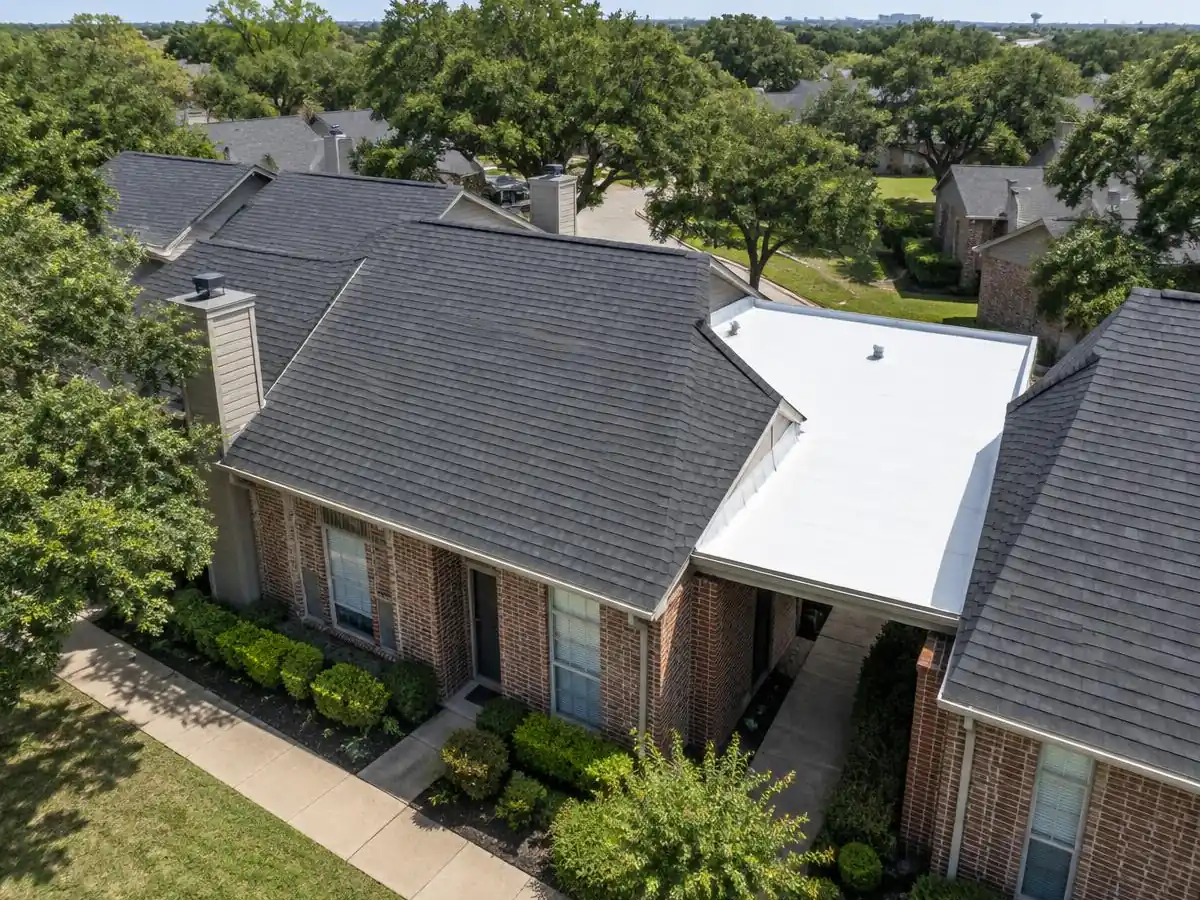
A lot of multi-unit residential roofing projects in Farmers Branch involve buildings that carry a pitched shingle roof and a low-slope or flat section on the same structure. When two different crews handle those two sections, the seam where they meet belongs to nobody. One contractor who works both systems owns that tie-in, and that is usually where the water gets in. It's part of our commercial roofing services.
Walk around most townhome rows, fourplexes, and small apartment buildings and you'll find two roofs on one building. There's the pitched part, usually architectural shingles, over the units. Then there's a low-slope section, maybe over a breezeway, a stairwell landing, a back porch run, or the flat area where the HVAC units sit. That second part is a commercial-style roof even though the building is residential.
The common way these get handled is with two contractors. A shingle crew does the pitched sections and somebody else does the flat part, or the flat part just gets skipped because nobody bid it. So you end up with two warranties, two schedules, and a seam in the middle that each crew figures is the other one's problem.
That seam is called the tie-in. It's the spot where the shingles and underlayment on the pitched roof meet the membrane on the low-slope roof. It has to be flashed so water running down the slope lands on the flat section and keeps moving instead of working its way underneath. If you look closely at an older building, you'll see the patches stacked up right there, because that's where it tends to start.
We handle both sides. On the residential side that's shingle, metal, clay tile, and slate. On the low-slope side it's TPO, EPDM, and modified bitumen, and we do that work for apartment buildings and HOA communities too. So the crew that lays the shingles is the same crew that runs the membrane and flashes the transition between them, and there's no handoff in the middle of your building.
Flat sections also fail differently than pitched ones, and that matters when a unit calls in a ceiling stain. A leak under a low-slope section often traces back to a rooftop unit or a drain line rather than the membrane itself. It can be the flashing at the tie-in, or it can be a clogged drain backing water up. You don't know until somebody gets up there and traces it. A crew that only does shingles is usually guessing on the flat part.
Our North Texas weather is hard on both kinds of roof at the same time. Summer heat sits on a membrane for months, spring hail hits shingles and flat sections in the same storm, and wind goes looking for any edge that wasn't fastened right. After a storm blows through, you want one inspection that covers the whole building, not two reports that don't agree.
- One crew is responsible for the pitched sections, the flat sections, and the seam between them.
- Leak calls go to one company that can trace water across both systems.
- One schedule, so tenants deal with one round of work instead of two.
- One permit in our name covering the job, which helps later with insurance claims and when the property sells.
I would push any bidder on one question before you sign: who flashes the tie-in, and who comes back if it leaks? If the answer is the other guy, you've got your answer.
Decking Gets Checked on Every Building, Not Just One Roof
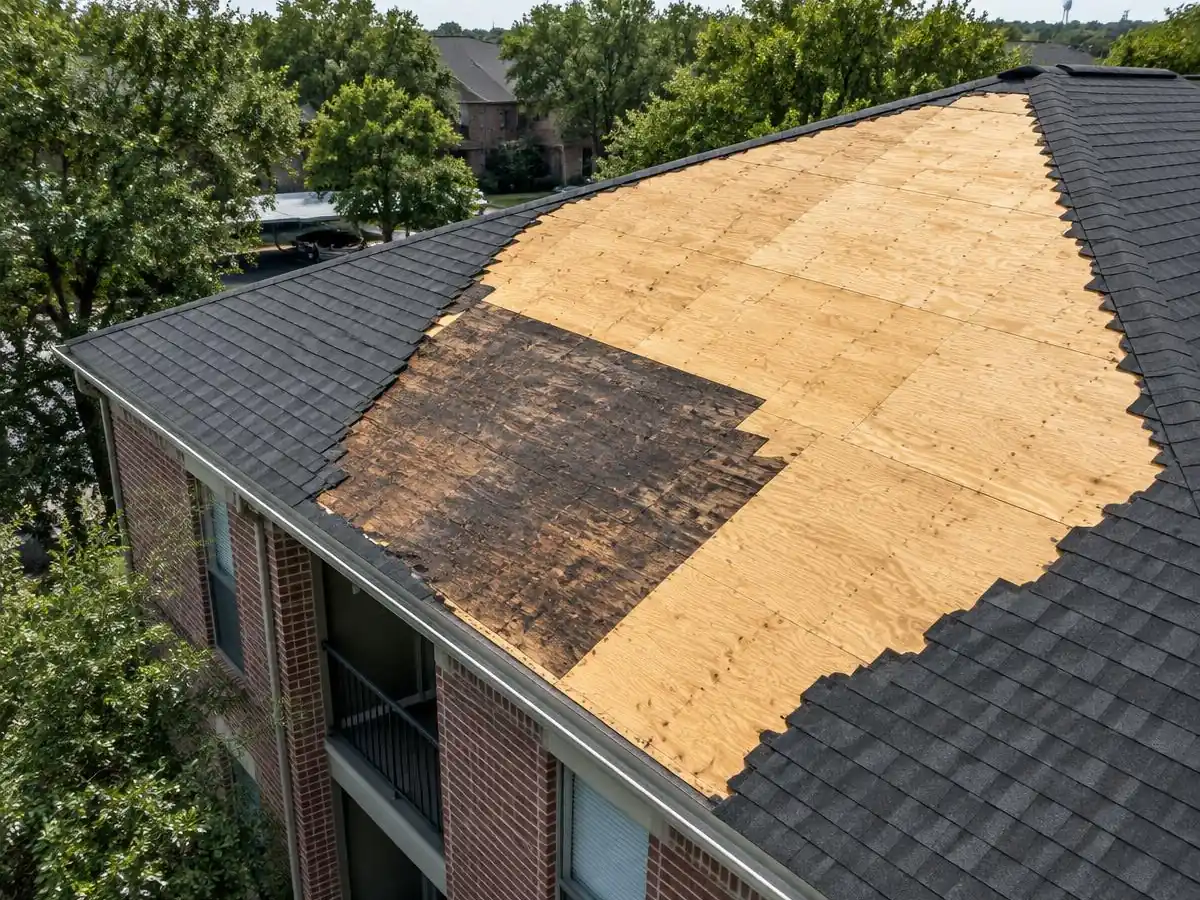
On a property with four or five buildings, or one long building with a dozen units under it, the decking isn't the same everywhere. Decking is the plywood or OSB sheeting the whole roof gets nailed to. One building can be perfectly solid and the one next to it can have a soft run over two units, and you'd never know it from the parking lot.
The common way to handle a big multi-unit job is to go over what's already up there, or to tear off one building, see decent wood, and assume the rest looks the same. It's faster and it bids cheaper. We go all the way down to the decking on every roof section of every building, because the only way to know what's under the shingles on Building C is to take the shingles off Building C.
Every sheet has to hold a nail. If it's soft or rotted, it comes out and gets replaced before any underlayment or new roofing goes down on that section.
Bad decking matters more on a multi-unit building because the consequence lands on somebody's ceiling. A new shingle nailed into soft wood doesn't grip. Then wind comes through in the spring and starts working that edge loose. We fasten with ring shank nails because the rings grab the wood and resist uplift when high winds get under a shingle and try to pull it off. A ring shank still needs solid wood to grab, though, and that's why the decking check comes first.
When we do find a soft spot, the cause isn't always obvious. It can be an old leak that sat there for a couple of seasons around a vent pipe or along the low-slope transition, or it can be moisture trapped in the attic because the space isn't venting right. You don't know until the old roof is off and somebody looks at the pattern. If it's a venting problem, putting new decking under the same bad airflow just starts the clock over, so attic venting is worth looking at in the same conversation.
Our North Texas weather makes this worse on bigger buildings. Long, low roofs sit under months of summer heat, and spring hail can crack a shingle enough to let water in for a while before anybody downstairs notices. On a single house, the homeowner usually spots a stain. In a fourplex or a townhome row, a tenant might not report it, so the damage can keep spreading under the roof.
Decking can show up on a bid in a few ways, so it helps to know what you're reading:
- Many roofing contracts price replacement decking per sheet as a separate line item, because nobody can see how much is bad until tear-off.
- Some bids include a set number of sheets and charge for anything past that.
- Some bids don't mention decking at all, which usually means it's either being layered over or it'll show up later as a change order.
On a multi-building property, ask how decking gets priced for each building and how you'll be told what was found on each one. A bid that treats ten roofs like one roof is assuming they all look alike underneath, and they rarely do.
Permits and Final Inspections Matter More for HOAs and Property Managers
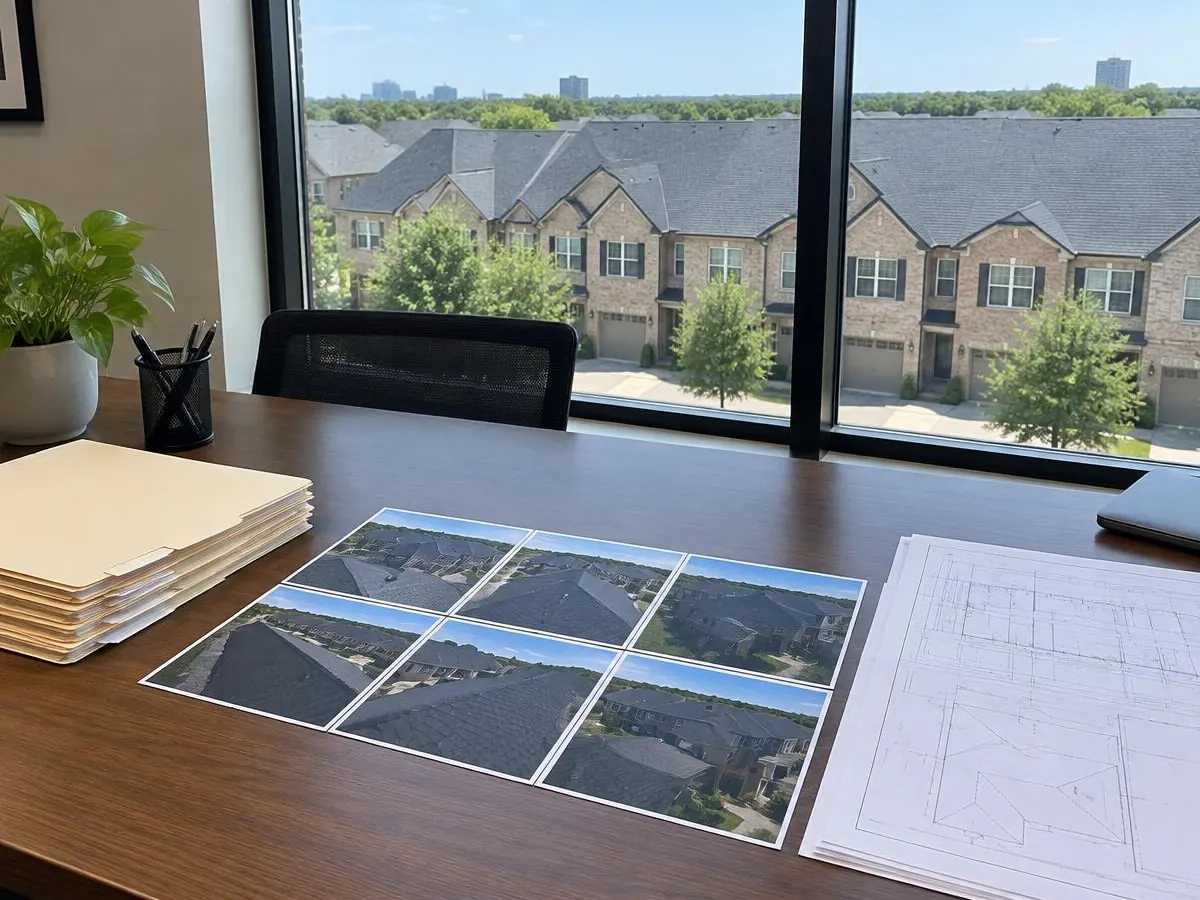
On a single house, the homeowner is the one who lives with the roof and the paperwork. On an HOA community or a rental property, the board turns over, the property manager changes, and units get sold. Five years from now somebody is going to open a file and want to know what was done to Building B and whether the city signed off on it.
Cities around Dallas generally treat a full reroof as permitted work. Each city draws its own line on what counts as a minor repair, so the first question on any bid should be who's pulling the permit and in whose name.
The common way this goes sideways is that the contractor asks the owner or the association to pull it, or the permit gets pulled and nobody ever calls for the final inspection, so it just sits open at the city. We pull the permit in our name and we schedule the final inspection, wherever the job happens to be. That paperwork is our job and not yours. It stays with us because the company that did the work should be the one on the hook for it.
A permit that never got closed tends to show up at the worst time. After hail comes through in April and the association files a claim, insurance carriers look at permit history when they process it. When an owner in a townhome row goes to sell, the buyer's side can look at it too. An open permit or a roof with no record at all gives somebody a reason to ask questions you'd rather not answer during a closing.
Multiple buildings make it easier for something to slip. One building can pass and the next one can still be waiting on an inspector, or one section can get left off entirely. Depending on the city and how the property is laid out, a big job can mean more than one permit. You want to know that every roof section on every building ended with a passed final, not just the first one the crew finished.
At the end of the job, a board or property manager should be able to put these in the property file:
- The permit number for each building or each permit that was pulled, and the address it was pulled under
- The record that each final inspection passed
- What was found and replaced on each building, including any decking sheets, so the next board isn't guessing
- The roofing materials used on the pitched sections and the low-slope sections, since those can be different products on the same building
None of that is complicated, and it takes a few minutes to hand over. It's just easy to skip when a crew is trying to get to the next job. On a property where a dozen households and an insurance policy depend on that roof, it's worth asking for before the final payment goes out.
Ring Shank Fastening Holds Up Against North Texas Wind and Hail
A townhome row or a two-story apartment building catches more wind than a one-story house down the street. It sits taller, the ridges run longer, and there's a lot more roof edge out there for a gust to get under. The end units and the corners tend to take it the worst, because that's where wind comes around the building and starts lifting at the rake and the eave.
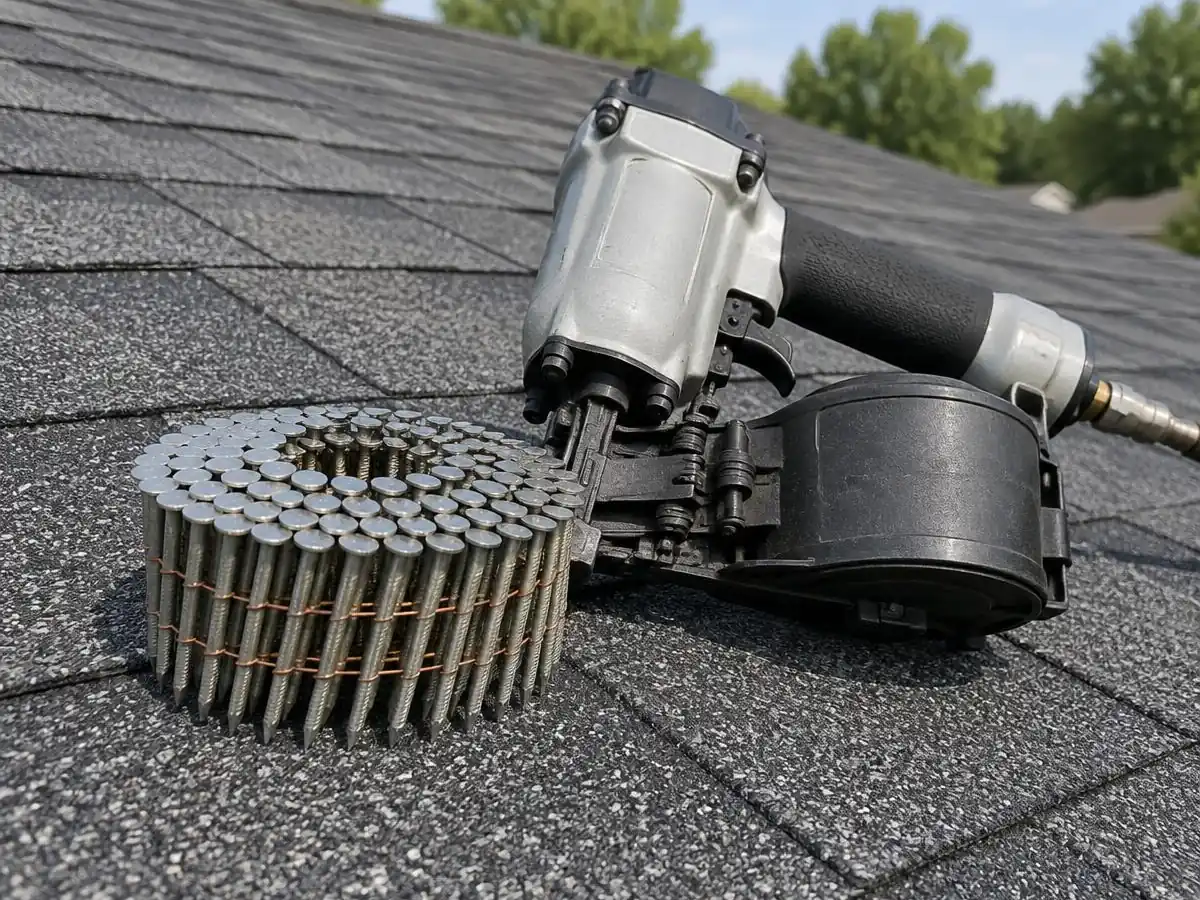
The common way to nail off a shingle roof is with smooth shank nails. They're standard, they go in fast, and on a calm day you can't tell the difference from the ground. We use ring shanks, because the little rings along the nail hold onto the wood when wind gets under a shingle edge and keeps pulling at it, over and over, all through a spring storm. A smooth nail can back out a little each time. A ring shank stays put.
Hail works with the wind more than people expect. Hail rolls through in April, and it can crack a shingle, bruise it, or break the seal strip that glues each shingle to the one below. That shingle might look fine from the parking lot. Then the next windy night comes, and a shingle that isn't sealed down anymore is only being held by its nails. Good fastening won't stop hail from doing damage, but it can keep a bruised shingle on the roof long enough for somebody to get up there and look at it.
On a single house, a missing shingle is one family's problem. On a fourplex, it's over somebody's bedroom, and that tenant may not call it in until there's a stain. So fastening on a multi-unit roof comes down to how many households end up dealing with water after a storm.
When shingles do come off a building, the reason isn't always the nail itself. It can be the type of nail, or it can be where the nails were placed, like set too high above the nailing strip so they miss the shingle underneath. You usually can't tell which one it was until somebody pulls a few shingles back and looks.
Fastening hardly ever shows up on a bid unless you ask, so these are the questions to put to anybody bidding your property:
- What type of nail goes into the shingle sections, ring shank or smooth shank?
- How many nails per shingle, and does that follow the manufacturer's pattern for high-wind areas?
- How do they fasten the rakes, eaves, and ridges, where wind lifts first on a long building?
- Who checks the nailing before the next course covers it up?
Ring shanks are a small difference on the invoice and a big one when wind comes across North Texas at 2 a.m. in May. On a building with a dozen units under it, that's one thing that sets the roof up to last, and it pairs with the decking check, because a good nail still needs solid wood to grab.
How Multi-Building Jobs Get Scoped and Priced
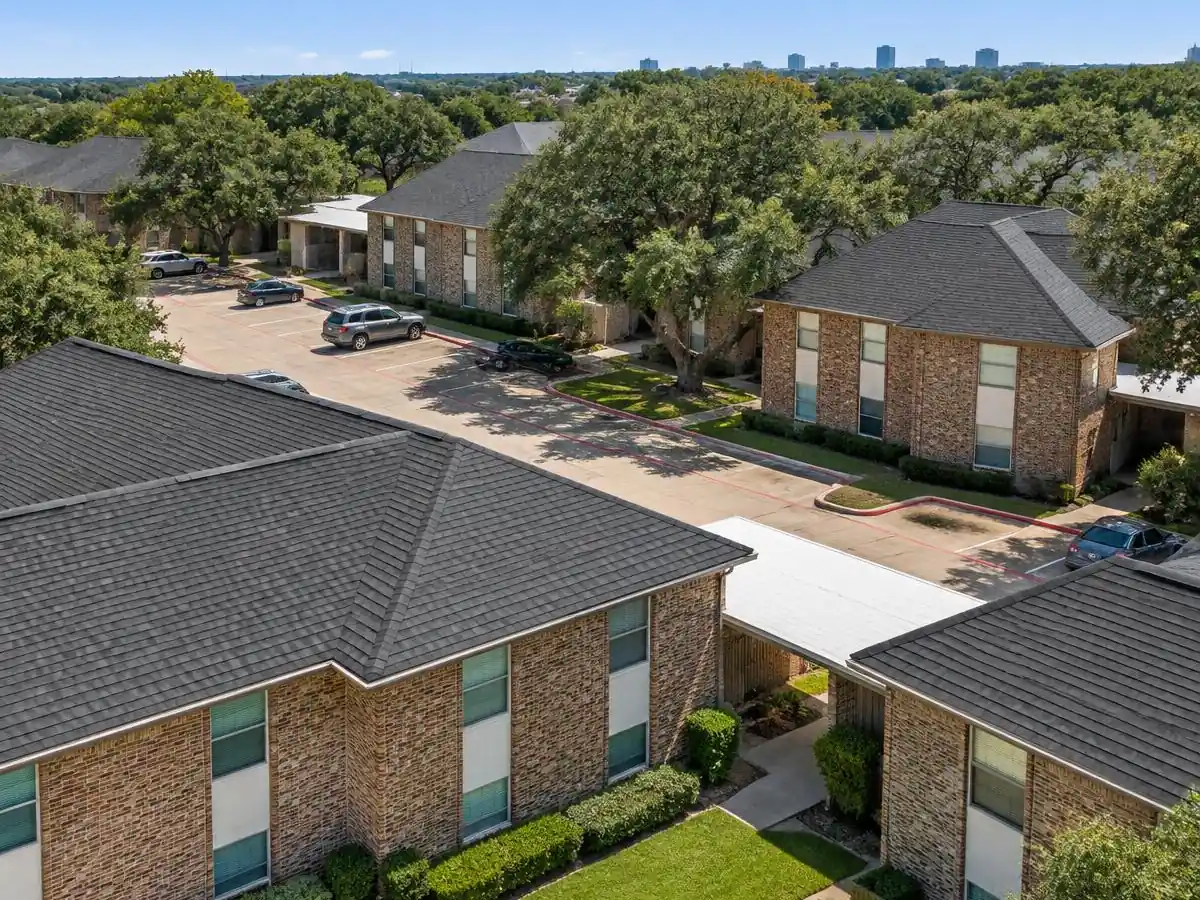
Most HOA boards and property managers we talk to have the same problem. They've got three bids on the table for the same property, and the numbers are far enough apart that it looks like three different jobs. Many times they are three different jobs, because each bidder scoped the property a different way.
Roofers price by the square, and a square is 100 square feet of roof. The term exists to keep the math simple. Nobody wants to haul shingles or run membrane by the square foot across a dozen roof sections, so the whole job gets counted in squares and the materials get ordered that way. On a multi-unit property, the squares should be counted building by building, and the pitched sections and low-slope sections should be counted separately. They take different materials and different labor, so they don't price the same.
The common way to bid a big property is one lump sum off an aerial measurement. It's quick, and it gets a number in front of you fast. An aerial report can tell you how big the roofs are, but it can't tell you the shape they're in. Things like soft decking, a clogged drain on a flat section, or a tie-in that's been patched four times don't show up from the sky. Anybody who quotes you a price without getting on the roof is guessing.
These are the things that tend to move the number on a multi-unit job:
- Pitch. A steeper roof takes more labor and more safety setup, because the crew can't walk it freely and has to work tied off.
- Height. A two-story or three-story building means more staging and more time getting material up and debris down.
- Material on each section. Architectural shingles over the units and TPO or modified bitumen on the flat sections are priced as separate pieces of the job.
- Tie-ins and penetrations. Every spot where a pitched roof meets a flat one, plus vent pipes, skylights, and rooftop HVAC units, adds flashing work.
- Existing layers. If there's more than one layer up there, all of it has to come off before anything new goes down.
- Access. Tight parking lots, carports, breezeways, landscaping, and tenants' cars all affect how fast a crew can stage and clean up.
- Phasing. Doing one building at a time so tenants aren't all dealing with it at once can change how the job is scheduled and staffed.
Our North Texas weather adds one more wrinkle. Hail comes through in the spring, and it doesn't always hit every building the same way. The buildings facing the storm can take a lot more than the ones tucked behind them. One building might need a full new roof while the one next to it only needs repairs, or the whole property could be due. You don't know until somebody walks each roof.
So when you're comparing bids, line them up by building. Ask each contractor to break out the squares and the cost for every building, with pitched and low-slope sections listed separately, and to tell you how they'd handle it if Building D turns out worse underneath than Building A. A bid that holds up to that is one you can compare. A single number for the whole property usually means somebody assumed every roof looks the same, and on our North Texas properties that's rarely how it turns out.
FAQs
Do I need a separate permit for each building on my property?
Often yes, since each building can require its own permit depending on the city and how the property is laid out. On a multi-building job, you want to confirm that every section on every building passed its final inspection, not just the first one finished. We pull permits in our name and track every inspection so nothing gets left open at the city.
Why does my flat roof section leak when the shingles look fine?
A leak under a low-slope section often starts at the rooftop HVAC unit, a drain line, or the flashing where it meets the pitched roof, not the membrane itself. You usually can't tell the source until someone traces the water across the whole roof system. That's why one contractor who handles both pitched and flat sections can track a leak faster than a crew that only does shingles.
Why do bids for my HOA property vary so much even though it's the same roofs?
Bids vary because contractors scope multi-building properties differently, and an aerial measurement can't show what's wrong under each roof. Soft decking, a patched tie-in, or a clogged drain won't show up from the sky. Ask every bidder to break out squares and cost by building, with pitched and flat sections listed separately, so you're comparing real numbers instead of guesses.
Ready for Your
Multi-Unit Residential Roofing?
Get a free, no-obligation evaluation from our GAF certified team in Farmers Branch. We'll inspect your property, provide a written estimate, and walk you through every option.
Want to pay over time? Check your financing options.


Need A Roofing Contractor? Request An Estimate!
Fill out the form and we'll get back to you promptly.