
Hail Damage Roof Assessment in Farmers Branch
Signs Your Roof Needs a Hail Damage Assessment
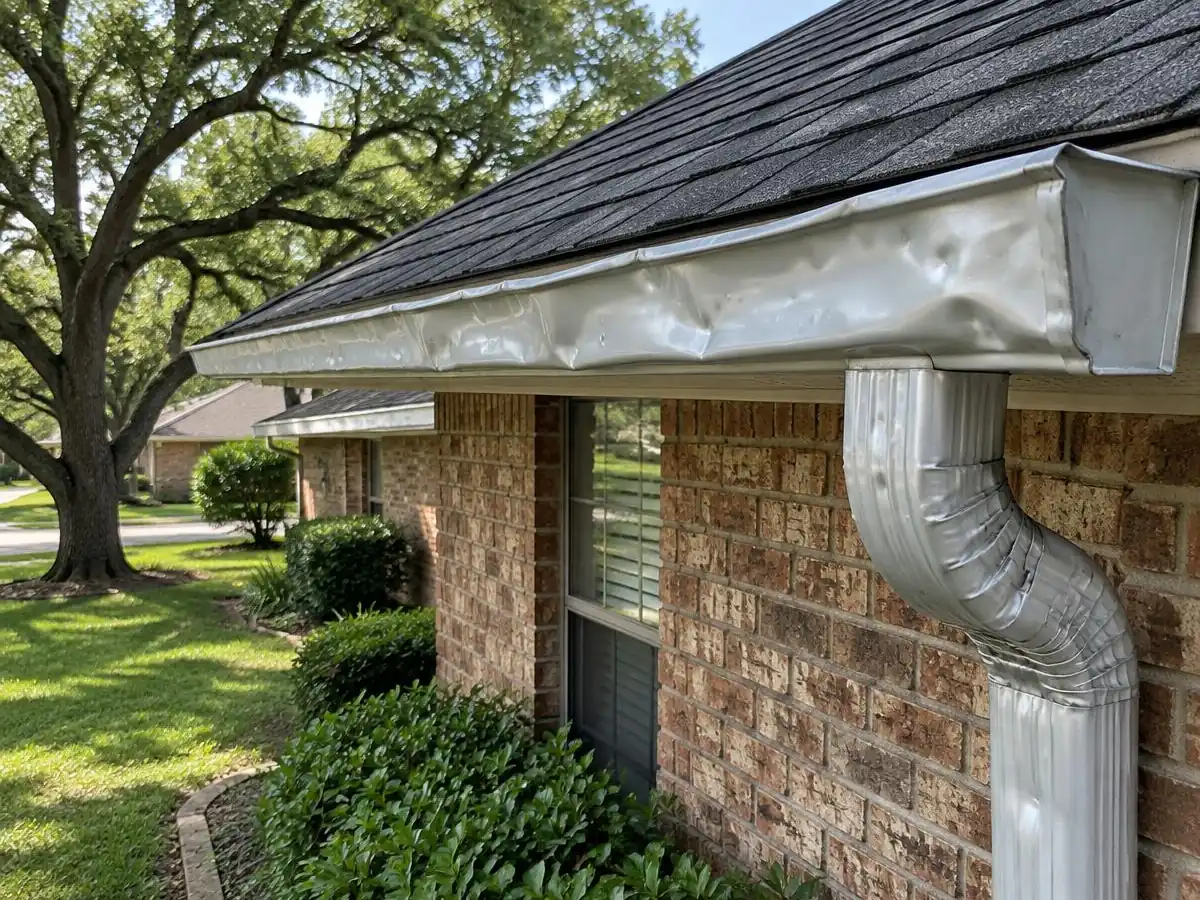
After a hailstorm, the softer things around your house, like gutters, downspouts, AC fins, and roof vents, tend to show hits before the shingles do. If those took dents, your roof was in the same storm and it's worth having someone get up there and do a hail damage roof assessment. Ground-level signs tell you to check the roof. They don't tell you what the roof looks like. It's one of our storm and hail damage services.
Most folks don't see hail damage on a roof, because you can't really see shingles well from the driveway, so what they notice is everything else. A spring storm rolls through Farmers Branch, and the next morning you're out walking the yard and the gutters look a little lumpy. That's usually where it starts.
Hail hits everything on your property roughly the same, so the soft metal and painted surfaces end up keeping a record of the storm. If you look closely at these, you'll see it:
- Dents along the gutters or on the downspouts, especially on the side that faced the storm.
- Bent or crushed fins on the outdoor AC unit.
- Dings on roof vents, turtle vents, or pipe jacks you can see from the yard or a back window.
- A pile of dark sand-like grit at the bottom of a downspout or in the splash block. Those are shingle granules.
- Chipped paint or fresh marks on a wood fence, window trim, or the siding.
- Torn window screens or dented mailbox and patio furniture.
- Dents on your car if it was parked outside.
Any one of those means your roof took the same storm. It doesn't mean the roof is damaged, and it doesn't mean it isn't. Shingles are tougher than a gutter in some ways and weaker in others, so the only way to know is to get on the roof and look at the shingles themselves, slope by slope.
Now, some of what people find can fool you. Granules in the downspout can come from hail knocking them loose, or they can come from an older roof that's been shedding granules for years in our North Texas sun. You don't know which until somebody gets up there and looks at where the bare spots are and what shape they are. Hail tends to leave random, roundish hits. Age and blistering tend to look different up close. It can be one, it can be the other, and sometimes it's a little of both.
There's also the case where you see nothing at all on the ground and the roof still took hits, because a storm can come through at an angle and hit one side of the house harder than the other. If your neighbors on the same street are getting inspectors out after a storm, that's a decent reason to have yours looked at too, even if your gutters look fine.
And if you check all of this and find nothing, no dents, no granules, no marks on the fence or the AC, and the storm was just a little pea-size rattle on the windows, you can usually wait. Keep an eye on the ceilings and the attic, and watch for any stains after the next good rain. We'd rather you hold off than have somebody talk you into a roof you don't need.
Cosmetic Marks Versus Functional Damage
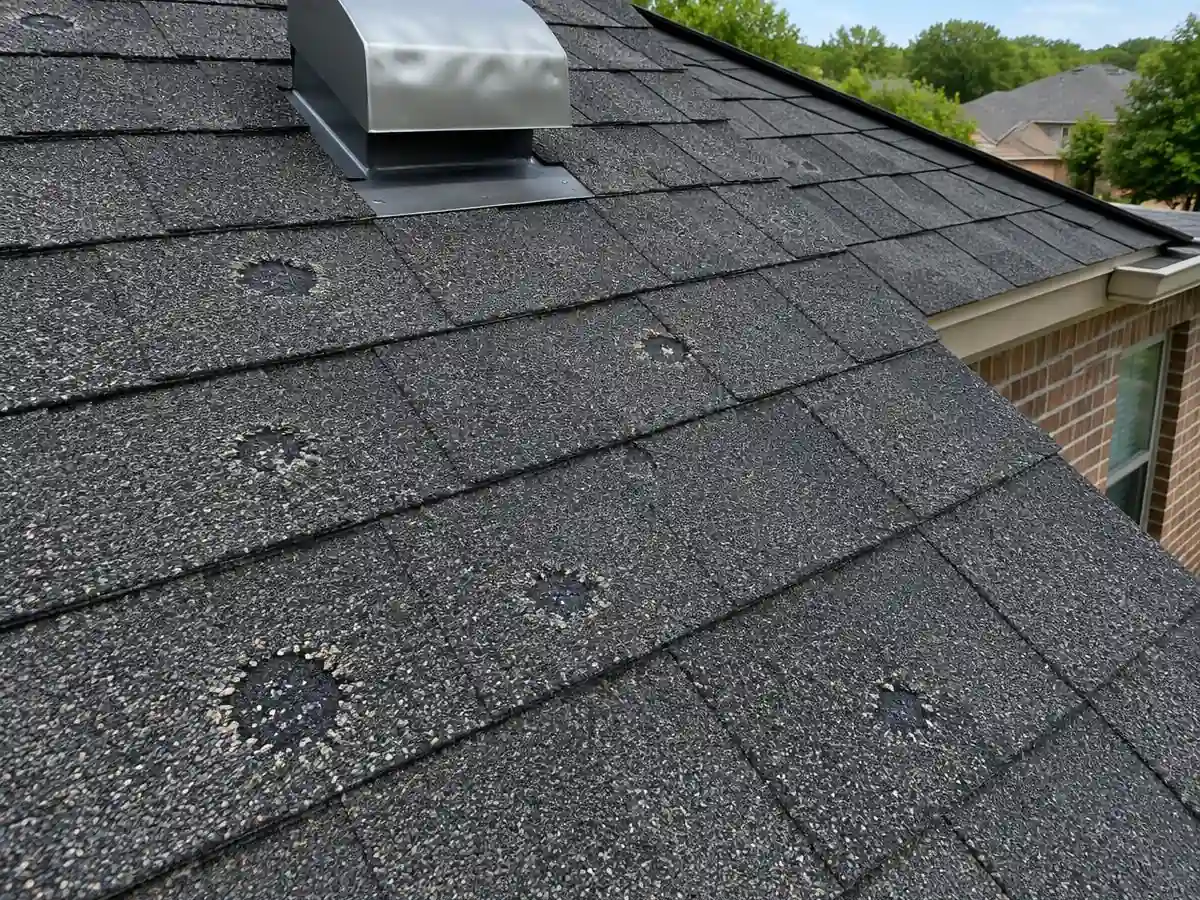
Once somebody's on the roof, the question changes. It's no longer about whether hail hit it, because it usually did if your gutters took dents. It's about whether those hits did anything that matters. A roof can be covered in marks and still shed water fine for years. Another roof can look almost clean from the ladder and have damage that starts leaking two summers from now.
Cosmetic means the hit changed how the roof looks and nothing else. Functional means the hit broke something the shingle needs to do its job, so it either lets water through now or it's going to wear out a lot faster than it should.
On an asphalt shingle, functional damage tends to look like this:
- A bruise. You press on the hit with your thumb and it gives a little, kind of like a soft spot on an apple, because the mat underneath got crushed.
- A fractured mat. The fiberglass layer inside the shingle cracked, even if the top still looks mostly whole.
- Granules knocked off down to the black asphalt, in a round spot. That asphalt starts cooking in the sun once it's bare.
- A torn or cracked shingle, or a tab that got lifted and broke its seal strip, so it's not stuck down anymore and wind can get under it.
Cosmetic marks look different up close. There can be spatter marks, where the hail just knocked dirt and oxidation off the surface and left lighter circles. There can be a scuff where a few granules moved but the mat's still firm underneath. And there are dents in metal, like turtle vents, a pipe jack collar, or a metal roof panel, where the metal bent but the coating didn't crack and the seams are still tight. Those dents can be ugly, and on a metal roof they can be all over the place, but if the panel still sheds water and the finish isn't broken, it's a looks problem.
Some hits don't read clearly either way. A crushed spot on a shingle can be from hail, or it can be from somebody walking the roof in boots on a hot August afternoon, or from a limb that came down in the same storm. You don't always know from one mark. So you look at the pattern. Hail damage tends to be random and spread across a whole slope, with more hits on the side that faced the storm. Foot traffic tends to follow a path, and a limb leaves a cluster.
That's why a real assessment goes slope by slope instead of grabbing a couple photos from the edge. We mark the hits, test them by hand, and count them inside a set area on each side of the roof, so the call is based on what's there and not on how bad it looks from the gutter line.
This line between cosmetic and functional matters for your claim too, because some homeowner policies treat cosmetic damage differently than damage that affects how the roof works, especially on metal. Policies aren't all written the same, so it's worth pulling yours out and reading that part before anybody files anything.
If the damage is functional, the next step is a hail damage roof repair or, when it's spread across the roof, a hail damage roof replacement.
What Happens During the Assessment
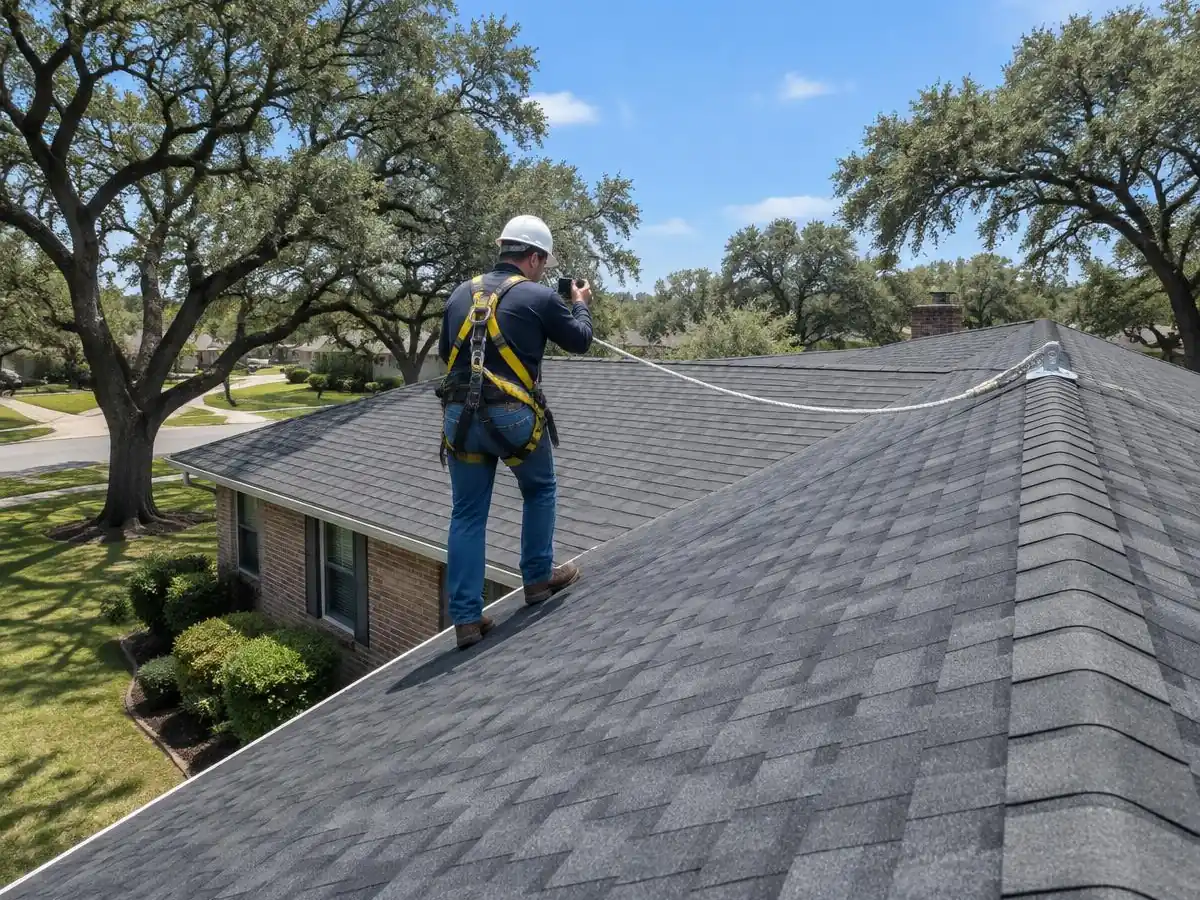
A good hail assessment starts on the ground, because the storm left its record down there before anybody puts a ladder up. Somebody should walk the house first and figure out which side faced the storm, using the gutters, the AC unit, and the fence line you may have already checked. That way they know which slopes deserve the most time once they're up top. It saves guessing.
On the roof, the shingles are only part of it. The other parts take hits too, and some of them take the worst of it:
- Ridge caps. They sit at the highest point and stick up off the roof, so hail tends to hit them square instead of at an angle.
- Pipe jacks. The rubber boot around a plumbing pipe can crack or split, and that's a leak point even if the shingles around it look fine.
- Flashing around a chimney or a wall, where a dent can open up a seam.
- Skylights, the dome or the glass and the frame around it.
- Turtle vents, ridge vents, and any exhaust caps.
A steep roof takes longer to walk, because the person up there has to be tied off and move slower, and that's normal. A two-story house with a steep pitch on the back side isn't something to rush through in fifteen minutes.
If you've got attic access, it's worth a look from the inside too. From underneath, you can see the decking, which is the plywood the shingles are nailed to. You're looking for wet spots, dark stains on the boards or rafters, or pinholes of daylight. Now, a stain up there doesn't always mean hail. It can be from a hit that broke through, or it can be an old leak at a pipe jack that's been slowly dripping for years, and you don't know until somebody traces it from the stain back up to the spot on the roof.
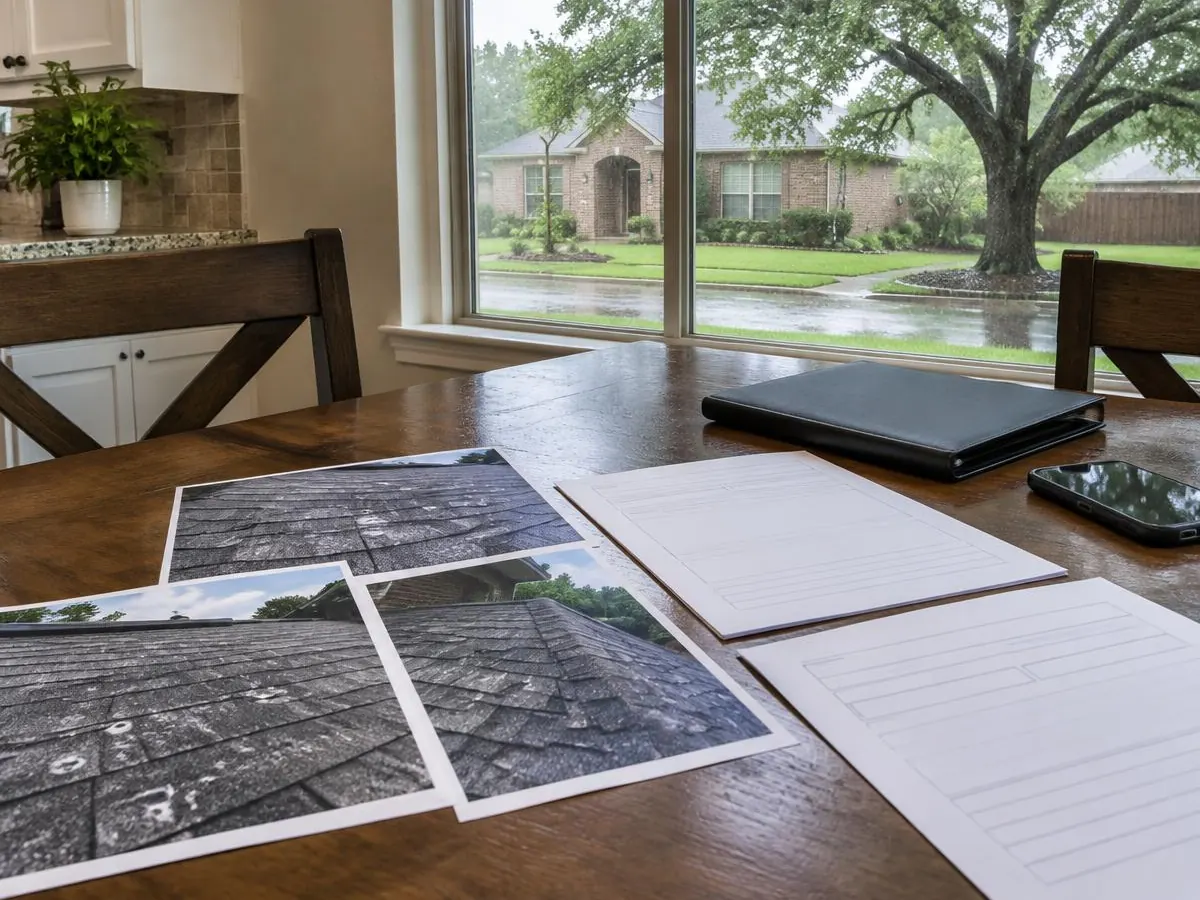
When it's done, you should come away with photos you can understand. That means a wide shot so you know which slope you're looking at, and a close shot of the hit itself. If the photos are all close-ups with no way to tell where they came from, they don't help you much, and they won't help an adjuster much either.
There are a few things you can have ready that make the visit go better:
- The date and rough time of the storm, if you remember it. Even something like a Tuesday evening in April helps.
- Any photos you took of hail on the ground, especially with a coin or a ruler next to it for size.
- A clear path to the attic hatch, usually in a hallway closet or the garage.
- Anything you know about past leaks or repairs, so old patches don't get mistaken for new damage.
- Your homeowner policy, if you think a claim might come out of this.
Anybody who tells you that you need a whole new roof from the driveway is guessing. And anybody who tells you it's fine without climbing up and looking is guessing too.
Texas Insurance Claim Deadlines After Hail
Most folks figure they've got time after a storm, and they usually do, but not forever. The clock on a hail claim tends to start on the day the storm hit, which your policy calls the date of loss. It doesn't start on the day you finally noticed the dents in the gutter or the stain on the hallway ceiling.
How long you get depends on your policy, because Texas homeowner policies aren't all written the same. Some give you a set window to report the damage. Others just say you have to report it promptly, which is looser and harder to pin down. Pull your policy out and find the part on reporting a loss, and if you can't make sense of it, call your agent and ask them the window in plain words. It's a short phone call.
Texas also has rules on the insurance company's side, about how quickly they have to acknowledge your claim and respond once you file. Those rules start working for you only after you've filed. They don't help you while you're still deciding.
Now, the bigger problem with waiting usually isn't the deadline itself. Our North Texas spring can run one storm into the next, so a roof that took hits in April might take another round in May, and then the question becomes which storm did it. An adjuster can tie damage to a date, and the further out you get, the harder that gets. Bare spots from knocked-off granules also weather in the sun, so a fresh hit from three weeks ago can look a lot like an old one a year later.
There's a quieter piece too. Policies generally expect you to keep the damage from getting worse once you know about it. If a hit lets water in and you sit on it through a few more rains, the rotted decking and the ceiling drywall can end up argued as neglect instead of hail.
Here's what tends to help in the first couple of weeks after a storm:
- Write down the date and rough time of the storm while you still remember it.
- Keep any photos of hail on the ground, the dented gutters, or the AC fins, with the date still on them.
- Get the roof looked at before you call the insurance company, so you know whether you're filing on functional damage or just marks.
- If water's coming in, get it covered, and keep the receipt for the tarp or the emergency repair.
- Hold on to every email, letter, and claim number once you do file.
The other option would be calling the insurance company first and letting them sort it out. That can work, but if the roof only has cosmetic hits, you may end up with a claim on your record and nothing paid, depending on how your policy treats that kind of damage. Knowing what's up there before you file lets you make that call with your eyes open.
Hail damage gets harder to prove with time, not easier. Have it looked at while the storm's still fresh.
Our roofing insurance claims page covers the rest of the process.
Verifying the Contractor Before Letting Them on Your Roof
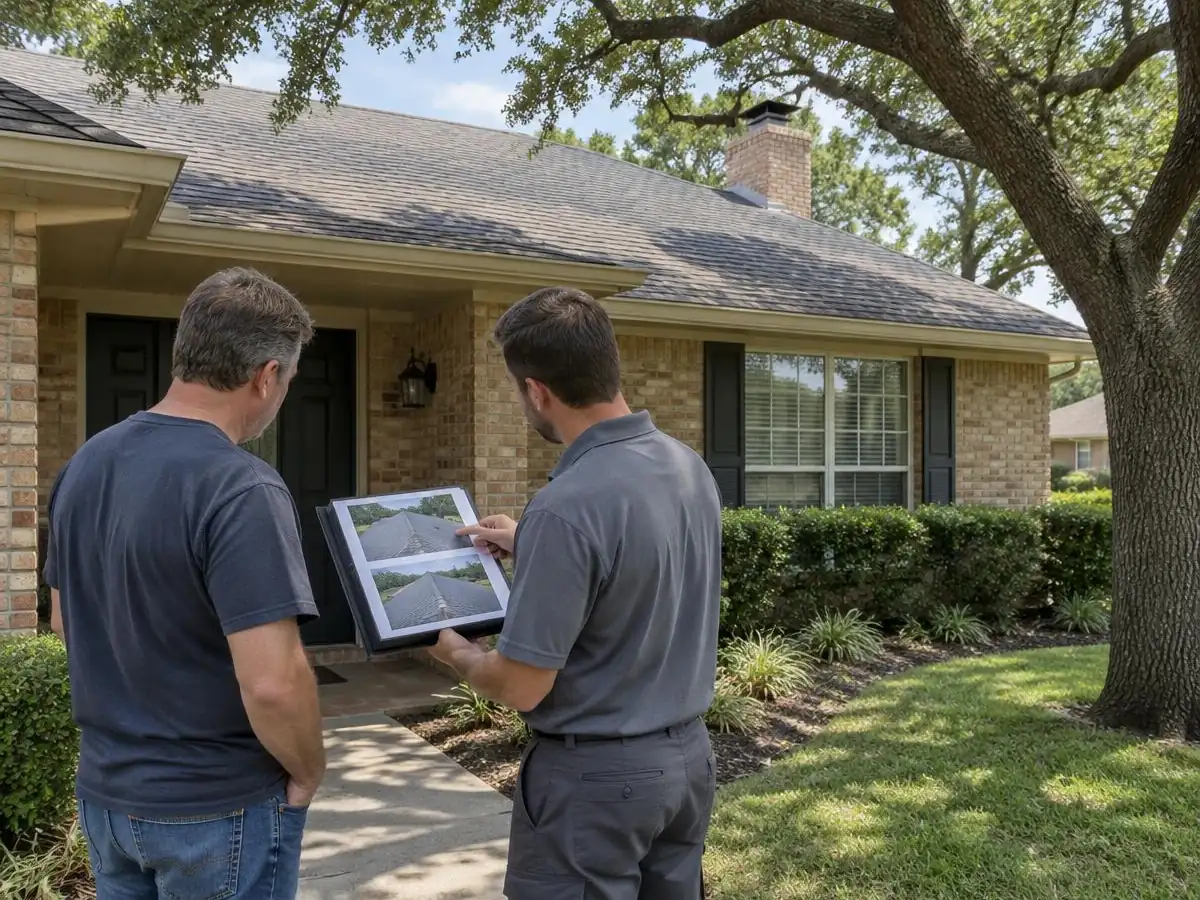
A day or two after hail comes through Farmers Branch, the trucks start showing up. You'll get a knock at the door, a flyer in the screen, maybe a yard sign two houses down. A lot of those folks are perfectly fine, but some of them follow the storms from state to state and won't be around when a pipe jack starts leaking next spring. So before anybody climbs up, it's worth five minutes to check who they are.
The common way is to let whoever knocked first get on the roof and take it from there. The other option would be to slow down a little, ask some plain questions, and only let somebody up once you know where they'll be next year. Hail damage isn't going anywhere in a day. You've got time to check.
Here's what to ask and look for:
- A local address you can drive to. A real office or shop counts. A cell number and a hotel parking lot don't.
- Proof of insurance, and ask for the certificate to come straight from their insurance company, not as a photo on somebody's phone. If a worker gets hurt on your roof and the crew isn't covered, that can land on you.
- Who's doing the assessment. Is it the person who'll be there for the work, or a salesperson who hands you off to a crew you never meet?
- Whether they'll pull the permit in their own name if the job turns into repair or replacement. Asking you to pull it yourself is a red flag.
- Photos that show the whole roof, with wide shots and close shots, like the ones described above, and not just a handful of close-ups.
- No pressure to sign anything on the spot. Be careful with any paper that hands over control of your claim or locks you into a contract before anybody's even been on the roof.
Watch out for anybody who offers to cover your deductible or says they can make a small storm look like a big one. That can turn a fair claim into trouble for you. Also be wary of anybody who wants a big payment before materials ever show up.
Now, a contractor can look good on paper and still do a rushed walk, and a small outfit with no website can do careful work, so the questions above matter more than how slick the truck looks. You're trying to find out two things. Will they tell you the truth about what's up there, and will they still be answering the phone when something comes up later?
For what it's worth, here's where we stand on those questions. We're a family owned company working out of 13135 Rosser Rd in Farmers Branch, and Max, who owns the company, is on the jobs with the crew instead of sending a salesperson. We're fully insured, and we're a GAF Certified Residential Roofing Contractor (#1155323) and a BBB Accredited Business with an A+ rating. We're also members of the Metrocrest Area Chamber of Commerce, and we've worked plenty of storm damage and insurance claims. When a job needs a permit, we pull it in our name and schedule the final inspection, so that paperwork is our job and not yours.
Check us the same way you'd check anybody else. That's the point.
FAQs
Does a roof with hail damage always need to be replaced?
No, not always. A roof only needs replacing when hail caused functional damage, like bruised shingles, fractured mats, or torn tabs that break the seal. If the hits are only cosmetic, such as spatter marks or dents in soft metal that haven't cracked the coating, the roof can often keep doing its job for years. The only way to know for sure is to have someone get on the roof and check each slope by hand.
What does a limited loss settlement for wind or hail damage to roof surfacing mean?
It means your policy may pay less for roof surfacing damage than for other storm damage, because some homeowner policies treat cosmetic hail marks on shingles or metal differently than damage that affects how the roof works. This is why it matters to read the surfacing section of your policy before filing a claim. Knowing whether your roof has cosmetic marks or functional damage helps you understand what a settlement offer should cover.
How much does a hail damage roof assessment cost?
At Under One Roof, the assessment is free and there's no obligation. It includes a ground walk to find the storm-facing side, a slope-by-slope check on the roof, attic access when you have it, and photos you can keep. Elsewhere, ask what's included before you book, since a quick driveway look and a full documented assessment aren't the same service.
Ready for Your
Hail Damage Roof Assessment?
Get a free, no-obligation evaluation from our GAF certified team in Farmers Branch. We'll inspect your property, provide a written estimate, and walk you through every option.
Want to pay over time? Check your financing options.


Need A Roofing Contractor? Request An Estimate!
Fill out the form and we'll get back to you promptly.