Best Time of Year to Replace Your Roof in North Texas: A Property Owner's Complete Guide
When you own property in North Texas, you know that your roof goes through a lot of weather extremes. Some people even say the weather in DFW is bipolar. Depending on the time of year, we can get hundred-degree days, hail that shows up out of nowhere, wind so strong that it can lift shingles, and ice storms that create havoc. This can make the timing of a roof replacement a big factor.
The reality is that if your roof is already leaking or a storm blew off some shingles, the best time to replace it is right away. You don't want to put it off. If you do, it can give water more time to work its way in, which can lead to the kind of interior damage. That will add high costs that could have been avoided. If the roof can wait, though, and you're planning ahead rather than reacting, there are some times of year that are easier than others around here. Fall is usually the best of them.
It mostly comes down to weather and working conditions, not price. You might have heard that replacing your roof can be cheaper in the fall, but that is not really true. What fall actually gives you is milder temperatures, drier days, and a better chance at getting the roof completed without a storm coming through in the middle of the project.
Why Timing Matters More in North Texas Than Anywhere Else
North Texas sits in what a lot of people call "Hail Alley," and it earns the name. Texas and Kansas saw the most hail events in the country in 2024, according to NOAA.[1] The weather here is rough on roofs in more ways than one. You've got the UV beating down all summer and breaking down the materials, big temperature swings that make everything expand and contract, and storms that can roll in with barely any warning. Homeowners in places like Highland Park, University Park, and Preston Hollow find out about all this the hard way, usually when something fails at the worst possible time and they're scrambling to get it handled.
That is really the heart of why timing matters. It is not about chasing a better price in some magic month. It is about getting ahead of the weather so you are not forced into a replacement during the worst of it.
Fall: September Through November Is the Sweet Spot
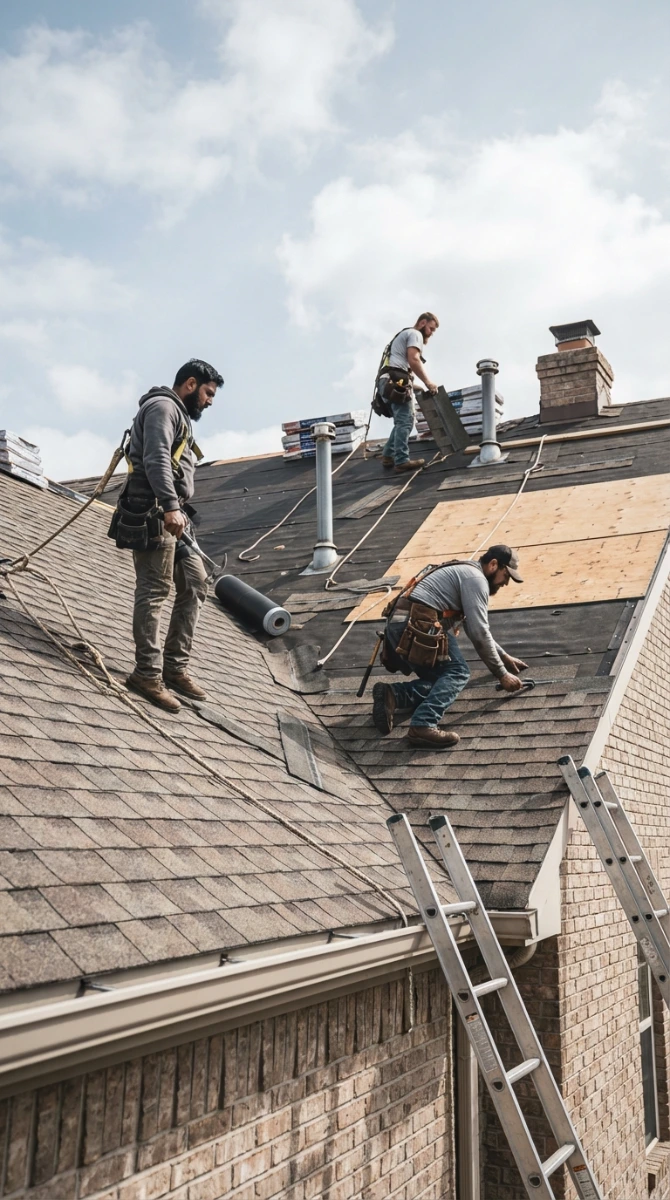
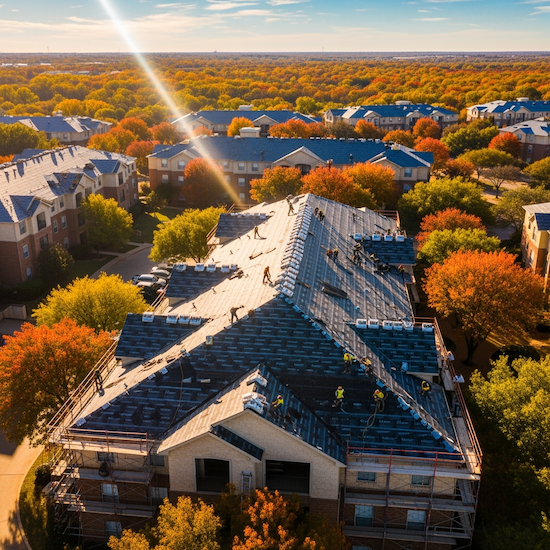
If you have the luxury of planning ahead, fall is about as good as it gets in North Texas. The weather settles down, the brutal heat finally breaks, and crews can actually work a full day without fighting the sun.
Here is what makes fall work so well:
- Temperatures usually sit in that 60 to 80 degree range, which is easy on both the crew and the materials
- Lower humidity means safer footing and better working conditions up on the roof
- Less chance of a severe storm blowing in and stalling the job partway through
- Shingles seal the way they are supposed to, since the adhesive strips bond best in mild weather
There is also the availability side of it. By the time fall rolls around, the summer rush has died down and the backlog of summer storm claims has mostly cleared out. That tends to make scheduling a lot easier, so you are not waiting weeks to get on the calendar. You still want to book ahead, but you have more room to pick a date that works for you instead of taking whatever is left.
One more thing worth knowing. Shingle manufacturers actually care about install temperature, because the sealant needs warmth to set right. GAF recommends installing shingles when it's at least 40 degrees, since the adhesive relies on warmth and sun to seal naturally, and in cold weather crews have to hand seal each shingle to make up for it.[2] Fall hits that sweet spot before the cold sets in, which is part of why the roof you put on in October tends to seal better than one rushed on during a July heat wave or a January cold snap.
Late Winter: February Through Early March
The next best time to install or replace a roof is in late winter, right before storm season starts to crank up. The timing tends to work well for commercial buildings, since property managers usually have to plan around tenants and business hours and can't just halt everything on short notice.
The big draw is getting out ahead of those spring storms. Crews are also coming off the slower winter stretch, so there is usually more room on the schedule than you'd find in the middle of hail season. You get the work wrapped up before the messiest weather of the year shows up.
If you already know the roof is on its way out, handling it in February or early March means you are not sitting there every spring watching the radar and hoping an old roof makes it through one more round. You go into storm season covered.
Times to Avoid
Peak summer, roughly June through August, can be the most challenging time to get a new roof. The heat in North Texas can be dangerous for crews working on a roof, and it's not always ideal for the materials either. OSHA tracked 33,890 work-related heat injuries and illnesses that involved days away from work between 2011 and 2020, averaging around 3,389 per year.[3] On the really hot days, crews can usually only work safely in the early morning before the heat builds up, and that can cause the project to take a little longer than we would like.
The other challenging time for a roof installation or replacement is storm season, March through May. This is when the weather is the most unpredictable. Several days of rain and storms can certainly make the work take longer. It's also a rough time to get stuck needing an emergency repair, since everybody in the area is dealing with the same storms at once, and the local roofers are all slammed with emergency repairs and replacements.
None of this means a roof can't go on in summer or spring. We install roofs all year long. It's just that if you have the choice, these are the times when it can be more challenging.
Understanding North Texas Weather Patterns for Better Planning

The Hail Factor
Hail is the thing that does the most damage to roofs in the DFW metroplex, and the numbers back that up. NOAA's Storm Prediction Center counted 5,373 hail events across the country in 2024, down from 6,962 in 2023, and Texas is always near the top of that list.[1] The peak runs from March through May. That timing lines up with the storm season we mentioned earlier.
This is really why so many property owners in places like Carrollton, Lewisville, and Richardson try to plan a replacement outside that window. If your roof is already getting up there in age, the last thing you want is to head into the middle of hail season hoping it holds, and then end up dealing with damage on top of a roof that needed replacing anyway.
Heat and UV Exposure
The summer heat does its own kind of damage, just slower. North Texas regularly pushes past 100 degrees, and all that sun and UV gradually wears down roofing materials over the years. It's part of why roofs here don't always last as long as the same materials might somewhere cooler.
That heat is also what makes summer such a tough stretch for installation. For a roofing crew on an exposed roof in July, the risk is very real, which is why so much summer work gets pushed to the early morning hours.
Seasonal Planning by Property Type
Residential Properties
For a single-family home, fall is usually the easiest choice. Kids are back in school, so there's less coming and going around the neighborhood while the crew works, and you've got a good runway to get everything buttoned up before any winter weather. Homeowners in established areas like Lakewood, Keller, and Southlake tend to like that timing for those exact reasons.
Multi-Unit Properties
Apartment and condo properties are a different animal, since you're working around several people who live there. Fall tends to be the smoother season for these jobs, too. The weather is calmer, which means fewer rain delays that can drag out a project and frustrate tenants. It's also easier to coordinate the work alongside other maintenance happening before winter.
Commercial Properties
Commercial buildings come with their own scheduling puzzle. A business near DFW Airport or in one of the downtown corridors has to keep operating while the roof gets installed, so the calmer fall weather helps keep the project predictable and on track. A lot of property managers also like wrapping roof work into the end of the year, when capital improvement budgets and tax planning are already on the table.
How Material Choice Plays Into Timing
The roofing material you go with actually changes how much timing matters, since different materials want different conditions to go on right.
Metal roofing does great in North Texas once it's up, but it needs moderate temperatures during install so the panels and expansion joints set correctly. That makes fall close to ideal for a metal roof. Too much heat and the metal's already expanded, too cold and you run into other headaches, so those mild fall days hit right in the middle.
Asphalt shingles are even pickier about temperature, which a lot of homeowners don't realize. The adhesive strips that seal each shingle down need warmth to bond the way they're supposed to. Put them on in a cold snap and they may not seal until things warm back up, and rush them on during a brutal heat wave and you've got crews fighting the conditions. Fall lands in that comfortable middle where the shingles seal clean and the crew can actually work.
Planning Around Insurance and Claims
If your replacement is tied to storm damage and you are also filing an insurance claim, timing might work a little differently. Most storm-damage claims in North Texas happen between March and June. That, of course, is when hailstorms are at their worst. That's also when insurance adjusters can get the most backed up. So a claim filed in the thick of the season can take longer to process than one filed in a quieter stretch.
It doesn't change whether your damage is covered. It just means that if you're filing during peak season, a little extra patience helps, since the whole system moves more slowly with everyone filing at once.
When You Shouldn't Wait for the Perfect Season
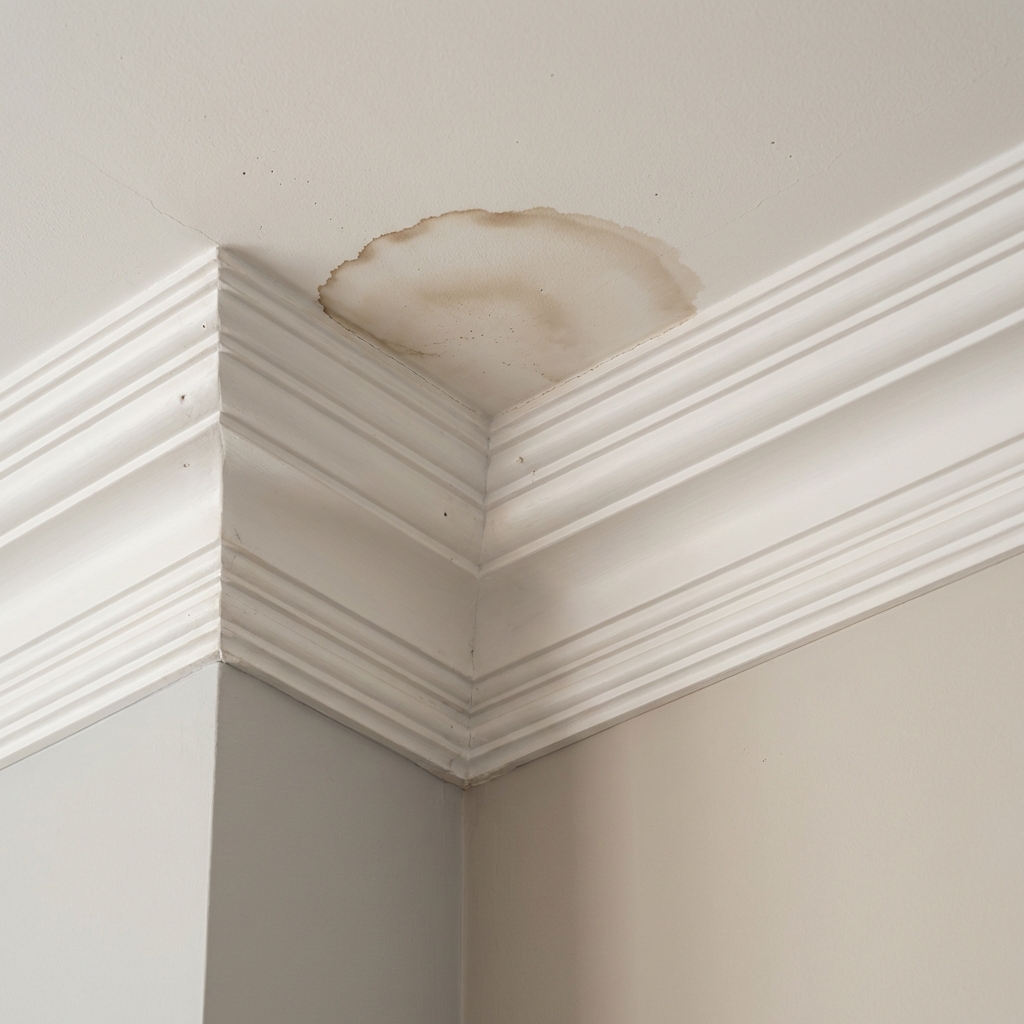
All of this timing talk goes out the window if your roof is actively failing. Some situations need handling right away, no matter what the calendar says:
- Water actively coming in or stains spreading across your ceiling
- Missing or badly damaged sections after a storm
- Any sagging or structural damage that affects the integrity of the roof
- Damage your insurance is requiring you to repair as part of a claim
- Anything that's creating a safety hazard for the people inside
In any of these cases, waiting for fall just lets the damage get worse and more expensive to fix. The best time is whenever you catch it.
Getting Ready for Your Replacement
Once you've got a timeframe in mind, a little prep makes the whole thing go smoother.
A few months out is the time to do your homework. Talk to more than one contractor, get real written estimates, check that they're insured, and sort out anything your HOA or building management needs from you ahead of time.
As you get within a month or so, you're nailing down the details. Material delivery, permits, giving the neighbors a heads up, and having a backup plan in case the weather doesn't cooperate on the scheduled days.
During the actual install, stay in the loop. Keep in touch with the crew lead, take a few photos as it goes, and make sure there's a solid cleanup and a final walkthrough when it's done.
So When Should You Do It?
If your roof is leaking or a storm tore it up, you already have your answer. Get it handled now, before water turns a roof problem into a ceiling-and-drywall problem.
But if you're planning ahead and the roof can wait a bit, fall is the window to aim for in North Texas. The weather cooperates, the shingles seal the way they should, and crews aren't fighting heat or storms to get the job done right. Late winter is a solid backup if fall doesn't work out, especially for getting ahead of the spring storms.
The one thing that won't help you is waiting around for some cheaper time of year, because that's not really how roofing works here. Prices stay pretty steady through the seasons. So pick the time that lines up with good weather and your own schedule, and if the roof needs it now, don't let the calendar talk you out of it. Whatever month you land on, the roof replacement process itself does not really change.
Sources
- NOAA Storm Prediction Center, hail event data. https://www.spc.noaa.gov/
- GAF, Cool Weather Roofing: Must-Know Tips for Installing Shingles in Cool Temperatures. https://www.gaf.com/en-us/blog/residential-roofing/cool-weather-roofing-must-know-tips-for-installing-shingles-in-cool-temperatures-281474980457570
- OSHA, Heat Injury and Illness Prevention in Outdoor and Indoor Work Settings, Federal Register, 2024. https://www.federalregister.gov/documents/2024/08/30/2024-14824/heat-injury-and-illness-prevention-in-outdoor-and-indoor-work-settings
Thinking about a roof replacement?
Whether you've got storm damage that needs handling now or you're planning ahead for fall, we're happy to take a look and walk you through your options.