
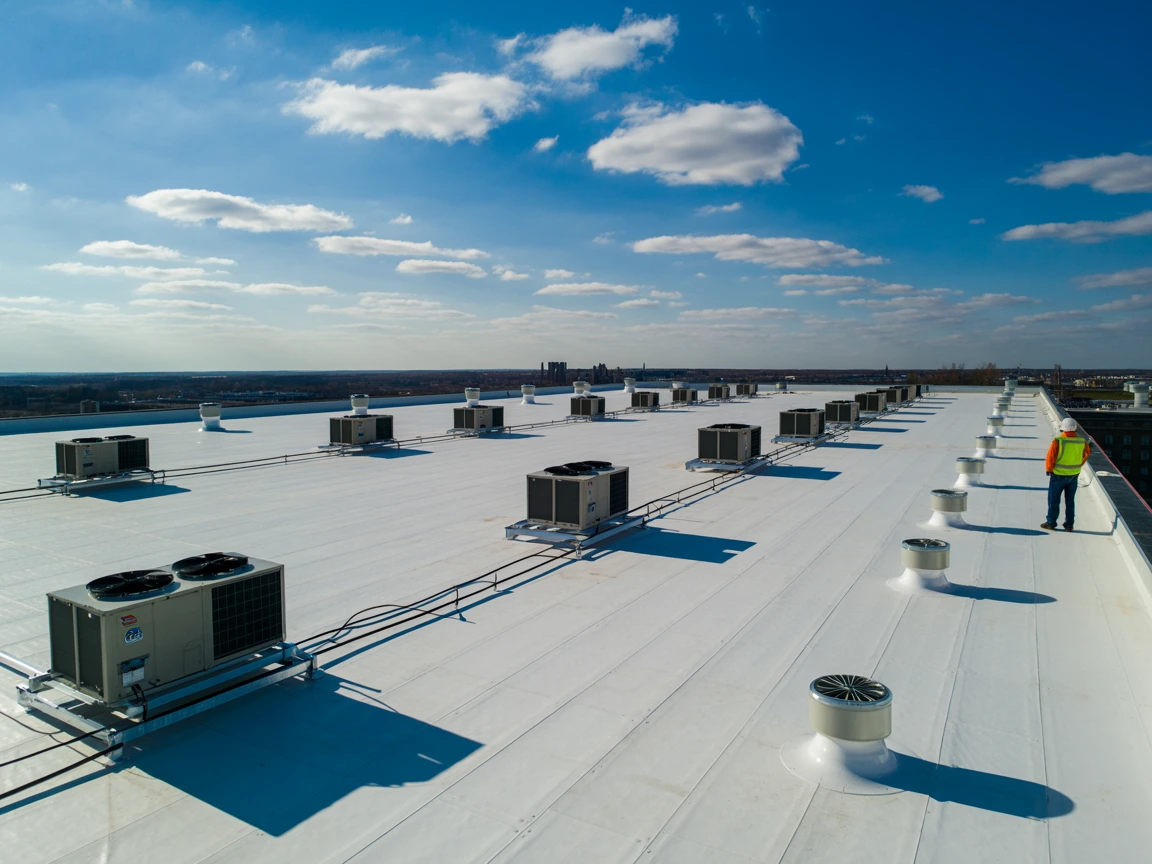
What Is TPO Roofing? A Guide for Commercial Building Owners
By Max Wensinger, owner of Under One Roof. Updated October 2026.
TPO is the white, single-ply membrane you see on a lot of flat commercial roofs around Dallas, Fort Worth, Farmers Branch, Carrollton, and Plano. This guide explains what it is, how it's made and attached, which thickness to pick, and how it compares to EPDM and PVC. If you're pricing a new roof for your building, our commercial TPO roofing page covers cost, our process, and real jobs.
What Is TPO Roofing?
TPO stands for thermoplastic polyolefin. It's a single-ply roofing membrane made for flat and low-slope roofs. The membrane blends polypropylene and ethylene-propylene rubber, which makes it flexible and tough at the same time.
Most TPO is white. A white roof reflects sunlight instead of soaking it up, so the building underneath runs cooler and the air conditioning works less. The seams between sheets are heat-welded, which fuses them into one continuous surface.
You'll find TPO on warehouses, office buildings, retail centers, restaurants, and multi-family buildings across the DFW area.
How TPO Membranes Are Made
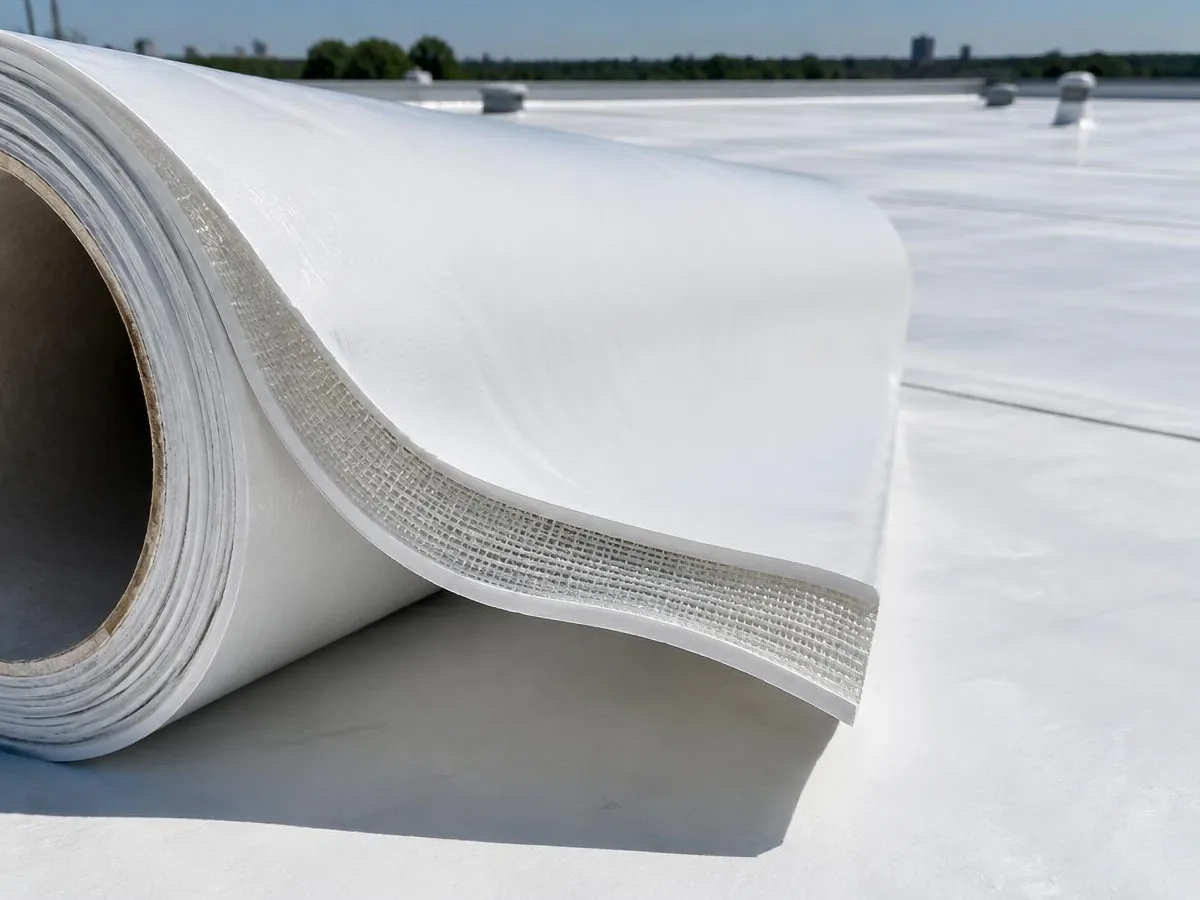
Manufacturers blend the base materials with heat and pressure, then add UV stabilizers, flame retardants, and color. Commercial TPO is reinforced, which means a polyester scrim is sandwiched inside the sheet.
We recommend reinforced TPO on every commercial building. Non-reinforced sheets are made for small details and flashing, not for covering a whole roof.
White is the standard because it reflects the most heat. Tan and gray are also made if you want the roof to match the building, but they reflect less.
TPO Thickness: 45, 60, or 80 Mil
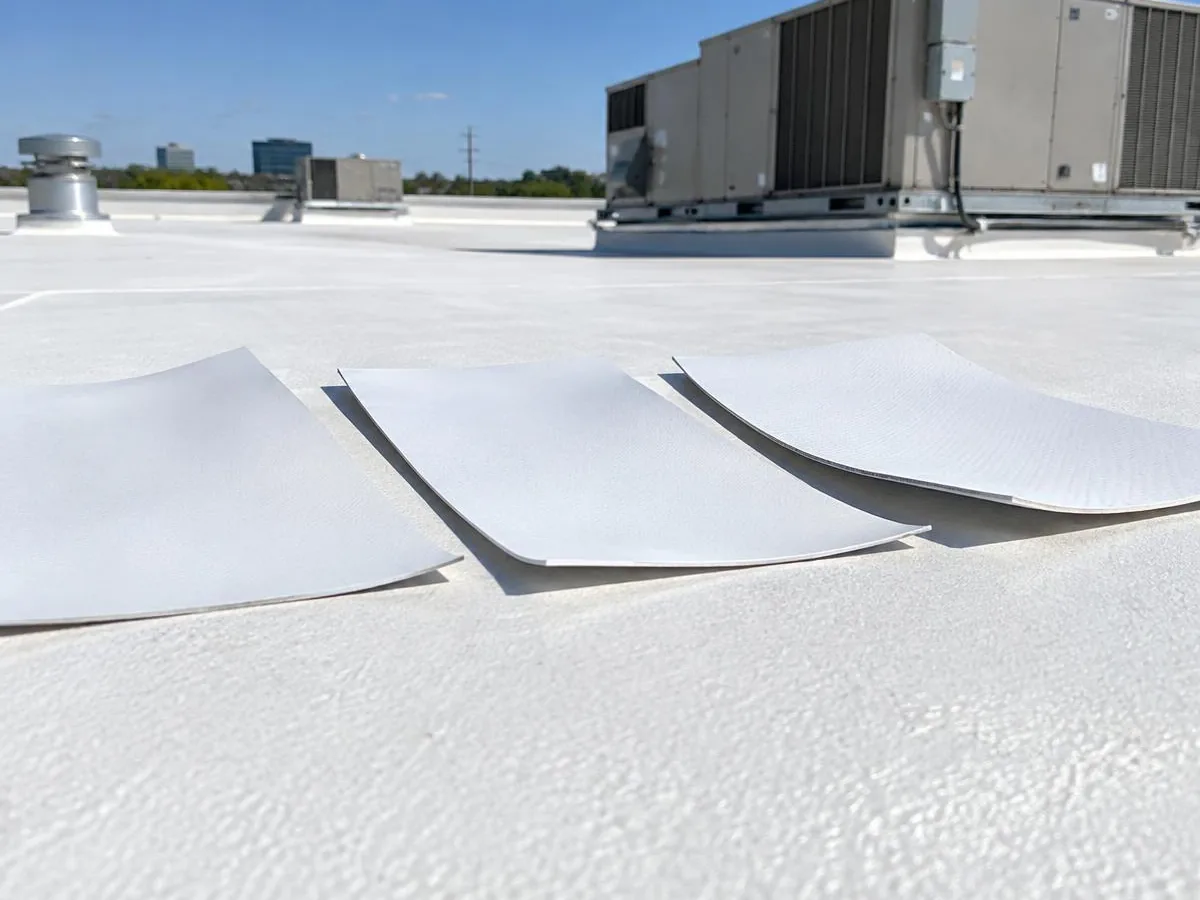
TPO is sold by thickness. The three common options are 45, 60, and 80 mil.
| Thickness | Best for |
|---|---|
| 45 mil | Light foot traffic and basic protection |
| 60 mil | Standard commercial roofs with moderate traffic |
| 80 mil | Roofs with HVAC units, heavy equipment, or regular service traffic |
Most commercial buildings around Dallas and Farmers Branch do well with 60 mil. If your roof holds several HVAC units or service crews walk it often, 80 mil holds up better. We look at how the roof gets used before we recommend a thickness.
How a TPO Roof Gets Attached
Max explains how a vent-secured TPO roof stays down without screws.
There are four common ways to hold a TPO membrane down. The right one depends on the deck, the building height, and the wind exposure.
Attachment methods:
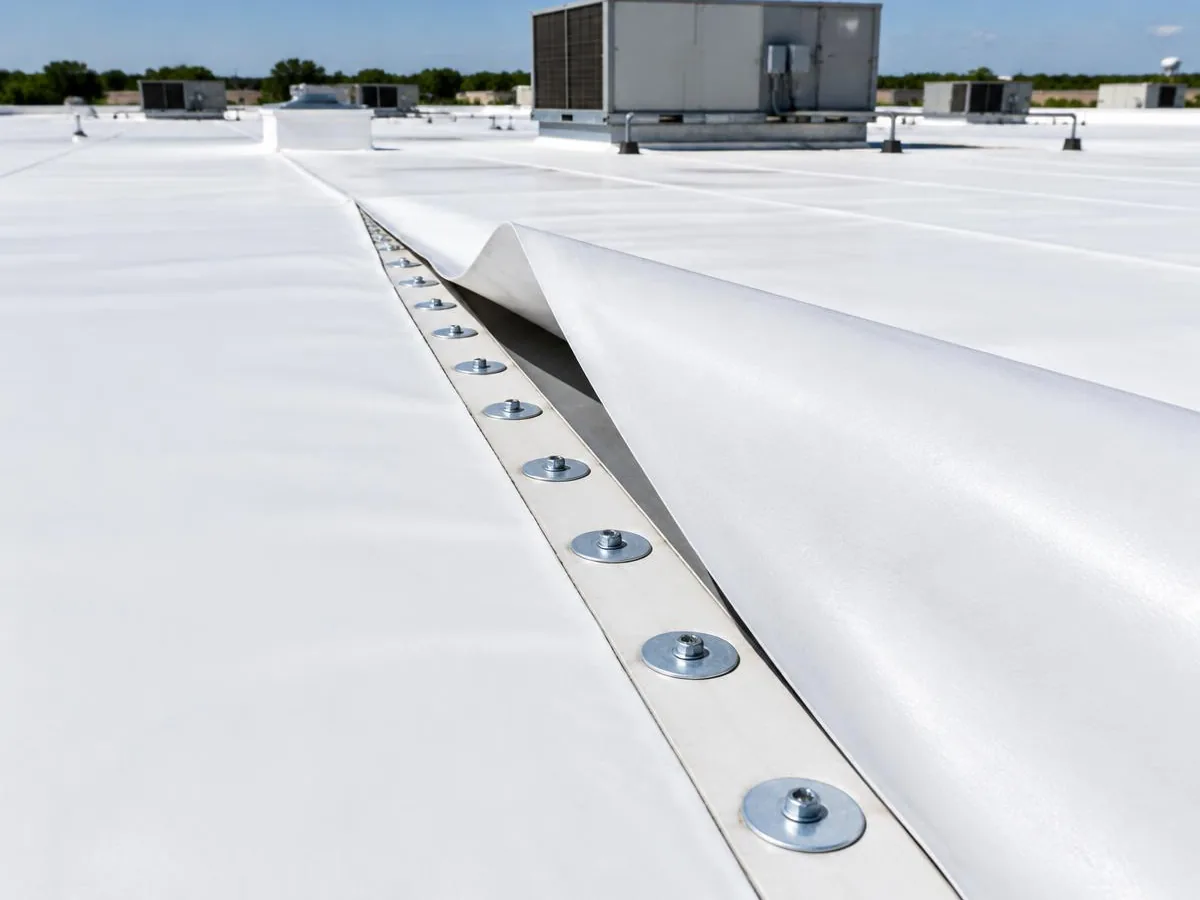
- Mechanically attached: the membrane is fastened to the deck with screws and plates, then the seams are heat-welded over them. It works on most commercial buildings.
- Fully adhered: the whole sheet is glued to the surface below. It gives the strongest wind resistance, which is why we recommend it on taller buildings and open, windy sites.
- Ballasted: river rock or pavers hold the membrane in place. It's simple, but the roof structure has to be able to carry the weight.
- Vent-secured: vacuum vents across the roof hold the membrane down with no screws through it. That's the system on our current Dallas tar and gravel replacement.
On a low-slope roof, drainage gets planned at the same time. If the deck doesn't pitch water toward the drains, tapered insulation under the TPO does it.
How TPO Works on Different Buildings
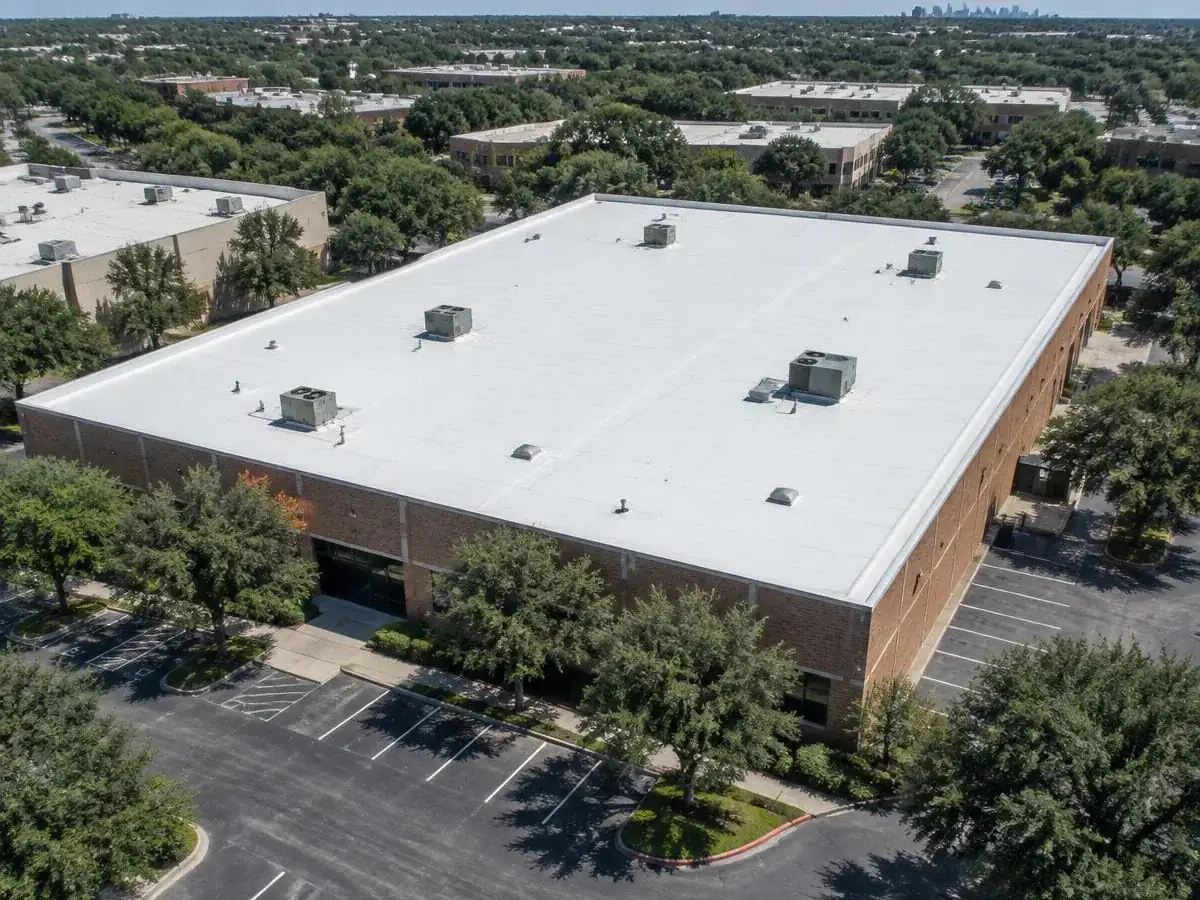
Warehouses
Big open roofs with long runs of membrane. TPO's heat-welded seams keep those long runs watertight, and the white surface helps with ponding and UV.
Office buildings
A white TPO roof cuts the heat coming through the roof, so the HVAC works less in a Texas summer and tenants stay comfortable.
Retail centers
Lots of rooftop equipment and service traffic. The membrane handles foot traffic, and the welded seams stay sealed around penetrations.
Restaurants
TPO resists the grease and chemicals that come out of kitchen exhaust, and it cleans up during routine maintenance.
Multi-family buildings
A long-lasting roof means fewer disruptions for residents. On buildings over two stories, the job takes extra lifting equipment and safety steps during tear-off.
TPO vs. EPDM vs. PVC
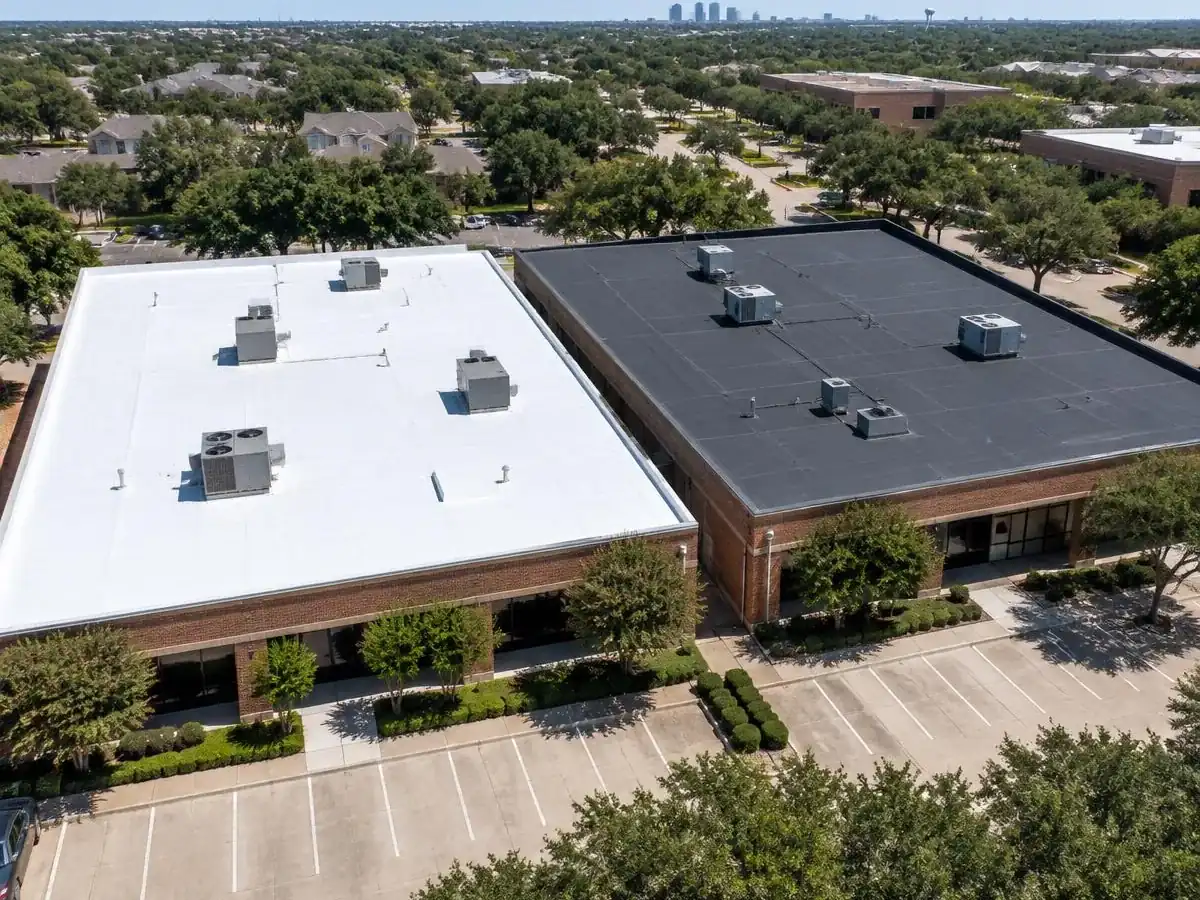
These are the three single-ply membranes you'll see on commercial flat roofs. Here's how they compare.
| System | Color | Seams | Relative cost | Best for |
|---|---|---|---|---|
| TPO | Usually white | Heat-welded | Middle | Most commercial buildings |
| EPDM | Usually black | Glued or taped | Lower | Budget projects where heat gain matters less |
| PVC | Usually white | Heat-welded | Higher | Roofs with heavy chemical or grease exposure |
For most commercial buildings in North Texas, TPO hits the best balance. You get the reflective white surface and welded seams of PVC at a lower price, and a much cooler roof than black EPDM.
Environmental notes:
- TPO is recyclable at the end of its life
- It's made without chlorine
- A white roof helps reduce the urban heat island effect
- Reflective TPO can count toward LEED points on qualifying projects
TPO Manufacturers We Work With
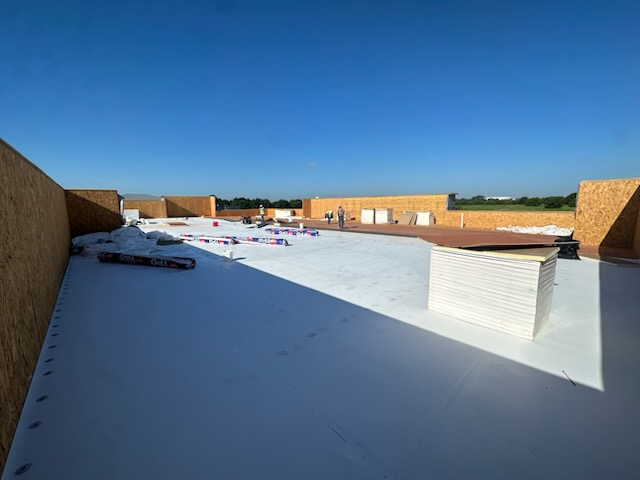
On commercial jobs we work with manufacturer-certified installers for GAF, Versico, and Firestone TPO, depending on the product the building needs.
The systems:
- GAF EverGuard TPO, including a fleece-backed version. It's what we used on a 25,000 square foot office building in Waxahachie: a fully adhered GAF EverGuard install in October 2025.
- Versico TPO, including VersiFleece fleece-backed membrane.
- Firestone UltraPly TPO, with options for induction welding.
Fleece backing is a felt-like layer on the underside of the sheet. It helps the membrane bond in fully adhered systems and stand up to foot traffic.
Certified installs qualify for the manufacturer's longer warranty options. Coverage depends on the membrane, the thickness, and how it's installed. Our commercial TPO roofing page explains how we handle warranties.
Taking Care of a TPO Roof
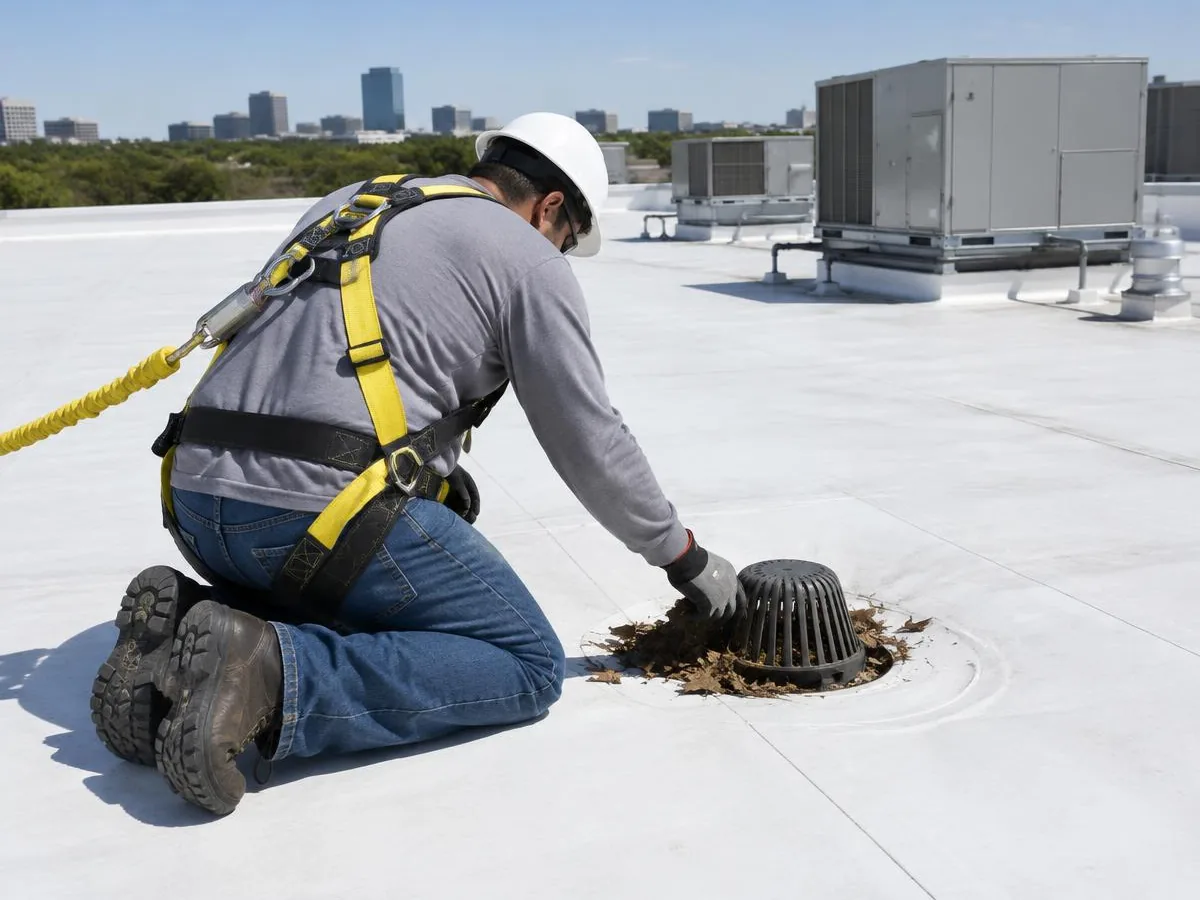
A well-installed TPO roof can last 20 to 30 years with regular care, according to NRCA guidance. Most problems we see start small.
Common TPO problems and how to prevent them:
- Seam failures: usually from a bad weld at install. Every seam should be probed after it's welded.
- Punctures: from dropped tools, loose screws, or hail. Walkway pads around HVAC units help, and the roof should be walked after any other trade works up there.
- Ponding water: water that sits more than 48 hours after rain wears the membrane faster. Clear drains and good slope prevent it.
- Shrinkage: TPO can pull back slightly as it ages, especially at walls and curbs. Proper attachment and edge details keep it in place.
A simple inspection schedule:
- Walk the roof in spring and fall
- Clear drains and scuppers and pull debris off the field
- Check flashing around every penetration
- Look again after hail or high winds, and take photos
What a TPO Roof Costs, and When to Replace One
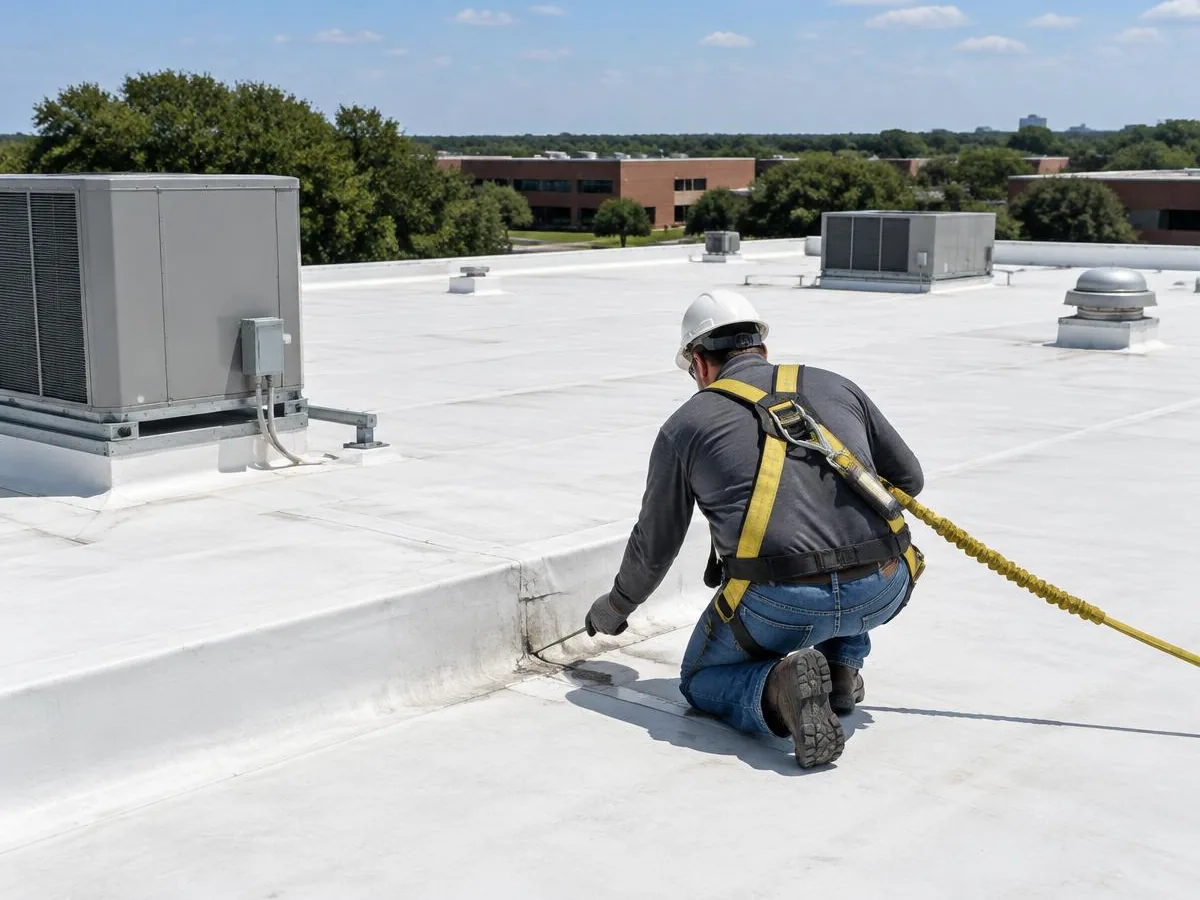
TPO runs about $5 to $15 per square foot right now. Tariffs and fuel costs have pushed prices up, and your number depends on the roof size, thickness, the layers coming off, and the deck. Our commercial TPO roofing page breaks down what drives the price.
Small problems like a puncture or one bad seam can be repaired. Wet insulation across large areas, seams opening in several places, or widespread hail damage usually means it's time for a new roof. Our commercial TPO roofing page walks through how that call gets made.