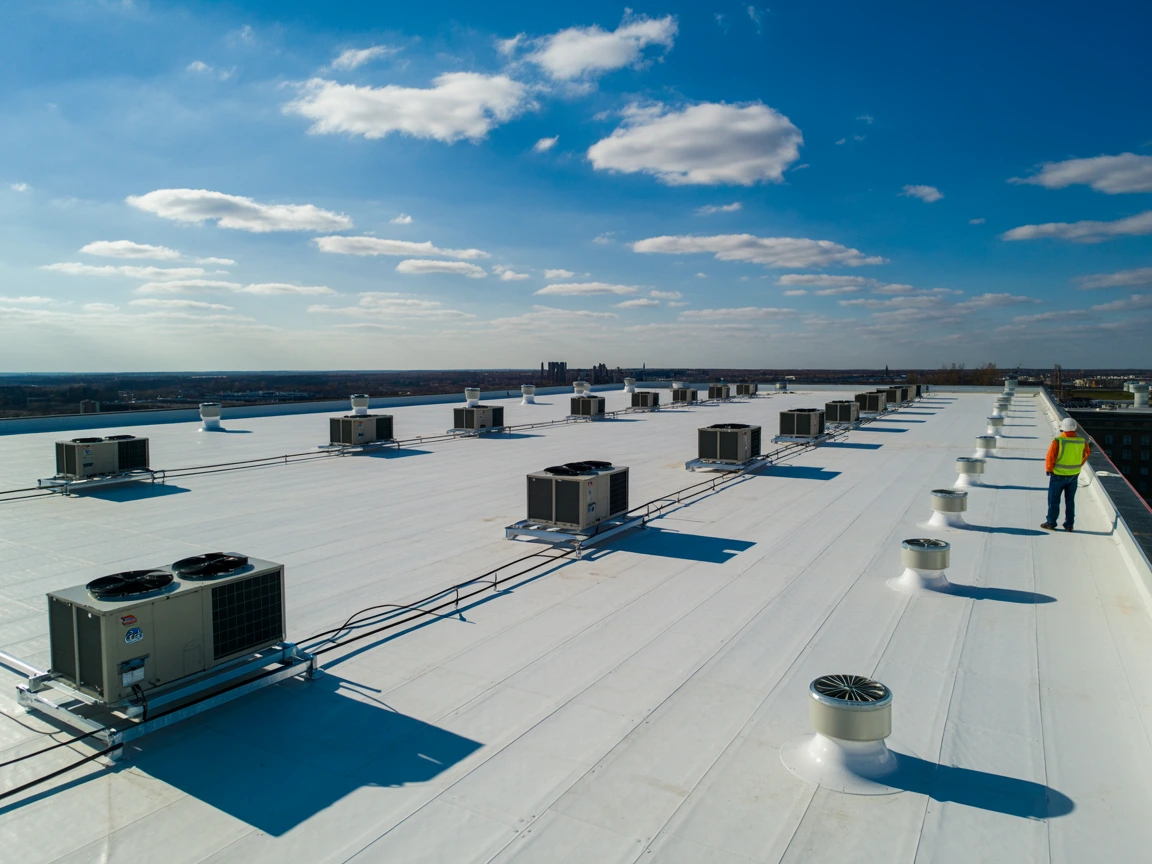
Commercial TPO Roofing Based in Farmers Branch Serving DFW
Energy-efficient single-ply membrane systems with 20-30 year lifespan
Get Free Estimate: (214) 649-5984Do you own or manage a commercial building in North Texas with a flat roof? Are you starting to think about a replacement? TPO is probably the system you've heard about most. There's a reason for that. It works well in Texas heat, the white reflective surface cuts cooling costs, and the heat-welded seams hold up better than glued systems over time. We install TPO for warehouses, office buildings, retail centers, and multi-family properties in Farmers Branch and across Dallas and the surrounding area. We work with manufacturer-certified installers for GAF, Versico, and Firestone TPO systems, which means you get access to the longer warranty options that those manufacturers reserve for their certified contractors. Costs typically range from $5 to $15 per square foot, and a well-installed TPO system can last 20 to 30 years.
TPO is one option in our Farmers Branch commercial roofing work.
Why North Texas Building Owners Choose Us for Commercial TPO Roofing
Picking a commercial TPO roofing contractor in North Texas isn't a small decision. You're looking at a 20 to 30 year investment, and the difference between a good install and a bad one shows up the first time it rains heavy or the wind kicks up over 50 mph. Most building owners want to know two things up front: do we know what we're doing, and will the warranty actually hold up when it's needed.
We're a GAF-certified, fully insured commercial roofing contractor based in Farmers Branch, working with manufacturer-certified installers across the Dallas-Fort Worth metroplex. That certification matters because it gives you access to the longer warranty programs that GAF, Versico, and Firestone only offer through certified contractors. A standard warranty is one thing. The enhanced coverage that comes with certified installation is another, and most building owners don't realize the difference until they need to file a claim.
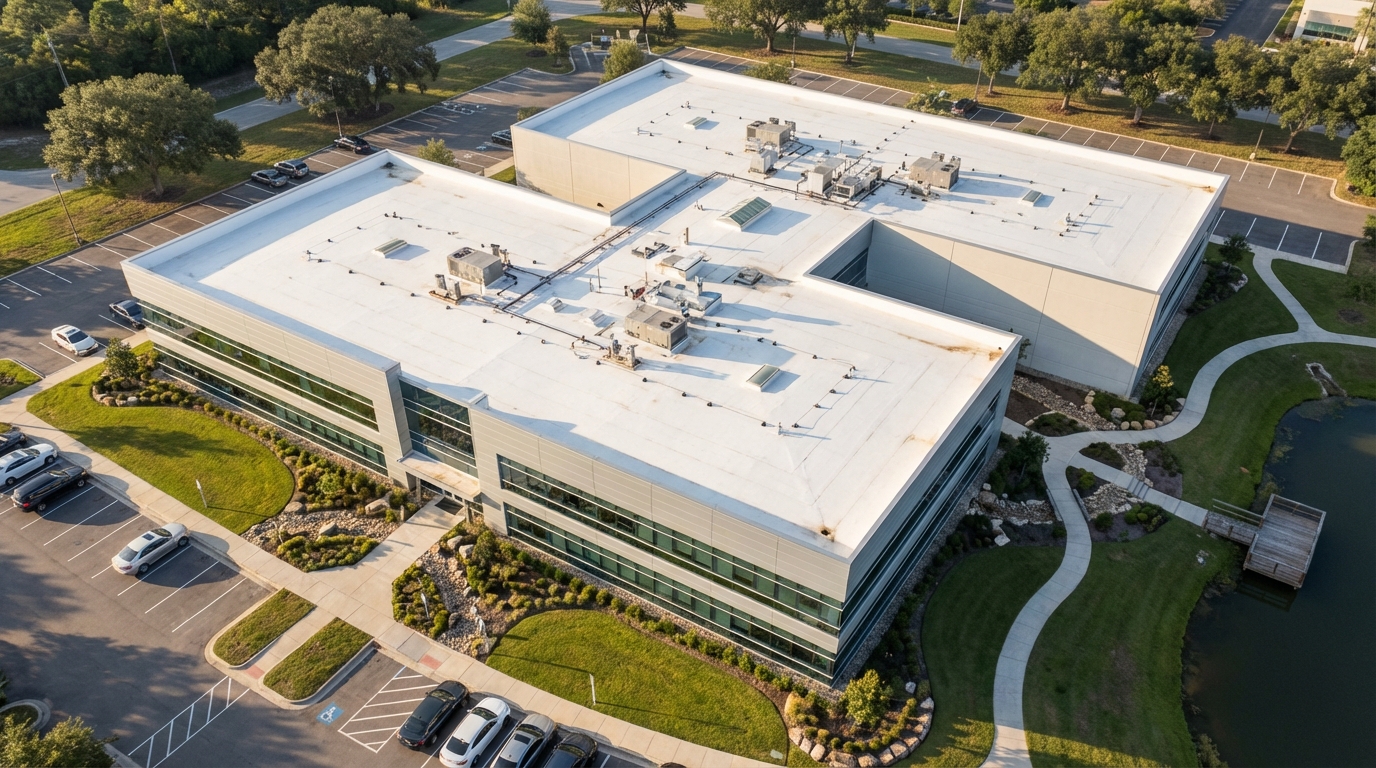
We've installed TPO on warehouses, office buildings, retail centers, and multi-family properties throughout the metroplex. Each type of building comes with its own logistical challenges. Warehouses usually mean large spans and tight project timelines. Office buildings need quiet hours and tenant coordination. Retail centers run on tight operational schedules and can't lose foot traffic for weeks. Multi-family properties need careful resident communication. We've worked through all of those scenarios.
Our TPO Expertise
Whether you're a property manager handling a building you've never re-roofed before, or you're working with an architect on a new commercial build from the ground up, we can walk you through the TPO options and help you pick the system that matches your building, your budget, and your warranty preferences. No high-pressure sales, no obscure pricing. We'll show up, look at the roof, and tell you what makes sense for your situation.
Recent TPO Installation Project
25,000 Square Foot Office Building - Waxahachie, TX
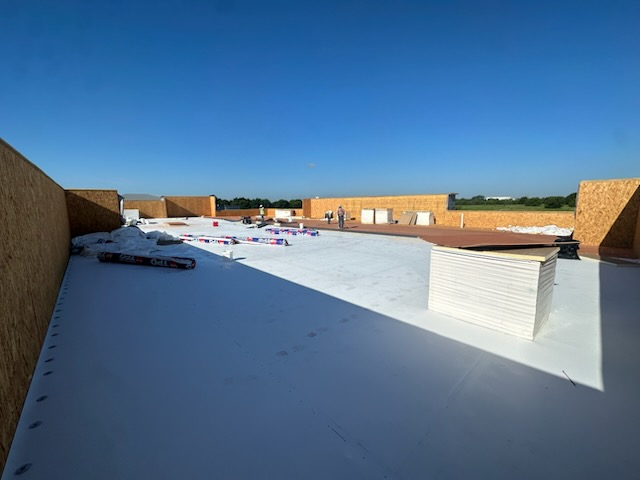
In October 2025, we completed a fully adhered GAF EverGuard TPO installation on a 25,000 square foot office building in Waxahachie. This project showcased our ability to handle large commercial installations efficiently, even during Texas's challenging weather conditions.
The fully adhered system provides maximum wind uplift resistance for this multi-story commercial property. GAF EverGuard's fleece backing made installation smoother despite the heat, ensuring quality results and comprehensive warranty coverage for the property owner.
Max, owner of Under One Roof, discusses the Waxahachie TPO installation
Why Choose TPO Roofing?
Exceptional Durability
TPO membranes are built to handle what North Texas weather throws at them. The membrane resists UV degradation, which is the main cause of premature aging in flat roof systems in this part of the country. It also withstands ozone exposure and chemicals that can degrade other roofing materials over time. The flexibility built into the membrane means it won't crack when winter temperatures drop and won't soften excessively in summer heat. A properly installed TPO roof should give you 20 to 30 years of service, depending on the membrane thickness and how well it's maintained.
Energy Efficiency
The reflective white surface of a TPO roof reflects sunlight rather than absorbs it. That matters a lot in Dallas-Fort Worth summers, when the difference between a dark roof and a reflective one can mean a 50°F difference in surface temperature. Your HVAC system doesn't have to work as hard to keep the building cool, which shows up directly in your monthly energy bills. We've installed white TPO on retail centers and warehouses across DFW, where property managers have noticed a difference in cooling costs the very first summer after installation. The Department of Energy has data backing this up, too, showing that reflective roofing can significantly reduce a building's cooling load.4 The EPA reports that solar reflectance from a cool roof can reduce peak cooling demand by 11 to 27 percent in air-conditioned buildings, which is a real number on a Texas summer power bill.3
Weather Resistance
North Texas weather is hard on roofs. Hail in spring, high winds throughout storm season, intense UV in summer, and freeze-thaw cycles in winter. TPO handles all of it better than most flat roof systems. The membrane is rated for high wind uplift, especially when installed as a fully adhered system. It resists punctures from hail and debris better than older single-ply systems, and the heat-welded seams won't pull apart in extreme temperature swings the way some chemically bonded systems can. For commercial buildings in open areas with high wind exposure, TPO is one of the better-performing options on the market.
Cost-Effective
TPO costs less than PVC roofing while delivering similar reflective performance and durability. It's also less expensive to install than a built-up roofing system, especially on larger commercial roofs where labor costs add up. When you factor in the 20 to 30-year lifespan, the cooling cost savings, and the warranty coverage available through certified installers, the long-term math usually favors TPO for budget-conscious commercial properties. We provide transparent pricing once we've had a chance to inspect the roof and understand what your building actually needs. No surprise charges, no upselling.
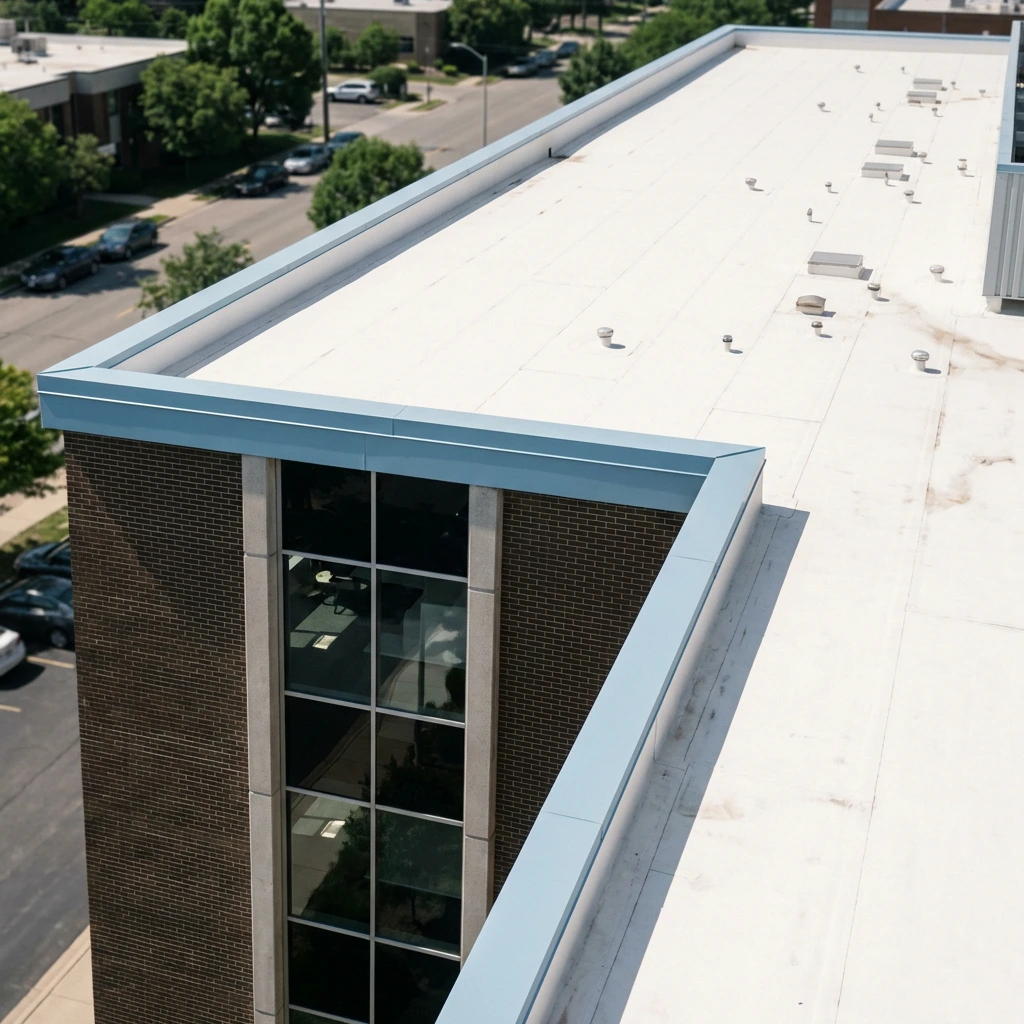
TPO Roofing Features
Want to Learn More About TPO Roofing?
Read our comprehensive guide covering TPO costs ($5-15/sq ft), manufacturer brand comparisons (GAF EverGuard, Versico, Firestone), long-term performance data from real installations including our recent 25,000 sq ft Waxahachie project, and detailed maintenance schedules for maximizing your roof's 20-30 year lifespan.
Read Complete TPO Roofing Guide →TPO Membrane Thickness Options
Choose the right thickness for your commercial building
| Thickness | Best For | Expected Lifespan |
|---|---|---|
| 45 mil | Light foot traffic, basic protection | 15-20 years |
| 60 mil | Standard commercial use, moderate traffic (Most Popular) | 20-25 years |
| 80 mil | Heavy equipment, high-traffic roofs, HVAC units | 25-30 years |
TPO Roofing Investment
TPO roofing typically ranges from $5 to $15 per square foot depending on several factors:
Membrane Thickness
45, 60, or 80 mil options affect material costs
Roof Size & Complexity
Larger roofs cost less per square foot as fixed costs spread
Installation Method
Mechanically attached, fully adhered, or ballasted systems
Existing Conditions
Deck repairs or structural work may be needed
Larger commercial roofs benefit from better per-square-foot pricing. We provide transparent quotes after a thorough roof assessment.
Our TPO Installation Process
Professional 6-step process ensuring quality and longevity
Comprehensive Roof Assessment
Before we touch a single roll of membrane, we walk the existing roof and document its condition top to bottom. We measure the area accurately, check the drainage patterns, look for soft spots in the deck, and identify any existing damage that needs repair before installation. We also check for HVAC penetrations, drains, and any rooftop equipment that will affect the installation plan. If the deck needs repair work or the insulation has moisture damage, we flag it before we start so there are no surprises mid-project.
Surface Preparation
A TPO system is only as good as the surface it's installed on. We clean the roof deck thoroughly, remove any debris, and let everything dry out completely before moving forward. If the existing roof needs to come off, we tear off the old material and inspect the deck underneath for damage. Any structural repairs get handled at this stage. Cutting corners on prep is the most common reason flat roof systems fail early, so we don't.
Insulation Installation
The insulation layer is what gives your TPO system its thermal performance. We install energy-code-compliant insulation in the right thickness for your building, which usually means polyisocyanurate or similar rigid foam boards. The insulation also creates the slight slope needed for proper drainage on what looks like a flat roof. Done right, the insulation layer helps your TPO system qualify for ENERGY STAR ratings and contributes to the long-term energy savings the system is known for.
TPO Membrane Installation
The membrane itself gets installed using one of three methods depending on your building. Mechanically attached systems use fasteners and plates to secure the membrane to the deck, which works well for most commercial applications. Fully adhered systems use bonding adhesive across the entire roof surface and offer the strongest wind uplift resistance, which is what we recommend for buildings in open or high-wind areas. Ballasted systems use weight (usually river rock) to hold the membrane in place. We follow manufacturer specifications exactly on fastener patterns, adhesive coverage, or ballast distribution to make sure the warranty stays valid. Installation also follows the standards published by the National Roofing Contractors Association, which set the industry baseline for membrane attachment, seam welding, drainage, and edge metal on commercial low-slope roofs.1
Heat-Welded Seams
This is where TPO earns its reputation. Every seam where two pieces of membrane meet gets heat-welded with a specialized welding tool that fuses the membrane edges together into a single piece. When done correctly, the welded seam is actually stronger than the membrane itself. We probe every seam with a metal pick after welding to confirm proper bonding. Any seam that doesn't pass gets re-welded on the spot. A failed seam is the most common point of failure on poorly installed TPO roofs, which is why this step gets so much attention.
Final Inspection & Documentation
Once installation is complete, we walk the roof one more time and check everything against the manufacturer's specifications. We document the installation with photos, complete the warranty paperwork, and walk the property owner or manager through what was installed and how to maintain it. You get a complete warranty packet with manufacturer registration, our workmanship warranty, and any inspection schedules required to keep the warranty valid. We also leave you with our contact information so you have a single point of contact for any issues that come up later.
Premium Warranty Protection
Premium warranties up to 20 years from leading manufacturers
We offer access to premium warranties up to 20 years on TPO installations through top manufacturers including GAF, Versico, and Firestone. By working with manufacturer-certified installers, we ensure your roof qualifies for the best warranty coverage available.
What's Covered:
Warranty Options:
Your warranty length depends on membrane thickness, installation method, and manufacturer selection. We help you select the coverage that matches your building's needs and budget, so the roof stays protected for the length of its service life.
TPO vs. Other Commercial Roofing Systems
Why TPO offers the best value for most commercial buildings
More Affordable Than PVC
TPO offers similar energy efficiency and performance to PVC roofing at a lower price point, making it ideal for budget-conscious commercial projects.
More Energy Efficient Than EPDM
Unlike black rubber EPDM roofing that absorbs heat, TPO's white reflective surface significantly reduces cooling costs throughout hot Texas summers.
Heat-Welded Seams
TPO seams are heat-welded to create bonds stronger than the membrane itself, unlike chemically glued systems that can fail over time.
Best Balance of Cost and Performance
TPO delivers the reflective white surface and durability of premium systems without the higher price tag. It won't crack in winter or soften excessively in summer.
We install TPO systems from industry-leading manufacturers including GAF, Versico, and Firestone. Each manufacturer offers different warranty options and performance features. TPO roofing gives you the reflective white surface and durability of premium systems without the higher price tag.
How TPO Compares to EPDM in DFW Climates
EPDM rubber roofing has been around longer than TPO and has a solid track record on commercial buildings. It's typically a darker color, which means it absorbs more heat than a white TPO membrane. That can be a significant tradeoff in Dallas-Fort Worth summers, when surface temperatures on dark roofs routinely cross 150°F. EPDM is usually glued down or mechanically attached, while TPO uses heat-welded seams that form a permanent bond once the membrane is installed correctly.
Both systems work in North Texas. EPDM holds up well in extreme weather and has been a reliable workhorse on commercial buildings for decades. TPO offers better energy performance in hot climates and tends to deliver better long-term cooling cost savings. For a building owner trying to decide between the two, it usually comes down to budget, building usage, and how much weight you put on the energy efficiency benefit. We can walk you through both options and give you honest pricing on each.
How TPO Compares to PVC and Modified Bitumen
PVC roofing is technically similar to TPO and delivers comparable performance in many ways. The main difference is cost. PVC is generally more expensive than TPO while offering similar reflective properties and durability. For most commercial buildings, TPO delivers nearly the same performance at a lower price point, which is why it's become the more popular choice over the last decade.
Modified bitumen is an older flat roof technology, basically an asphalt-based membrane installed in layers. It's still used on some commercial buildings, especially older ones, but it's heavier than single-ply systems and doesn't offer the reflective benefits of TPO. For most new commercial roofing projects in DFW, TPO has displaced modified bitumen because it's lighter, more energy efficient, and easier to install on standard commercial decking.
Frequently Asked Questions
Common questions about TPO roofing systems
How long does TPO roofing last?
A properly installed TPO roof lasts 20 to 30 years. The exact lifespan depends on the membrane thickness, the quality of the installation, and how well the roof is maintained over its life. Thicker membranes (60 to 80 mil) typically last longer than 45 mil systems, and fully adhered installations tend to outperform mechanically attached systems over time.
Is TPO roofing good for Texas weather?
Yes, TPO is one of the better-performing flat roof systems for North Texas weather. The membrane stays flexible during winter freezes, which prevents cracking during sudden temperature drops. The reflective white surface helps it resist UV breakdown during intense summer heat, and the heat-welded seams hold up well against high winds and hail that DFW sees every storm season.
What thickness TPO membrane do I need?
Most commercial buildings perform well with 60 mil TPO, which is the standard thickness for typical commercial applications. If your roof has rooftop HVAC equipment that gets serviced regularly, heavy foot traffic, or you want maximum durability, 80 mil is the better choice. 45 mil works for basic applications with light foot traffic but doesn't offer the same long-term warranty options as the thicker membranes.
Can TPO be installed year-round?
Yes, TPO can be installed year-round in the DFW climate. We avoid installation during active rain or extreme weather, but North Texas typically has enough mild weather windows that scheduling isn't a major issue. Cold weather installation does require some adjustments to adhesive application and seam welding, but it's not a barrier to getting the job done in winter months.
How does TPO roofing save on energy costs?
TPO saves on energy costs by reflecting sunlight instead of absorbing it. A white TPO roof can stay 50°F cooler than a dark conventional roof on a hot summer day, which directly reduces the heat transferred into the building. That means your HVAC system doesn't have to work as hard to maintain indoor temperatures, and the energy savings show up in your monthly utility bills throughout cooling season.
Citations & Resources
- National Roofing Contractors Association: Roofing Guidelines
- ENERGY STAR: Roof Products and Cool Roofs
- U.S. Environmental Protection Agency: Using Cool Roofs to Reduce Heat Islands
- U.S. Department of Energy: Guide to Cool Roofs
Ready for Your
TPO Roofing?
Get a free, no-obligation evaluation from our GAF certified team in Farmers Branch. We'll inspect your property, provide a written estimate, and walk you through every option.
Want to pay over time? Check your financing options.


Need A Roofing Contractor? Request An Estimate!
Fill out the form and we'll get back to you promptly.
TPO Roofing Throughout Dallas-Fort Worth
We provide tpo roofing services across the Dallas-Fort Worth area: