Commercial Flat Roof Installation in Farmers Branch
TPO, EPDM & modified bitumen systems with full permit handling
Get Free Estimate: (214) 649-5984Dallas heat is real when it comes to commercial roofs. We're talking 100+ degree days, where your actual roof surface can hit 160 degrees, or more.
We install commercial flat roofs in Farmers Branch and across Dallas and the surrounding area. Office buildings in Uptown. Warehouses out in Northwest Dallas. Those quirky restaurant buildings in Deep Ellum that always have something unexpected going on with the structure. Each project is different, and honestly, that's what keeps this work interesting.
Flat roofs are one part of our commercial roofing services for local properties.
Proper installation starts with understanding what the City of Dallas actually requires, and they have firm rules for commercial roofing projects. The good news? We handle all that permit paperwork and inspection coordination. You shouldn't have to become an expert in building codes just to get a new roof.
A well-installed flat roofing system does two main things. Keeps your building dry when it rains (obviously). And cuts your cooling costs, which in Texas summers, yeah, that matters. The U.S. Department of Energy has studied this pretty extensively, and they've documented how reflective roofing reduces heat gain in buildings.1 Real data, not just marketing hype.
Our process covers deck inspection through final warranty documentation. Same team, start to finish. No handoffs to random subcontractors you've never met.
TPO, EPDM, and Modified Bitumen Serve Different Dallas Buildings
Not all flat roofing membranes work the same way. We install three main types around Dallas, and picking the wrong one for your building type? That's an expensive mistake.
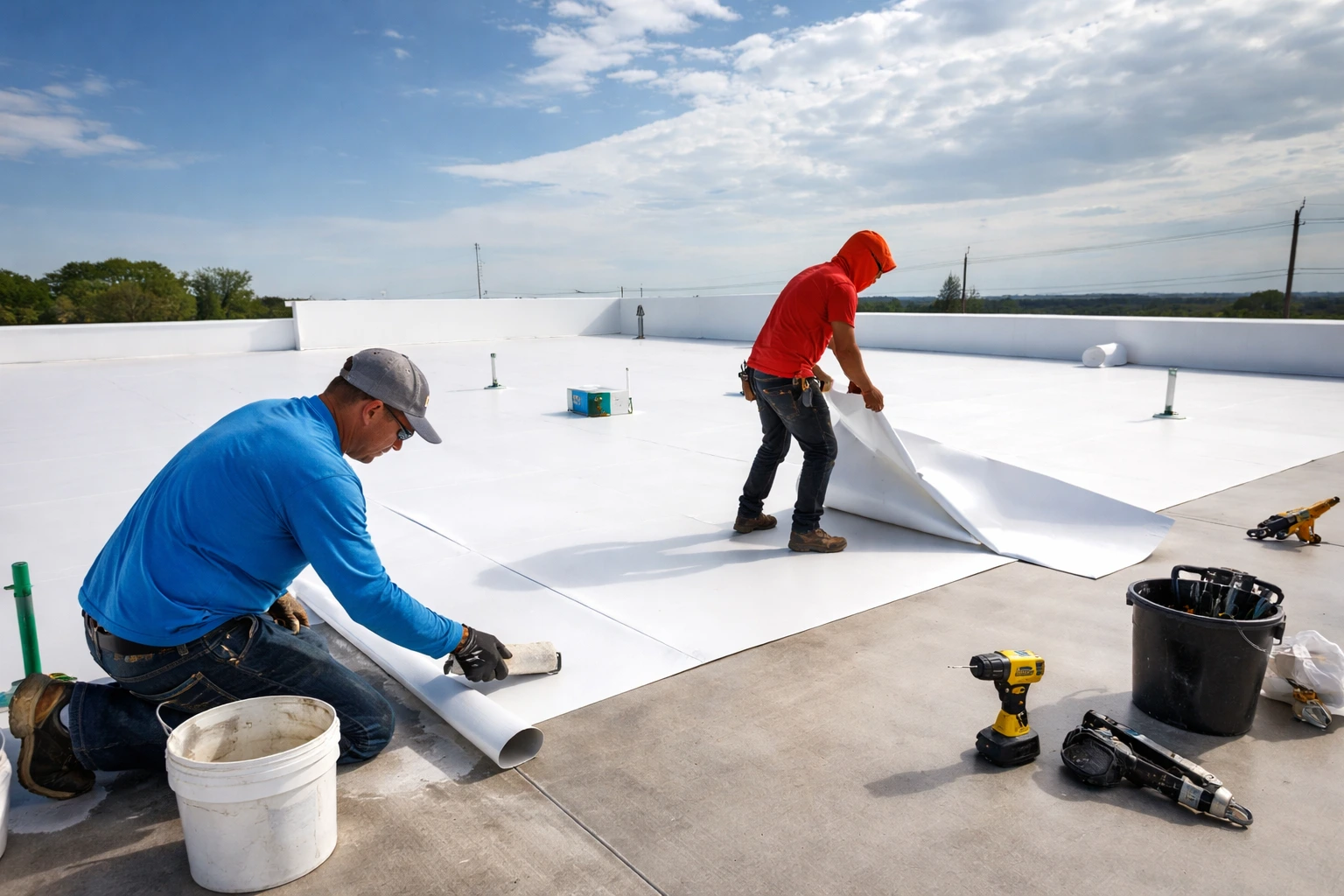
TPO (Thermoplastic Polyolefin) is what we recommend most often for office buildings. The white surface reflects heat instead of soaking it up like a sponge. Your AC units aren't running nonstop trying to cool a building with what's essentially a heat magnet on top. A reflective surface stays a lot cooler than a dark one, and we've seen that show up on actual utility bills. Real money every single month.
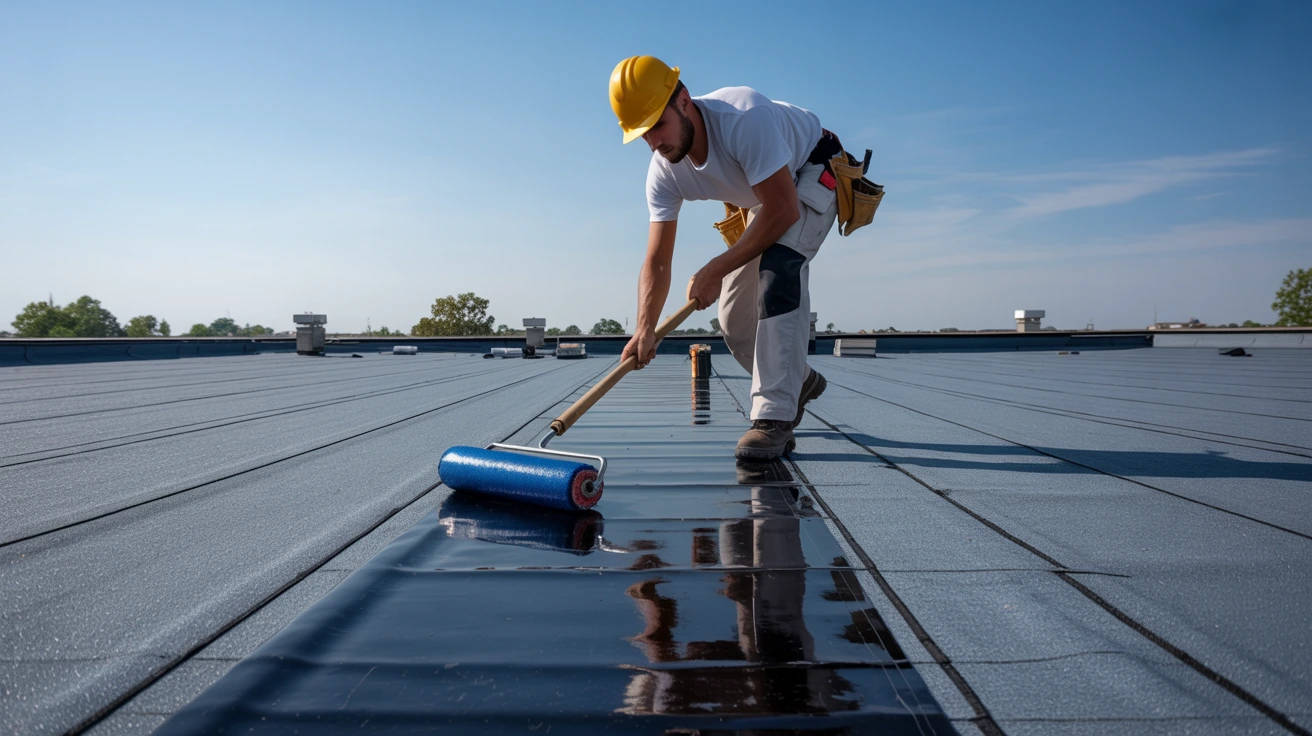
EPDM (Ethylene Propylene Diene Monomer) costs less upfront, which is exactly why warehouse owners gravitate toward it. It's basically a black rubber membrane that handles our crazy temperature swings without cracking apart, as long as it goes down right. That's the whole game with EPDM. Cut corners on the install, and it doesn't matter what membrane you use.
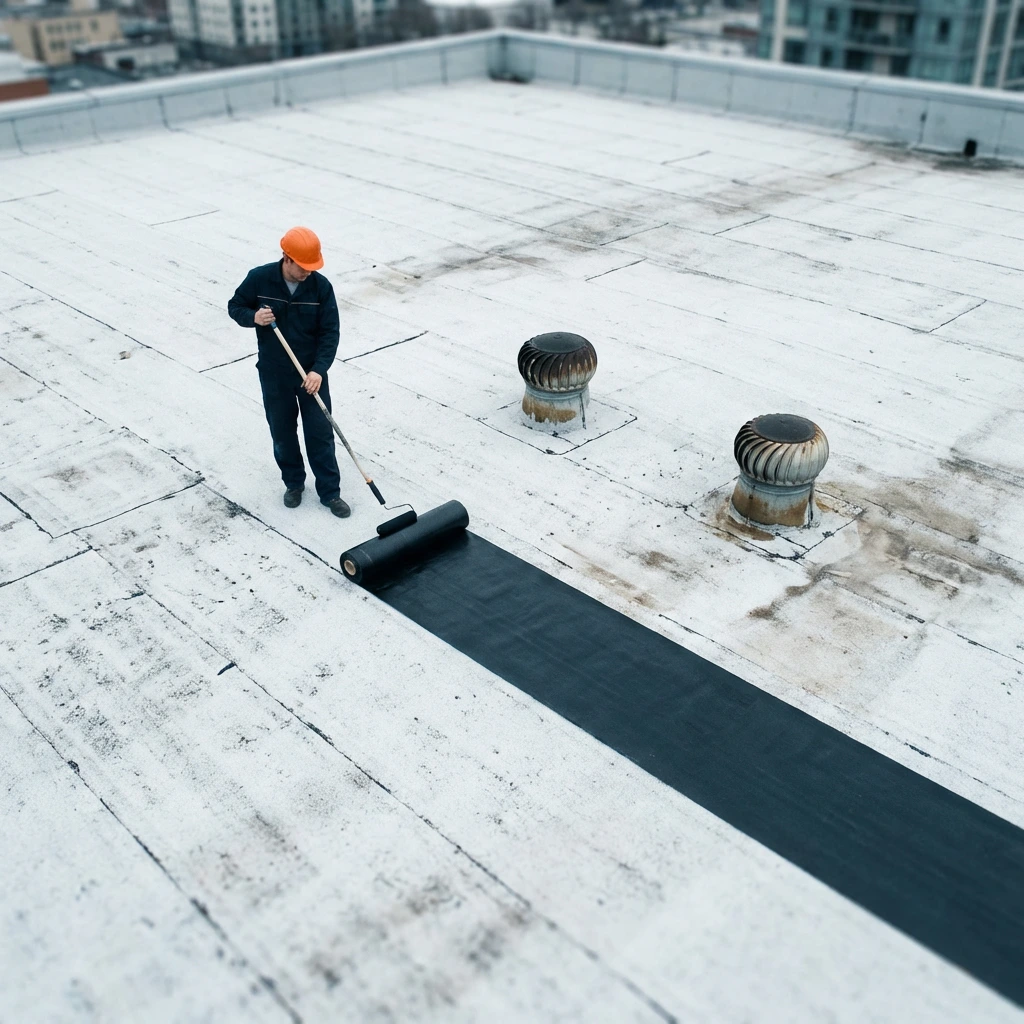
Modified Bitumen works great for retail and restaurant buildings. It comes in rolls, we install it with either heat or adhesive, depending on the specific situation. The material seals really nicely around all those rooftop HVAC units and exhaust vents. Restaurants especially appreciate that because they've got so much equipment up there.
Dallas weather just beats the heck out of roofing systems. We swing from 105 degrees in August down to 25 in January. Your membrane has to expand and contract through those cycles without failing. We help you figure out the right system based on building type, budget, and how long you're planning to own the property. Five years versus twenty years? Different answers.
Deck Condition and Building Code Determine Installation Scope
The roof deck is what everything else sits on. If it's compromised, your new membrane won't last, no matter how perfect the installation is.
We see problems during inspections constantly. Especially in those Northwest Dallas warehouses. Water damage is probably the most common issue. Wood decking just rots over time. Metal panels corrode. Sometimes, property owners have no idea how bad it is until we actually get up there and inspect.
What we're checking for:
- Structural damage: sagging areas, rotted wood, corroded metal panels that have rusted through
- Ponding areas: those low spots where water just sits there for days after it rains
- Code issues: missing fire barriers, inadequate ventilation, or outdated materials that no longer meet current code
Dallas enforces current building code on commercial roofs, and those codes aren't arbitrary bureaucracy. They exist because buildings have caught fire, roofs have blown off in windstorms, structures have collapsed. Fire resistance, wind uplift ratings, structural load capacity. It all matters when you're protecting a building worth hundreds of thousands or millions of dollars.
Sometimes we only need minor deck repairs before installing your new roof. Cool, easy project. Other times? The deck needs major work. Or complete replacement. Nobody likes finding that out, but better to discover it during our inspection than three months after we've installed a new membrane over rotting decking.
You'll get a detailed written scope of work from us. Plain English explanation of what your deck needs and why. No construction jargon that requires a translator.
City of Dallas Requires Permits for All Commercial Roof Projects
Every commercial roof project in Dallas needs a permit. Every single one. Even if your brother-in-law's friend says you don't, you do.
We've been through the City of Dallas permit process plenty of times, so we handle it for you. You submit plans for review, the city marks them up, and approval takes time. It's worth planning your project around that, because the city moves at its own pace and you can't really rush it.
Inspections happen at different stages throughout the project. They check deck prep, they check insulation, and they check the final membrane. Each one verifies the work actually meets safety and energy code.
Some property owners grumble about permit costs and delays, and that's understandable. But here's what you're actually getting: official documentation that your roof meets current building code. When you go to sell the building. When your insurance company starts asking questions after a hailstorm. When a future buyer does their due diligence. Those permit records prove your roof was done right. That has real value.
We handle all the city paperwork and inspector coordination. You've got enough to worry about running your business.
Proper Drainage and Insulation Prevent Costly Problems
Restaurant owners in Deep Ellum understand drainage problems on a deep level. Those old buildings with flat roofs that pond water after every single rain? Yeah.
Here's something that surprises most people. Flat roofs aren't actually flat. The National Roofing Contractors Association sets the low-slope and drainage standards the industry builds to,2 and even a low-slope roof needs a slight pitch, usually at least 1/4 inch per foot, to move water toward the drains. Doesn't sound like much, but that subtle slope makes all the difference between water draining and water just sitting there.
We create that slope using tapered insulation. The boards are different thicknesses, thicker on one end, thinner on the other. Stack them correctly and you've built in the drainage gradient you need. It's actually pretty elegant when you think about it.
Dallas storms can dump an insane amount of rain in a really short time. Like multiple inches in an hour. Your drainage system better be ready for that volume. We typically install multiple drains on commercial buildings:
- Primary drains: handle your everyday rainfall
- Overflow drains: these kick in when you get hammered by a heavy storm
- Scuppers: emergency outlets we cut through the parapet walls
Restaurants deal with an extra wrinkle, grease buildup around their kitchen exhaust fans. We've learned through experience to position drains away from those areas. Because grease plus drain pipes equals expensive service calls and maintenance headaches down the road. Nobody wants that.
Insulation does more than just create slope though. Keeps your building comfortable. Brings down energy costs noticeably. We follow current energy code requirements for insulation thickness - not optional, that's code. Your HVAC systems don't have to work nearly as hard maintaining comfortable temperature.
Water sitting on your roof for days at a time? That absolutely kills membrane lifespan. Good drainage design from day one protects your investment.
Heat-Reflective Membranes Lower Cooling Costs in Dallas
Roof color matters way more than most people realize. Black roofs absorb heat. White roofs bounce it away. Pretty simple physics, but the impact on your utility bills isn't small.
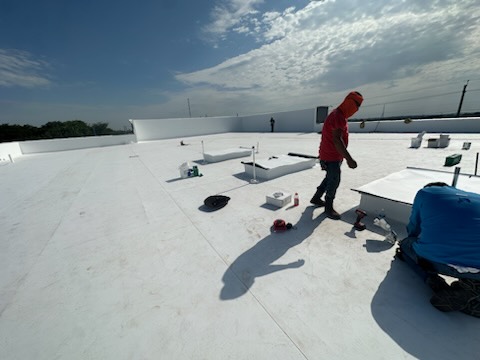
We've installed white TPO systems on retail centers in North Dallas. The property managers literally tell us their cooling costs dropped noticeably the first summer after installation. Makes sense when you think about it, since you're not constantly fighting heat radiating down through the roof deck into your building space.
According to the U.S. Department of Energy, a conventional roof can hit 150 degrees or more on a sunny afternoon, while a reflective roof stays more than 50 degrees cooler.1 That difference is substantial, especially in hot climates. Like, you know, Dallas in July.
What actually makes a membrane energy-efficient:
- High solar reflectance: bounces sunlight away before it turns into heat
- Lasting performance: stays reflective even after years of Dallas weather beating on it
- High emittance: releases absorbed heat quickly through thermal radiation
Commercial roofs in Dallas also have to meet the city's energy code for insulation and thermal resistance. Your roof has to hit those minimums. Not negotiable.
Property managers tell us their buildings run noticeably cooler that first summer after a reflective roof goes on, and on a 20,000 square foot building, a lower cooling load adds up over a season. That's real money back in the operating budget.
Your membrane choice affects operating costs for the next two or three decades. Worth spending time to get it right. We help you pick systems that meet energy codes and actually fit your budget reality.
Professional Installation Extends Roof Lifespan by Decades
Bad installation absolutely ruins good materials. We see it constantly around Dallas. Twenty-year membranes failing at the ten-year mark because the installation crew didn't know what they were doing. Or didn't care. Either way, it's expensive for the building owner.
Medical offices in Preston Hollow can't afford roof failures. You've got expensive diagnostic equipment. Patient care happening daily. A leak that forces you to close part of your building for repairs? That's serious money lost, plus you're disrupting patient schedules and making your life complicated.
We follow National Roofing Contractors Association guidelines on every single installation,2 from deck prep through seam welding. These aren't loose suggestions, they're the industry standards. Manufacturers have their own installation specs too, and we have to meet those for your warranty to stay valid. Miss a step and the warranty's void. Not worth the risk.
What proper installation actually looks like:
- Substrate gets prepped correctly, primer applied right
- Membrane overlaps at seams meet exact specifications
- Attachment method resists wind uplift for Dallas wind zones
- Flashing details around every single penetration and edge done properly
Safety matters just as much as the workmanship. OSHA requires fall protection for any worker on a roof six feet or higher,3 and our crews use guardrails and harnesses every day. No exceptions. That protects them, and it protects your liability as the property owner.
Warranties back up professional installation. Material warranties run 10-30 years depending on which membrane system you choose. Our workmanship warranty covers installation for 5-10 years. You get both when we finish your project. All in writing.
Cutting corners might save money upfront. Costs thousands more later when problems develop. We'd rather do it right the first time. Your roof performs the way it's designed to for its full expected lifespan.
What Does Commercial Flat Roof Installation in Dallas Include?
Here's how a typical project actually runs:
Building inspection and deck assessment
We get up on your roof and really examine everything. Check for damage, weak spots, anything that doesn't meet current code requirements.
Permit application through City of Dallas
We submit the required plans and applications to Building Inspection. You don't have to deal with City bureaucracy or figure out what forms they want.
Deck repair and surface preparation
Fix structural damage, replace any rotted sections, clean everything properly for membrane adhesion.
Insulation installation per energy codes
Install tapered insulation boards that meet energy-code thermal resistance requirements. Has to meet code.
Membrane system installation
Apply TPO, EPDM, or modified bitumen per manufacturer specifications. Seal all seams, edges, and penetrations properly.
Flashing installation and detail work
Install edge metal, parapet flashing, equipment curbs, and all penetration flashings per code.
Final inspection and warranty documentation
City inspector comes out and verifies code compliance. You get manufacturer warranty and our workmanship warranty. Everything in writing.
Each step builds on what came before. Skip something or do it wrong? You've got problems developing later.
Frequently Asked Questions
How long does commercial flat roof installation take in Dallas?
Most projects run 3-7 days depending on building size and weather cooperation. Smaller buildings under 10,000 square feet often wrap up in 3-4 days. Large warehouses or big retail centers can take a full week. Sometimes longer. Weather delays happen - we don't install in rain or high winds, period. We schedule around your business operations as much as physically possible.
Do I need to close my business during roof installation?
Most Dallas businesses stay open while we're working. We coordinate hours around when you're busiest. Retail stores usually want us there early morning before they open or evening after close. Restaurants schedule around lunch and dinner rushes. There's going to be some noise - we're installing a roof above you. But we're not in your actual business space disrupting operations. Our project manager works directly with you on logistics and timing.
What warranty comes with new commercial flat roofing in Dallas?
Material warranties range 10-30 years depending on which membrane type you choose. Workmanship warranties typically cover 5-10 years. TPO and PVC membranes often carry 20-year material warranties from the manufacturer. EPDM systems usually range 10-20 years. You get both the manufacturer warranty and our installation workmanship warranty with every project we do. All warranty documentation provided in writing when we finish.
Can you install a new roof over my existing one in Dallas?
Sometimes yes, sometimes no. Depends entirely on conditions. City inspectors have to approve what's called a recover application. Your existing membrane has to be completely dry - zero trapped moisture. The roof deck has to be structurally sound enough to support the additional weight of a second complete roof system. We do a thorough inspection to figure out if recover is actually viable or if you need a tear-off. Tear-off costs more because there's more labor and disposal involved. But sometimes it's honestly the only real option that makes sense.
How do I know if my Dallas building needs a new commercial roof?
Watch for a few key warning signs. Membrane cracks that are getting bigger. Ponding water that doesn't drain away within a day or two after rain. Interior leaks, obviously that's bad. Bubbles or blisters forming in the roofing surface mean there's moisture trapped underneath. Water stains on interior ceilings. Visible seam separation where membrane sections are pulling apart. If you're seeing minor issues, our commercial flat roof repair service may be enough. If you're not sure, call us for a free inspection. We'll assess how much useful life your roof actually has left and lay out your options clearly.
What roofing permits does the City of Dallas require?
All commercial roof projects need building permits and city inspections. Period. You legally cannot start work without an approved permit. The City requires two sets of plans for their review process. Inspections happen at different stages during installation - they're checking our work as we go. We handle all permit applications and coordinate inspector visits. That's just part of our service. You shouldn't have to navigate City requirements and construction permitting yourself. That's our job.
Ready for Your
Commercial Flat Roofing?
Get a free, no-obligation evaluation from our GAF certified team in Farmers Branch. We'll inspect your property, provide a written estimate, and walk you through every option.
Want to pay over time? Check your financing options.


Need A Roofing Contractor? Request An Estimate!
Fill out the form and we'll get back to you promptly.
Citations & Resources
- U.S. Department of Energy. Guide to Cool Roofs. https://www.energy.gov/sites/prod/files/guide_to_cool_roofs.pdf
- National Roofing Contractors Association (NRCA). Low-slope roofing, drainage, and installation standards. https://www.nrca.net/
- OSHA Standard 1926.501. Fall protection requirements for construction and low-slope roofing work. https://www.osha.gov/laws-regs/regulations/standardnumber/1926/1926.501
Commercial Flat Roofing Throughout Dallas-Fort Worth
We provide commercial flat roofing services across the Dallas-Fort Worth area: