Commercial Flat Roof Repair in Farmers Branch
Leaks, punctures, ponding, and seam failures on TPO, EPDM, and modified bitumen
Get a Free Inspection: (214) 649-5984When the roof leaks, you're the one who gets the call. A stain spreading across a tenant's ceiling, water pooling around the rooftop units again, or a drip that showed up right after the last storm.
We repair commercial flat roofs in Farmers Branch and across Dallas and the surrounding area. Warehouses in Northwest Dallas. Retail centers and office buildings. Those older restaurant buildings in Deep Ellum where the roof has been patched by three different crews already. We're a family-owned, locally owned shop, so when you call, you get someone who actually shows up.
Flat roof repair is part of our commercial roofing work in Farmers Branch.
Most flat roof problems start small and stay hidden. The membrane is the whole system on a flat roof, so a puncture you can barely see still lets water underneath, where it spreads through the insulation before anyone notices a leak inside. Catching it early is the difference between a patch and a much bigger bill.
What Actually Goes Wrong on Commercial Flat Roofs
Most of what we repair around Dallas comes down to a handful of failure points. The good news is that caught early, almost all of them are a repair and not a replacement.
- Punctures: dropped screws, dragged tools, and foot traffic from other trades poke holes straight through the membrane
- Failed seams: where two sheets of membrane meet, the bond can open up over time, and that gap is a direct path for water
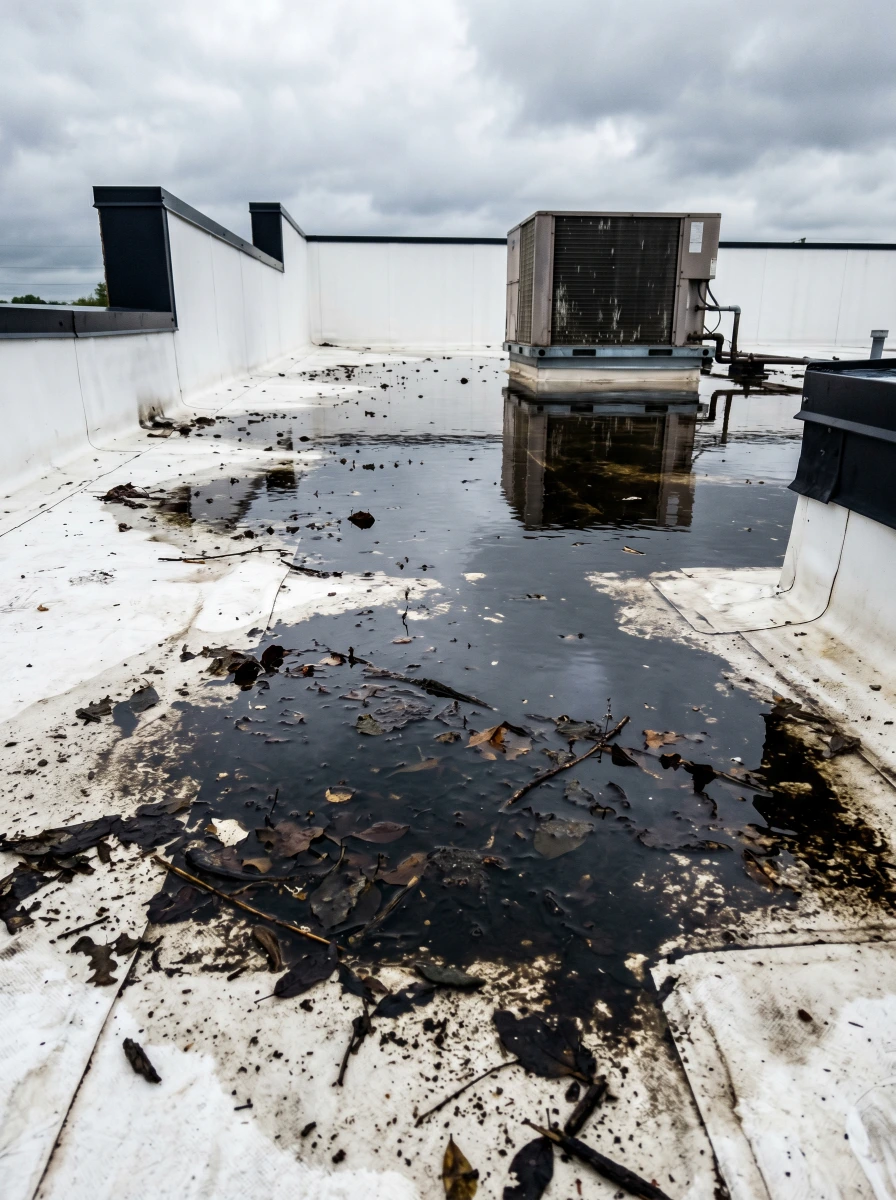
- Ponding water: low spots where water sits for days after rain, slowly breaking the membrane down
- Flashing failures: the seals around curbs, drains, vents, and parapet walls let go before the field of the roof does
- Blisters and open laps: trapped moisture bubbles up under the surface, a sign water already got in somewhere
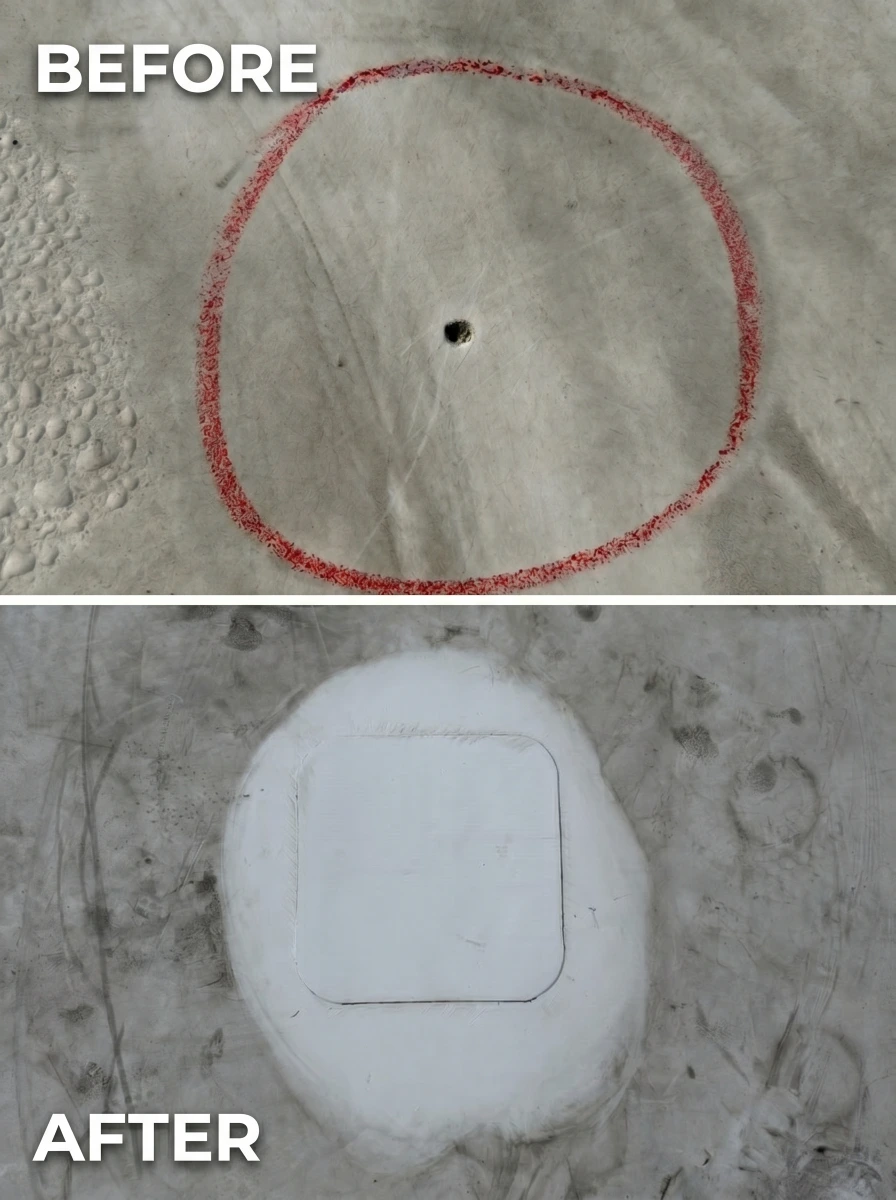
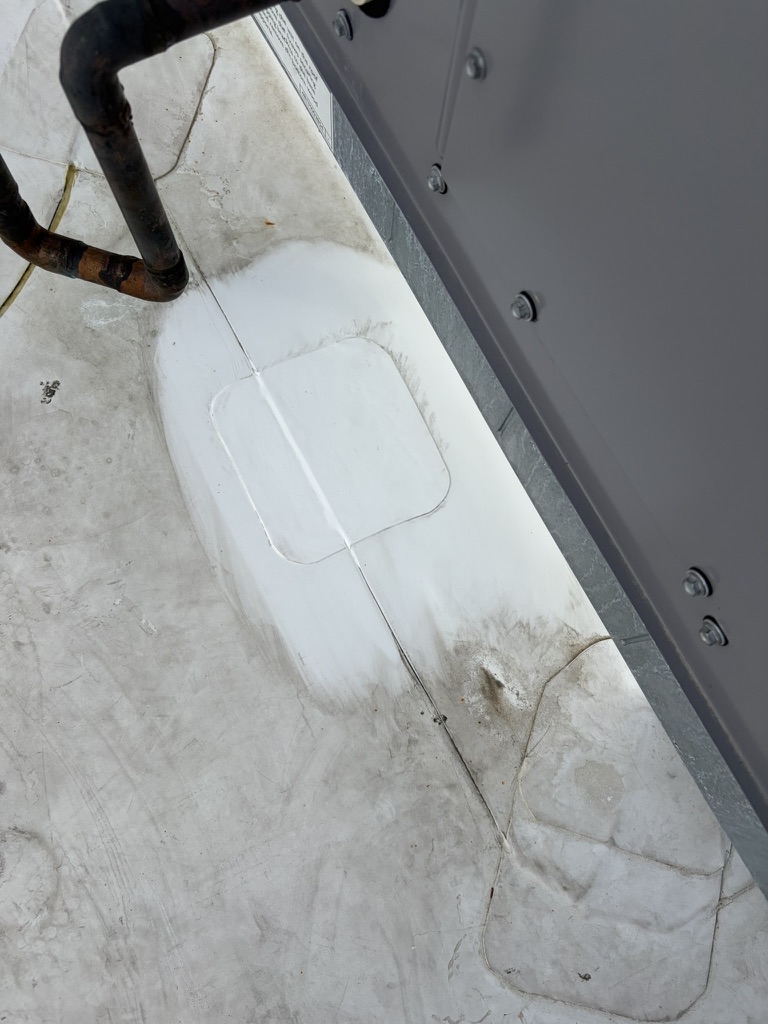
Here's a real one. We got called to a commercial TPO roof here in the metroplex where an HVAC crew had been servicing the rooftop units. They left around fifty screws scattered across the membrane and a saw cut close to a foot long, and the building had started leaking inside. We circled every puncture, documented the whole thing, then patched and resealed it.
That's the thing about a single-ply roof. It only works if the surface stays sealed. The National Roofing Contractors Association sets the low-slope and repair standards the industry builds to,1 and the recurring theme is the same: small breaches turn into big interior damage when they sit.
TPO, EPDM, and Modified Bitumen Each Repair Differently
The membrane on your roof decides how we fix it. Match the repair to the system and it holds. Get it wrong and you're back up there in a year.
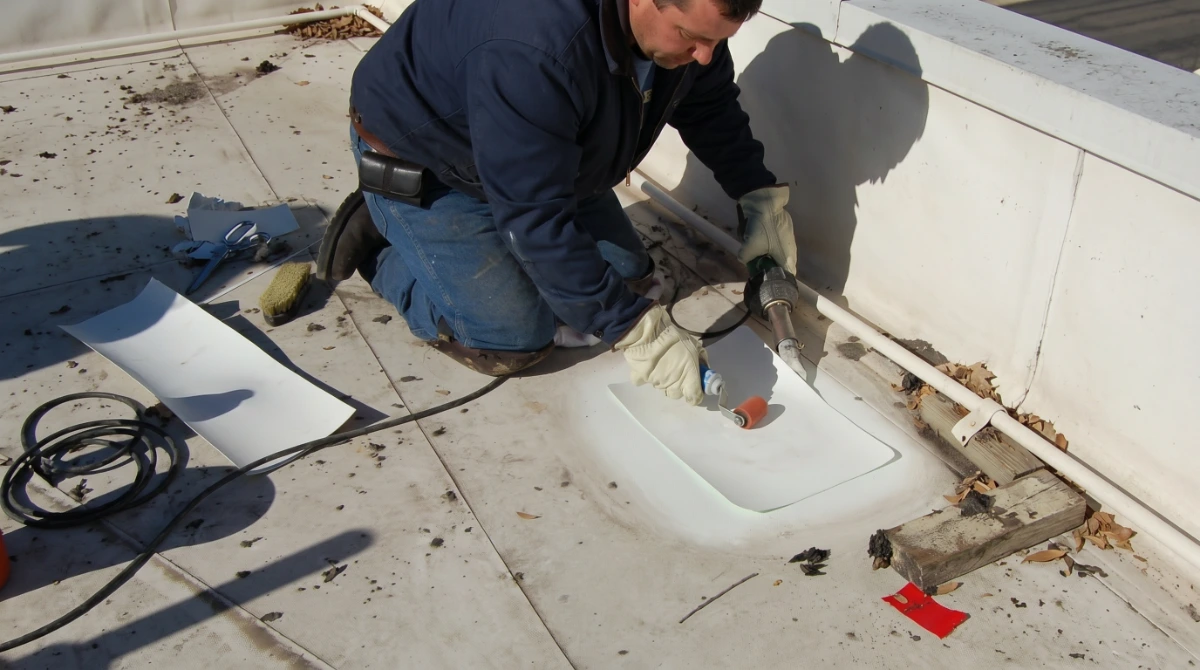
TPO repairs are heat-welded. We cut a patch from matching membrane and weld it down so it fuses into one continuous surface, the same way the seams were welded when the roof went on. Done right, the patch is as strong as the membrane around it.
EPDM is a black rubber membrane, and it patches with a primer and a cured seam tape or a bonding adhesive rather than heat. The prep is everything here. The surface has to be clean and primed, or the patch won't bond and you've wasted the trip.
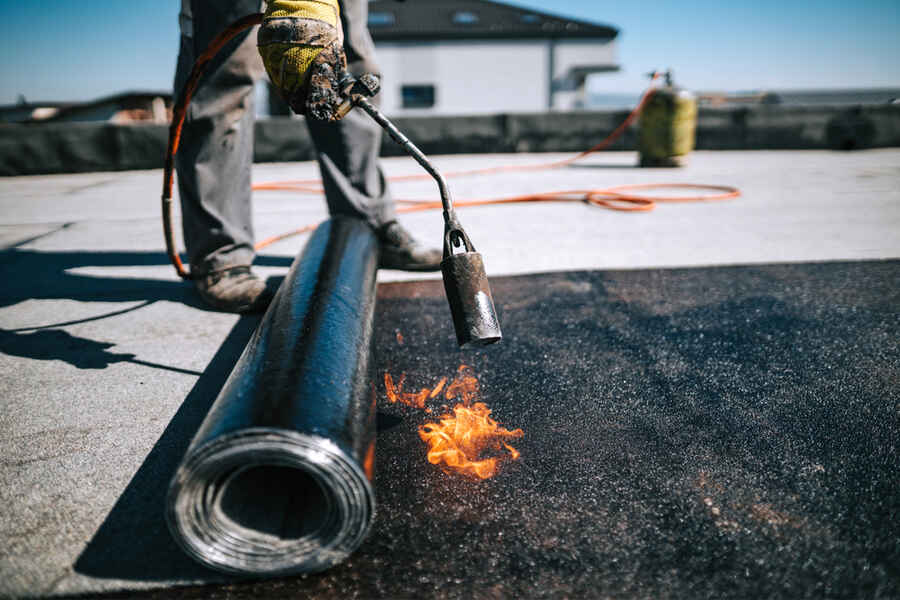
Modified bitumen comes in layers, and repairs use heat or a cold-process adhesive to seal a new ply over the damage. It's common on older retail and restaurant roofs, and it seals well around all the rooftop equipment those buildings carry.
If you're not sure what you've got up there, that's fine. We'll tell you on the inspection, and we carry the materials to repair all three.
When to Repair and When to Replace
The honest answer is that most flat roofs we look at need a repair, not a replacement. If the damage is isolated and the rest of the membrane still has years left, patching the problem area is the smart move, and it costs a fraction of tearing the whole thing off.
Replacement starts to make more sense when:
- The roof is near the end of its expected life and failing in more than one spot
- Water has soaked the insulation across a wide area, not just one section
- You're calling someone out every few months for a new leak in a new place
We give you the straight read either way. If a repair will hold, we'll tell you. If you're throwing money at a roof that's done, we'll tell you that too, and we can walk you through commercial roof replacement and flat roof installation options when it's time. Either way, you decide with the full picture in front of you.
Active Leak? We Move Fast Across Dallas
A leak in a commercial building isn't just a roof problem. It's a tenant calling, inventory getting wet, and a habitability or liability issue if it sits. So when water is coming in, the first job is to stop it.
We respond within hours across Dallas and the wider metroplex from Farmers Branch. Our trucks carry what we need for same-day temporary measures, sealing the breach and protecting what's underneath, so the damage stops climbing while we line up the permanent repair.
Not sure how bad it is yet? Start with a free roof inspection. We'll find the source, tell you how much life the roof has left, and lay out your options in plain language.
Storm Damage and Commercial Insurance Claims
If a storm, hail, or high wind damaged your roof, a lot of the repair may be covered. Insurance usually won't pay for normal wear or a roof that's simply old, but sudden storm damage is a different story.
The claim lives or dies on documentation. The Texas Department of Insurance tells policyholders to photograph the damage, make temporary repairs to prevent it from getting worse, and be there when the adjuster visits.3 That's exactly how we work a commercial claim. We document every spot with photos and a written report, then meet your adjuster on the roof so the scope reflects the real damage.
One Texas note worth keeping in mind: hang on to proof that you paid your deductible, since state law lets carriers ask for it. We'll handle the roof side and the paperwork so you're not chasing it down between everything else on your plate.
What Commercial Flat Roof Repair Includes
Here's how a typical repair runs:
Roof walk and leak tracing
We get up on the roof and find where water is actually getting in, which is rarely right above the stain inside. We trace it back to the source instead of guessing.
Moisture survey under the membrane
We check whether water has spread into the insulation below the surface. A dry repair over wet insulation just traps the problem, so this step decides the real scope.
Written scope and your options
You get a plain-English breakdown of what's wrong, what it'll take to fix, and whether repair or replacement makes more sense for your building.
Membrane repair and resealing
We patch punctures, re-weld or seal failed seams, and rebuild flashing details per manufacturer specs so the warranty stays intact where it applies.
Water test and final check
We confirm the repair actually holds and the drainage moves water the way it should before we call it done.
Documentation for your records
You get photos and a written report. Useful for your files, your warranty, and any insurance claim tied to the damage.
Safety is part of every step. OSHA requires fall protection for anyone working on a roof six feet or higher,2 and our crews follow it every time. We're a fully insured, GAF Certified team, and that protects your building and your liability while we're up there.
Frequently Asked Questions
How much does it cost to have a flat roof repair?
Most flat roof repairs run a few hundred to a few thousand dollars, depending on how much membrane is involved and what caused the damage. A handful of punctures on a sound roof is a small job. Widespread seam failure or wet insulation under the membrane costs more, since there's more to open up and dry out. We give you a written number after we get up there and actually look.
What are the common problems with flat roofs?
The big ones are ponding water, punctures, seam separation, flashing failures, and blistering. Most start small and stay hidden, because the leak inside rarely shows up right under the spot where water got in. On a single-ply roof like TPO or EPDM, even a tiny breach lets water spread under the membrane before you notice a stain. That's why catching them early matters.
How often do flat roofs need to be repaired?
There's no fixed schedule. A well-installed flat roof that gets looked after shouldn't need frequent repairs. The bigger habit is inspection, twice a year, usually spring and fall, plus after any major storm. If you're calling someone out every few months for a new leak, that's a sign of a deeper problem, not just bad luck.
What is the life expectancy of a commercial flat roof?
It depends on the material. TPO and EPDM usually go 15 to 25 years. Modified bitumen runs 10 to 20. Metal can last 40 to 50 or more. Dallas heat, UV, and hail can shorten those numbers if the roof isn't maintained. Regular inspections and small repairs along the way are what get you to the high end of the range.
Can water sit on an EPDM roof?
A little brief pooling after rain usually won't ruin EPDM, but water that sits for more than a day or two is a real problem. Standing water breaks the membrane down over time, adds weight the deck wasn't built for, and can even void some manufacturer warranties. If you've got spots that pond after every rain, the fix is usually drainage and slope, not just a patch.
What is the 25% rule in roofing?
It's a building-code guideline. If more than 25% of a roof section is damaged or replaced within a 12-month period, code often requires the whole section to be brought up to current standards instead of just patched or recovered. That can turn a small repair into a larger project, so we check it during the inspection. Codes vary by city, so we confirm what Dallas requires before we scope the work.
What not to say to a roof insurance adjuster?
Keep it factual and avoid guessing. Don't speculate about what caused the damage, don't downplay it, and don't volunteer that the roof was old or neglected, since offhand comments can be used to reduce or deny a claim. Stick to what you can actually see and let your documentation do the talking. We meet your adjuster on the roof with photos and a written report so the conversation stays grounded in the real damage.
How fast can you respond to a commercial roof leak?
We respond within hours across Dallas and the DFW metroplex from our Farmers Branch base. Our trucks carry what we need for same-day temporary measures that stop the water and protect what's inside while we line up the permanent fix. If you've got water coming through a drop ceiling on a Saturday, call us. We answer.
Can other crews working on the roof cause damage?
All the time. HVAC techs, satellite installers, and other trades walk a single-ply membrane and leave dropped screws, dragged tools, and the occasional saw cut behind. A puncture you can barely see still lets water under the membrane, where it spreads before anyone notices a leak inside. If a crew has been on your roof recently and you're seeing stains, it's worth having us take a look.
Ready for Your
Commercial Flat Roof Repair?
Get a free, no-obligation evaluation from our GAF certified team in Farmers Branch. We'll inspect your property, provide a written estimate, and walk you through every option.
Want to pay over time? Check your financing options.


Need A Roofing Contractor? Request An Estimate!
Fill out the form and we'll get back to you promptly.
Citations & Resources
- National Roofing Contractors Association (NRCA). Low-slope roofing, drainage, and repair standards. https://www.nrca.net/
- OSHA Standard 1926.501. Fall protection requirements for construction and low-slope roofing work. https://www.osha.gov/laws-regs/regulations/standardnumber/1926/1926.501
- Texas Department of Insurance. Help after a storm: documenting damage and filing a claim. https://www.tdi.texas.gov/consumer/storms/recoverytips.html
Commercial Flat Roof Repair Throughout Dallas-Fort Worth
We provide commercial flat roof repair services across the Dallas-Fort Worth area: