Professional Condominium Roofing Services in Dallas, TX
HOA board-approved roofing solutions for Dallas condominiums. Expert guidance through special assessments, reserve fund planning, and insurance claims.
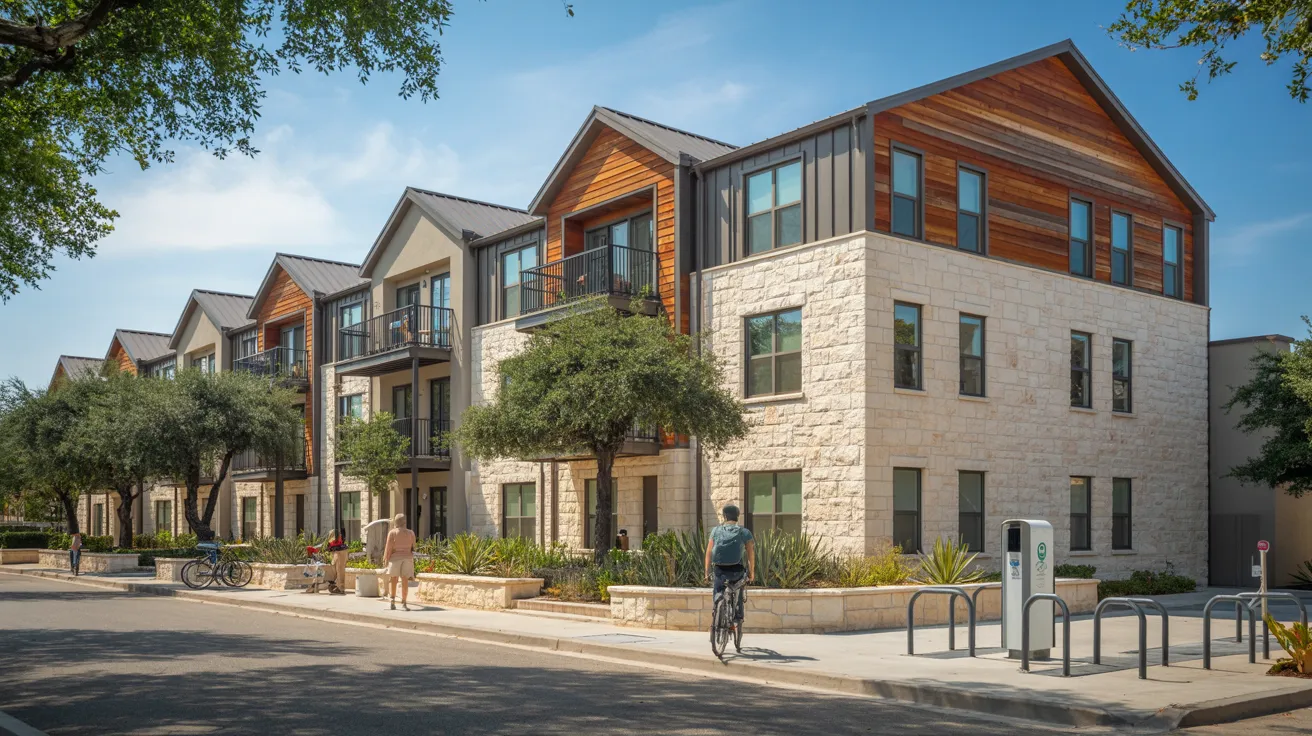
Get Your Free HOA Board ConsultationCondominium roofing in Dallas requires specialized expertise in HOA governance, financial planning, and multi-owner coordination. Unlike apartment buildings where one owner makes decisions, condo roofing involves HOA boards, special assessments, reserve fund management, and complex insurance policies[1]. We help Dallas condo associations in Highland Park, Uptown, Preston Hollow, Carrollton, and throughout the metroplex navigate the unique challenges of maintaining common element roofs while protecting unit owner investments and property values.
In Carrollton, we serve condo communities including The Heights at Old Denton, Trinity Mills Station condos, Hebron 121 Station, and developments near the DART Green Line corridor. Whether your association is managing luxury condos in downtown Carrollton or family-oriented communities near Rosemeade Recreation Center, we provide transparent HOA board communication and expert roofing solutions tailored to your building's architecture and your community's budget.
Condominium Ownership: Who Owns and Maintains the Roof?
In a condominium, you own the interior space of your unit, but the HOA owns the roof, exterior walls, and other common elements[2]. This shared ownership structure creates unique responsibilities and challenges:
- The HOA board makes all roofing decisions on behalf of unit owners
- Costs are divided among unit owners through special assessments or reserve funds
- Individual owners cannot hire their own roofers or modify the roof
- Board decisions require proper voting procedures and owner notification
Under Texas Property Code Chapter 82, the HOA has legal authority to maintain common elements and assess unit owners for necessary repairs and replacements[3]. We work directly with HOA boards to ensure compliance with Texas condominium law while delivering quality roofing solutions that protect both the building and individual unit values.
Understanding Condo vs Townhouse vs Apartment Roofing
Many Dallas residents confuse condominiums with townhouses and apartments. The key difference is ownership structure, which dramatically affects roofing decisions and costs:
| Property Type | Roof Ownership | Decision Maker | Payment Method |
|---|---|---|---|
| Condominium | HOA owns as common element | HOA board vote required | Special assessment or reserve fund |
| Townhouse | Individual owner (usually) | Homeowner decides independently | Individual owner pays directly |
| Apartment | Property owner/landlord | Property owner decides | Owner pays, may raise rents |
This table illustrates why condo roofing requires specialized expertise. We must work with HOA boards, present options to multiple decision-makers, and structure financing that works for all unit owners while maintaining fiduciary responsibility[1].
HOA Board Approval Process for Condo Roofing Projects
Navigating the HOA board approval process can be challenging for Dallas condo associations. We guide boards through every step to ensure smooth project execution and satisfied unit owners:
Step 1: Professional Roof Assessment
We provide detailed roof inspections with photographic documentation, remaining lifespan estimates, and repair vs replacement analysis. This gives boards the technical information needed for informed decisions.
Step 2: Multiple Contractor Bids
HOA fiduciary duty requires obtaining competitive bids. We provide transparent, itemized proposals that boards can compare against other contractors while explaining material and warranty differences.
Step 3: Board Presentation and Q&A
We attend board meetings to present options, answer technical questions, and help boards understand long-term cost implications. Our presentations include material samples, warranty comparisons, and project timeline details.
Step 4: Financing and Assessment Planning
We help boards determine whether to use reserve funds, levy special assessments, or combine both approaches. This includes payment plan options to ease financial burden on unit owners.
Step 5: Owner Notification and Communication
Under Texas law, boards must notify owners of special assessments and major projects. We provide communication templates and FAQ documents that boards can share with residents.
Step 6: Project Execution with Board Oversight
Throughout the project, we provide regular progress updates, maintain open communication with property managers, and document work for board records and future reserve studies.
This structured approach ensures boards fulfill their fiduciary duties while minimizing owner complaints and maintaining positive community relations during major roofing projects.
Special Assessments and Reserve Funds: Financing Condo Roofing
The financial structure of condo roofing sets it apart from other multi-family properties. Dallas HOA boards have two primary funding mechanisms:
Reserve Funds
Well-managed condo associations maintain reserve funds specifically for major capital improvements like roofing. The Community Associations Institute recommends reserve studies every 3-5 years to plan for future expenses[1]. Ideal reserves cover 70% of replacement costs, reducing the need for large special assessments.
Special Assessments
When reserve funds are insufficient, HOA boards levy special assessments—one-time charges divided among unit owners. Under Texas Property Code Section 82.102, boards must follow proper voting procedures and provide owner notification[3]. Payment plans typically spread costs over 12-24 months to reduce financial hardship.
Example: 40-Unit Dallas Condo Roofing Project
- Total Project Cost: $280,000
- Reserve Fund Available: $150,000 (54% of cost)
- Special Assessment Needed: $130,000
- Per-Unit Assessment: $3,250 per owner
- 24-Month Payment Plan: $135/month per unit
We work with HOA boards and property managers to structure financing that maintains community harmony while protecting the building envelope and individual unit values.
Complex Insurance Coverage for Condominium Roofs
Condo insurance is more complex than single-family or apartment coverage because it involves both master HOA policies and individual HO-6 policies. Understanding this split coverage is critical for roof damage claims in Dallas:
Master HOA Policy
The condo association's master policy typically covers the roof structure, building exterior, and common areas. This "walls-out" or "all-in" coverage determines what the HOA policy pays when roof damage occurs. Storm and hail damage are generally covered, while gradual deterioration and aging are not[4].
Individual HO-6 Policies
Unit owners carry HO-6 policies (also called "walls-in" coverage) that protect interior improvements, personal property, and provide liability coverage. When a roof leak damages a unit's interior, both the master policy and individual HO-6 policy may be involved in the claim.
Deductibles and Special Assessments
One challenging aspect of condo insurance is that the master policy deductible—which can be $10,000-$50,000 or more—may be passed to unit owners as a special assessment. If the HOA files a roof damage claim with a $25,000 deductible, unit owners collectively pay that amount through assessment before insurance coverage begins[5].
We help Dallas HOA boards navigate insurance claims, document damage for adjusters, and coordinate repairs that satisfy both the master policy carrier and individual HO-6 requirements. Our experience with insurance restoration ensures maximum claim approval and minimal out-of-pocket costs for associations and unit owners.
Multi-Building Condo Complex Coordination
Large Dallas condo developments often include multiple buildings with separate roofs requiring coordinated planning and phased execution. This complexity demands specialized project management:
Phased Construction Scheduling
We complete one building at a time to control quality and budget. This allows boards to assess work before committing to subsequent phases and spreads financial impact over multiple fiscal years if needed.
Material Consistency Across Buildings
All buildings receive identical materials and colors to maintain uniform appearance and property values. We secure bulk pricing and warehouse materials to ensure consistency even if projects span multiple years.
Dedicated Project Management
Each complex receives a dedicated project manager who serves as the single point of contact for the HOA board, property management company, and residents. This streamlines communication and ensures accountability.
Resident Communication and Access
We coordinate parking, maintain access to units, schedule around resident needs, and provide advance notice of noise and disruption. Clear communication prevents complaints and maintains community satisfaction.
Our experience with Dallas multi-building condo complexes in Highland Park, Uptown, Preston Hollow, Carrollton, and surrounding areas ensures smooth projects that meet HOA board expectations and maintain positive resident relations throughout construction. From established communities near the Carrollton DART station to newer developments along the Dallas North Tollway corridor, we adapt our approach to each association's unique needs.
Financing Options for Condo Associations
Beyond traditional special assessments and reserve funds, Dallas condo associations have additional financing options for major roofing projects:
HOA Loans
Some banks offer loans specifically designed for condo associations, allowing boards to finance roofing projects without large special assessments. Monthly loan payments are covered through regular HOA dues or smaller supplemental assessments spread over the loan term.
Insurance Claim Proceeds
When storm or hail damage triggers a successful insurance claim, the master policy provides funding for roof replacement. Boards must still cover deductibles through special assessment, but insurance proceeds dramatically reduce unit owner costs.
Phased Replacement Schedules
For multi-building complexes, boards can phase roof replacements over multiple years, spreading costs across several budget cycles. This approach requires careful priority assessment to ensure critical buildings receive attention first.
Contractor Payment Plans
We offer flexible payment terms that allow HOA boards to structure deposits and progress payments in ways that align with assessment collections and cash flow. This flexibility helps boards manage budgets while ensuring timely project completion.
Our financial guidance helps Dallas HOA boards choose financing structures that minimize owner hardship while ensuring quality roofing protection and maintaining healthy reserve fund balances for future capital needs.
Why Dallas HOA Boards Choose Under One Roof
Specialized expertise in condominium governance, financial planning, and multi-owner coordination
Frequently Asked Questions
Who is responsible for paying for condo roof repairs in Dallas?
In condominiums, the HOA is typically responsible for roof repairs and replacement as part of the common elements. Individual unit owners pay through special assessments or reserve fund allocations as determined by the HOA board and condo bylaws. The exact responsibility is defined in your Declaration of Condominium and HOA governing documents.
How do special assessments work for condo roof replacement?
Special assessments are one-time charges levied by the HOA board to fund major projects like roof replacement. The board votes to approve the assessment, then divides the total cost among unit owners based on their ownership percentage or square footage. Payments can often be structured over 12-24 months to ease the financial burden on residents.
What is the HOA board approval process for condo roofing projects?
The process typically involves: (1) Getting professional roof inspections and assessments, (2) Obtaining multiple contractor bids, (3) Presenting options to the board with cost analysis, (4) Board vote on contractor selection and funding method, (5) Notifying unit owners of special assessment or reserve fund usage, (6) Final approval and contract signing. We guide boards through each step.
How much should our condo reserve fund have for roof replacement?
The Community Associations Institute recommends reserve funds cover 70% of the cost of major repairs like roofing. For a typical Dallas condo with a $200,000 roof replacement cost, your reserve study should plan for $140,000 in reserves. This prevents large special assessments and maintains property values.
Does insurance cover condo roof damage in Texas?
Insurance coverage is complex for condos. The master HOA policy typically covers the roof structure, while individual HO-6 policies cover improvements and betterments. Storm and hail damage are usually covered, but gradual wear and aging are not. Each policy's deductible applies, and recent roof damage claims can affect future coverage terms.
Can individual condo owners hire their own roofer?
No. The roof is a common element owned by the HOA, not individual unit owners. All roofing decisions must go through the HOA board, and only board-approved contractors can perform work. Individual owners cannot modify or repair the roof without violating condo bylaws and potentially voiding warranties.
How long does a condo roof replacement take in Dallas?
Timeline depends on building size and complexity. Small condo buildings (8-16 units) typically take 5-10 days. Mid-size complexes (20-40 units) need 2-3 weeks. Large condo developments with multiple buildings require 4-8 weeks. We create detailed schedules and coordinate with property management to minimize resident disruption.
What happens if condo owners refuse to pay special assessment for roof?
Under Texas Property Code Chapter 82, HOAs can place liens on units for unpaid assessments, charge late fees and interest, and even foreclose in extreme cases. Special assessments approved by the board are legally binding. We recommend HOAs offer payment plans to help owners manage costs and maintain community harmony.
Do condo roofs need different materials than apartments?
Material selection depends on building design, not ownership structure. However, condos often choose higher-quality materials since individual owners have more stake in long-term value. Dallas condos commonly use architectural shingles, metal roofing, or TPO systems. Board decisions balance upfront cost, lifespan, aesthetics, and impact on property values.
How do you coordinate roofing work across multiple condo buildings?
For multi-building condo complexes, we phase the work strategically: (1) Complete one building at a time to control costs and quality, (2) Schedule around resident needs and HOA calendars, (3) Use consistent materials for uniform appearance, (4) Maintain dedicated project managers for board communication, (5) Provide progress reports and photographic documentation for transparency.
Resources
- [1] Community Associations Institute - HOA governance best practices and reserve fund management
https://www.caionline.org - [2] U.S. Department of Housing and Urban Development - Condominium Project Approval Handbook 4265.1
https://www.hud.gov/program_offices/housing/sfh/condo - [3] Texas Property Code Chapter 82 - Condominium Act and owner assessment authority
https://statutes.capitol.texas.gov/Docs/PR/htm/PR.82.htm - [4] National Roofing Contractors Association - Commercial roofing standards and warranty requirements
https://www.nrca.net - [5] Texas Department of Insurance - Condominium insurance coverage requirements
https://www.tdi.texas.gov - [6] City of Dallas Development Services - Building permits and code compliance for multi-family properties
https://dallascityhall.com/departments/sustainabledevelopment - [7] U.S. Environmental Protection Agency - Mold prevention in multi-family residential buildings
https://www.epa.gov/mold - [8] Occupational Safety and Health Administration - Construction safety standards
https://www.osha.gov/fall-protection - [9] National Weather Service Dallas - Climate data and severe weather statistics for North Texas
https://www.weather.gov/fwd/d100data
Ready to Present to Your HOA Board?
Contact us today for a free roof assessment and detailed HOA board presentation package for your Dallas condominium.
Related Services
Explore our comprehensive range of home improvement services
Residential Roofing
Complete home roofing solutions
Learn MoreCommercial Roofing
Business & industrial roofing
Learn MoreEmergency Repairs
24/7 storm damage response
Learn MoreRoof Inspections
Free professional inspections
Learn MoreMulti-Unit Residential
Apartments & condos
Learn MoreHail Damage Assessment
Insurance claim assistance
Learn More