
Roof Repair in Farmers Branch
Know what's under the shingles first
- GAF Certified Contractor
- BBB Accredited, A+ Rating
- 24/7 Emergency Roof Repair
- Family Owned and Local
We handle roof repair in Farmers Branch and across Dallas and the surrounding area, from a few lifted shingles to loose flashing and split vent boots. It's one part of our residential roofing work. Most repairs get done the same day, though a bigger one can take a little longer, and pricing depends on the job.
Signs Your Roof Needs Repair, Not Just a Look
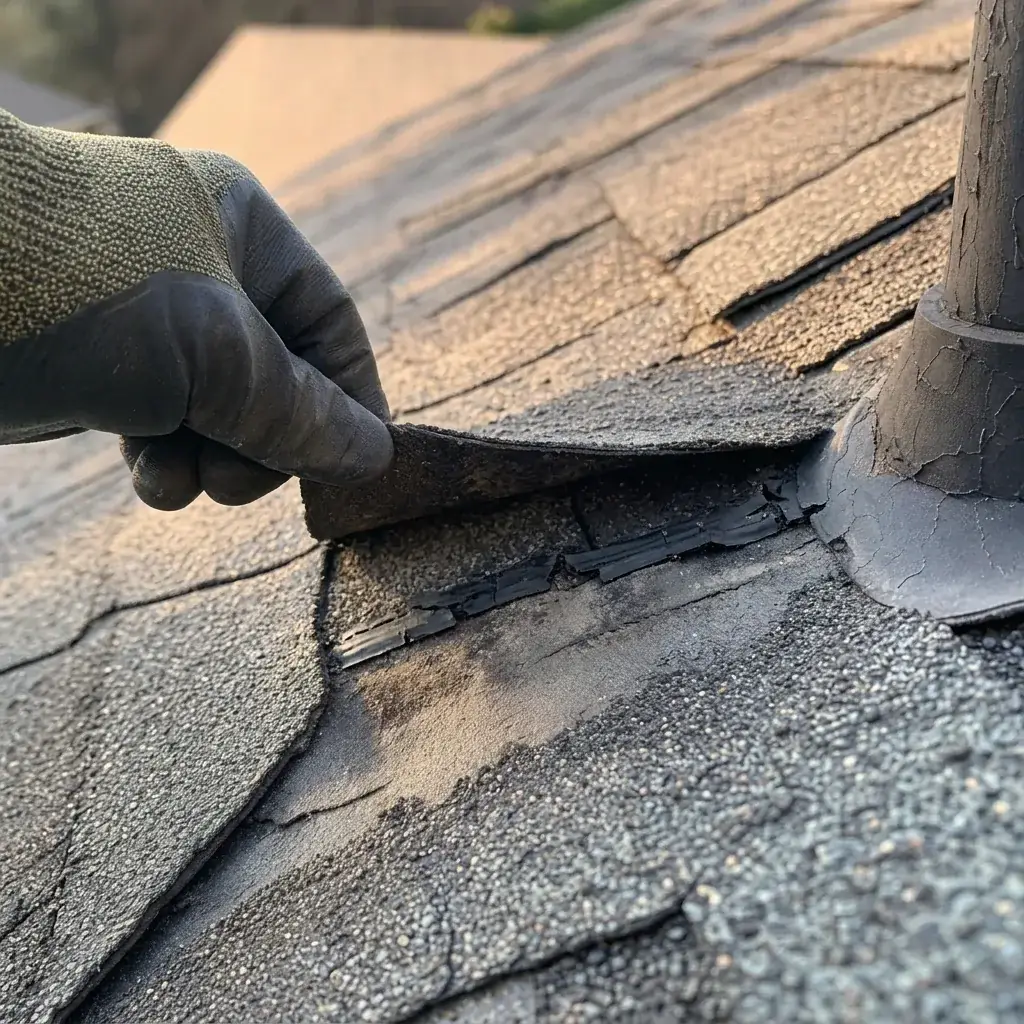
A roof needs repair when water is getting in, or when something has opened a path for water to get in. Missing or lifted shingles, loose flashing, and stains on your ceiling all count. Dark streaks and a few loose granules usually don't, and you can just keep an eye on those.
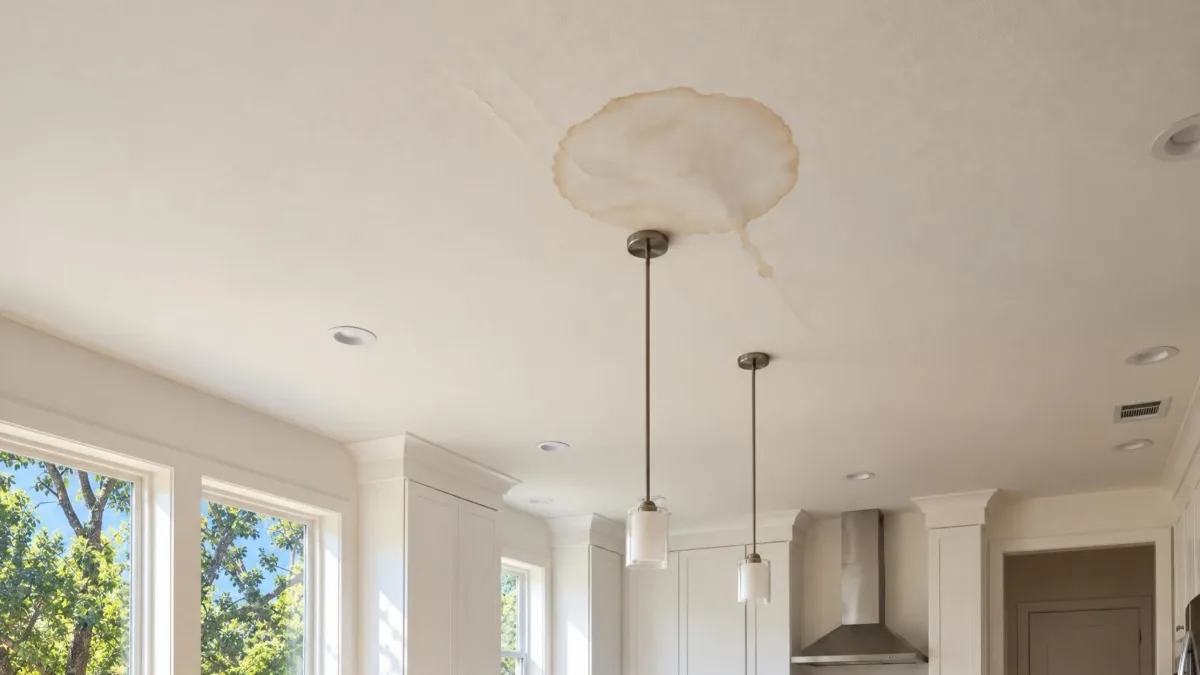
Most folks call because they spotted something, and it's usually small. A brown ring on the ceiling, or a shingle lying in the flower bed after a little wind blew through the night before. The question is whether that thing means water is getting in, or it's going to soon. That's the line between a repair and something you can just watch.
These are the ones that mean it's time for a repair in Farmers Branch:
- A water stain on a ceiling or wall, even a dry one. Dry today can still mean wet the next time it rains.
- Shingles that are missing, creased, or lifted at the edge. A crease means the shingle got bent back by wind, and the seal under it is probably broken.
- Flashing that's pulled loose or rusted. Flashing is the metal that seals the spots where your roof meets a chimney, a wall, or a vent pipe.
- Cracked rubber boots around plumbing vents. Our summer sun bakes them until they split.
- Damp insulation, dark wood, or daylight showing through when you look up from the attic.
- Soft spots when somebody walks the roof. That usually means the decking underneath has taken on water.
Our North Texas weather tends to work on a roof in layers. The heat sits on it for months and dries out the sealant strips. Then spring hail comes through. Then wind finds any shingle edge that wasn't fastened down right and gets under it. A roof can look fine from the driveway in March and be letting water in by May.
The stain on your ceiling also doesn't always sit under the leak. Water gets in at one spot, runs along the decking or down a rafter, and drips somewhere else. It can be the flashing around the chimney, or it can be a cracked vent boot ten feet away. Nobody knows which until somebody gets up there and traces it back to where it started. Anybody who tells you what's wrong from the yard is guessing.
Now, some things look worse than they are. Black or dark green streaks running down the shingles are usually algae1, and they don't cause leaks by themselves. That's a cleaning job, and roof cleaning is its own service if it bothers you. A light sprinkle of granules in the gutters on a newer roof is generally normal too, since shingles shed some granules early on. If you're finding a lot of them, like little piles at the bottom of the downspout, that's the shingle wearing through, and it's worth having somebody get up and look.
If you're not sure which group your problem falls into, treat any stain inside the house as a repair sign until it's proven otherwise. Water you can see on the ceiling has usually been sitting in the attic for a while already.
Repair or Replacement: How To Tell the Difference
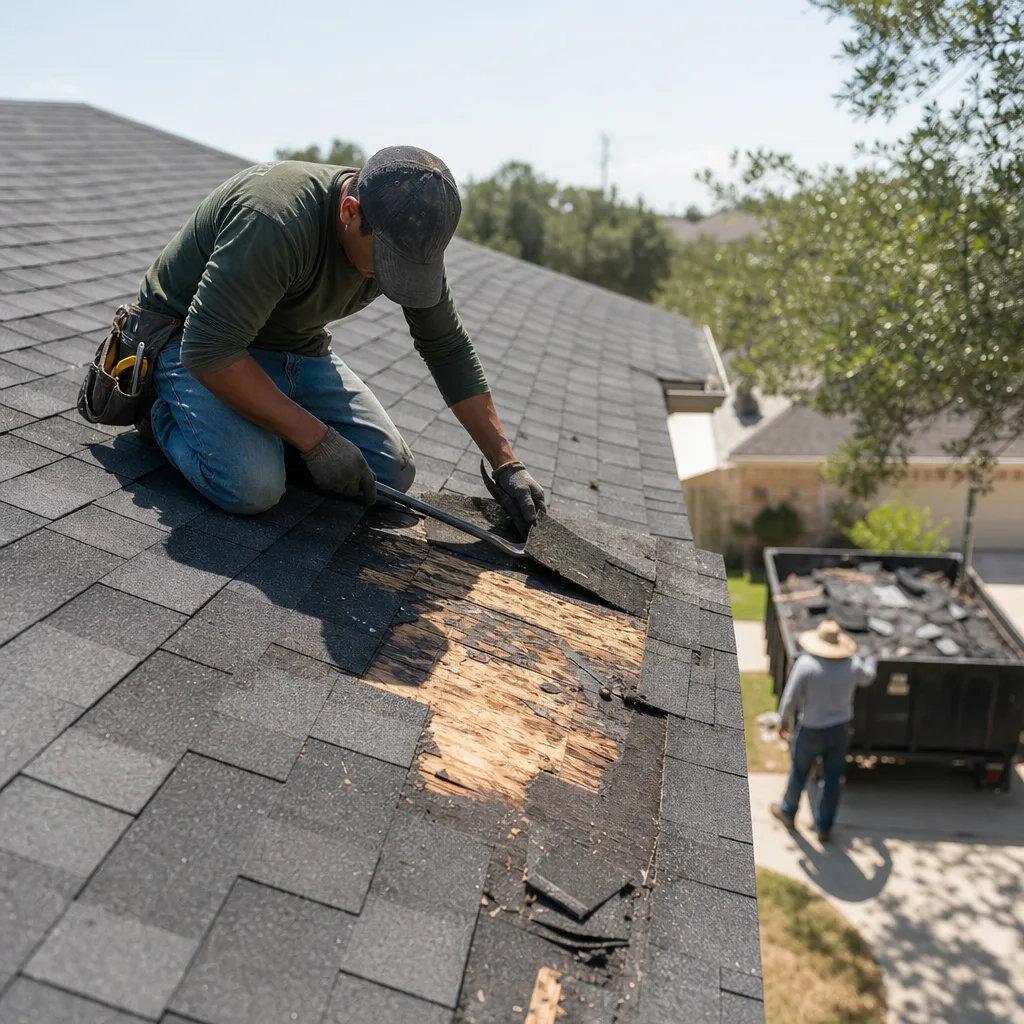
A repair makes sense when the damage is in one spot and the roof around it is still healthy. A replacement makes sense when the problem is spread across the roof, or when the shingles are old enough that fixing one spot keeps breaking the next one. Most roofs land clearly on one side, and some sit right on the line.
Say a little wind came through and took a few shingles off the back slope, and everything else up there still lies flat and holds a seal. That's a repair. The same goes for a split vent boot, a section of flashing that pulled away from the chimney, or a soft spot in the decking about the size of a pizza box. We fix the spot and the rest of the roof keeps doing its job.
Now, the picture changes when the damage shows up everywhere you look. These are the things that tend to push it toward replacement:
- Hail hits on every slope, not just the side that faced the storm. Patching one face leaves the other three still beat up.
- Shingles that crack when you lift them. After enough North Texas summers the shingles get brittle, so when you try to slide a new one in, the ones around it snap. The repair ends up making more damage than it fixes.
- Soft decking in more than one area. One rotted sheet is a repair, but several spread across the roof usually means water has been getting in for a long time in more than one place.
- Repairs piling up. If you're calling somebody out every spring for a different leak, you're paying for the roof one patch at a time.
- More than one layer of shingles already up there. A second layer hides the decking and adds weight, and it makes every repair harder to do right.
Matching is the other thing that can tip it. Shingles fade in our sun, and colors and product lines get discontinued, so a new patch on an older roof can stick out from the street. On a back slope nobody sees, that might not bother you. On the front of the house, some folks would rather not live with it.
The pricing also works differently, and it helps to know why. A repair is usually priced by the job, meaning the materials and time to fix that one area. A replacement is priced by the square. A square is 100 square feet of roof, and roofers use it because it keeps the math simple on a big surface. When someone gives you both numbers, you're comparing two different kinds of quote, and it's fair to ask how each one was figured.
Sometimes you don't know which way it goes until a repair is underway. A stain can trace back to one cracked boot, or it can trace back to decking that's soft across half the slope. Nobody can tell you which one it is until the shingles come up and they can see it. When it does turn into a replacement, we go all the way down to the decking, because that's the only way to know what you're putting a new roof on. That side of the job is covered on our roof replacement page.
If the roof is sound and the problem is local, you should get a repair, not a sales pitch for a whole new roof.
What Happens During a Repair Inspection
Tracking Down a Storm Leak
Preston Hollow, Dallas
A real repair inspection starts inside the house and ends on the roof. Whoever does it should be able to show you where the water is getting in, why, and what it'll take to stop it, before anybody talks about price.
Most roofing companies send a salesperson out. We send Max, who owns the company and works the jobs alongside the crew, so the person looking at your roof is the same person who'll be standing there when the repair gets done.
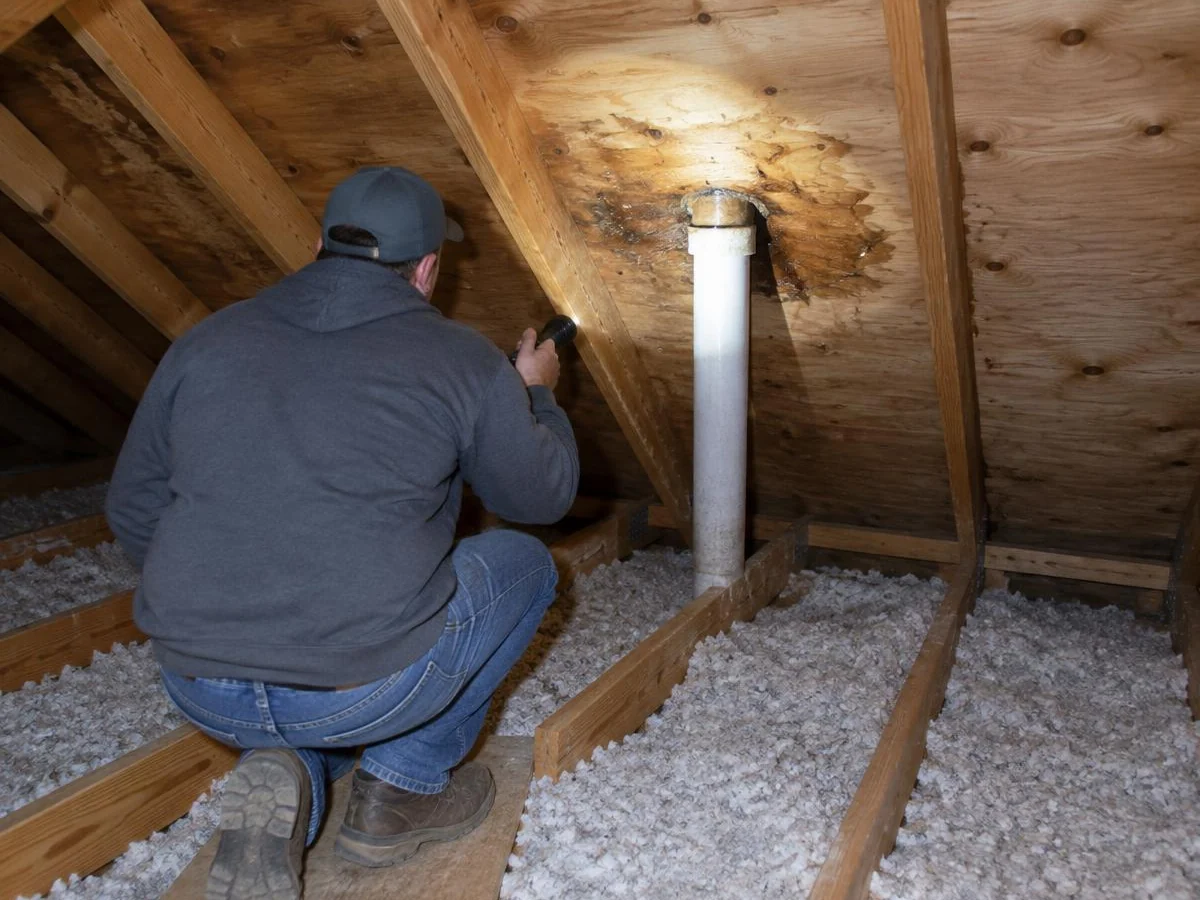
The attic usually comes first, because it shows where the water has been. That means wet or matted insulation, dark streaks on the rafters, rusty nail tips poking through the decking, or a spot where daylight shows through. Since water can run a ways before it drips, the attic is where you start tracing it uphill toward the source.
Then somebody gets up on the roof and walks it. The other option would be looking from a ladder at the gutter line, or from the yard, and plenty of folks do it that way. Most of what fails on a roof sits up high, around the ridges, the chimney, and the vent pipes, and you can't feel a soft spot in the decking unless you're standing on it.
On the roof, these are the things that should get checked:
- Shingle seals. Lifting a few tabs shows whether the sealant strip is still holding or the shingle is just lying there loose, waiting on the next wind.
- Creases and nail pops. If you look closely, you'll see a faint line where wind folded a shingle back, or a little bump where a nail has backed out.
- Flashing at chimneys, walls, and valleys. It gets checked for gaps, rust, and old caulk that's cracked and pulled away.
- Vent boots and roof penetrations, since rubber is usually the first thing our summer sun breaks down.
- The decking underfoot. A spongy feel usually means the wood under the shingles has been soaking up water.
- Hail marks, if a storm came through. That's its own process, called a hail damage assessment.
Sometimes the cause is obvious. Other times there are two suspects sitting a few feet apart, a loose piece of step flashing and a cracked boot right above it, and it can be either one. A careful inspection says so instead of guessing, and the repair covers both if the roof can't settle it.
When it's done, you should get a plain answer: what was found, where it is, and whether it's a spot repair or something bigger. Photos help, because most people aren't going up there to check. If someone can't point to the problem, be slow to hand over a deposit.
A few things on your end make the visit go better:
- Write down when it leaks. Every rain, or only with hard wind from one side? That tells a lot about where to look.
- Take a photo of the stain now, so you can tell later if it's growing.
- Clear a path to the attic hatch, often in a hallway ceiling or a garage closet.
- In July and August, morning is usually better. By midafternoon a dark roof gets hot enough that shingles soften and scuff easily underfoot.
When Your Roof Does Not Need Repair Yet
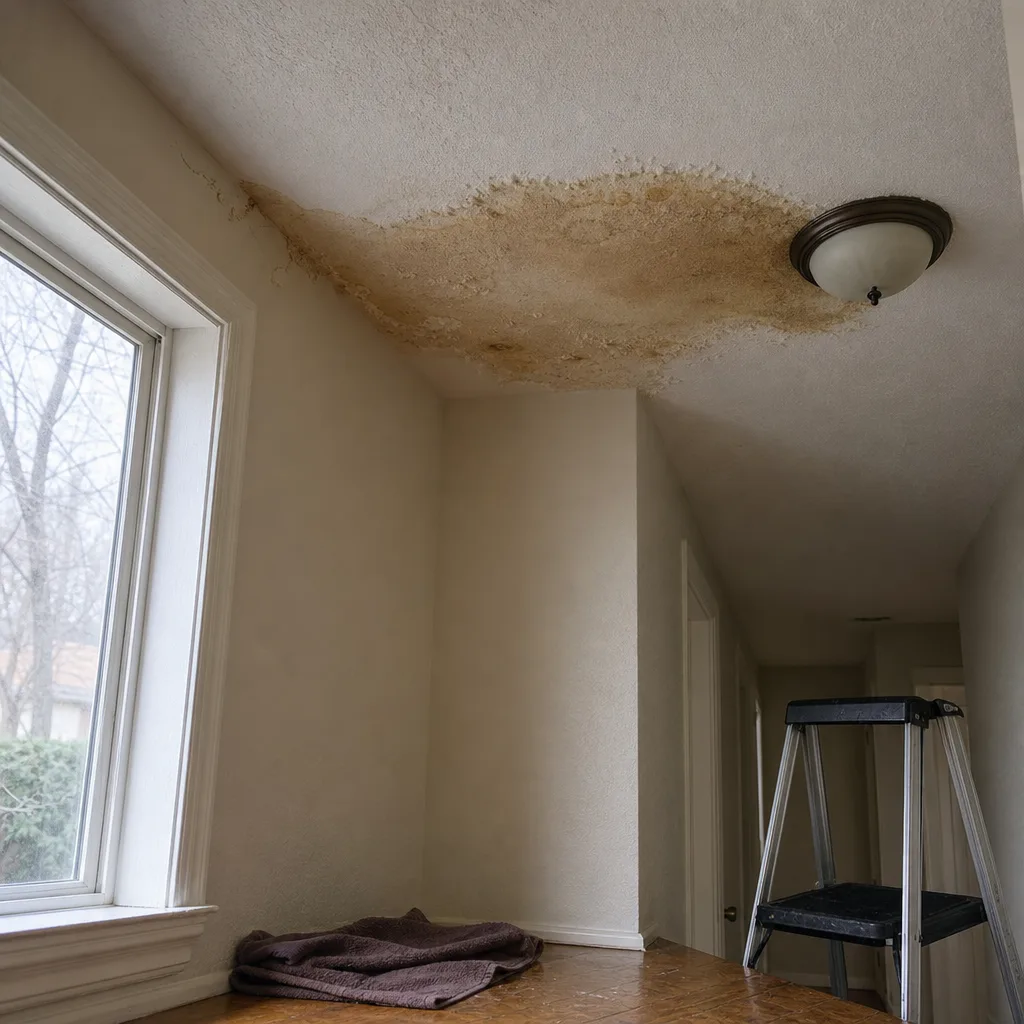
You don't need a roof repair if the roof isn't letting water in and nothing up there has opened a path for it yet. Plenty of what looks like a roof leak turns out to be something else, and some roof issues can sit until the next time somebody checks.
Water in the attic doesn't always come from the roof. A lot of our North Texas homes have the AC unit up in the attic, and all summer it makes water that drains out through a line and a pan under the unit. If that line clogs, the pan fills and spills over and you get a stain on the ceiling that looks just like a roof leak. A bathroom fan that blows into the attic instead of outside can do the same thing, and so can the plumbing for an upstairs bathroom. A stain that shows up in August after three dry weeks probably isn't the roof.
Sometimes the AC pan sits right under a vent boot, and it can be the pan or it can be the boot. Either way, if it's the pan, an AC tech fixes it and your shingles never needed touching.
Winter has its own version. On a cold January morning, warm, damp air from the house rises into the attic and beads up on the underside of the decking and on the nail tips. Then the sun warms the roof and it drips, and you've got wet spots spread across the attic floor that look like a leak. That's an airflow problem, and new shingles won't stop it. Attic venting has its own page if that's what you're dealing with.
Some roof things you can handle yourself or just keep an eye on, on top of the streaks and granules covered earlier:
- Leaves piling up in the gutters or the valleys. Clearing gutters from a ladder at the eave is a homeowner job, and you don't have to get on the roof to do it.
- A tree limb rubbing the roof. Have it trimmed back before it wears through the shingles it's touching.
- Small hail with no dents on the soft metal. If the gutters, vent caps, and AC fins came through clean, the shingles usually did too.
- An older roof that doesn't leak. Age by itself isn't a leak, and nobody should sell you a repair just because the roof has some years on it.
Waiting only works if you check, though. After the next hard rain, take a flashlight up to the attic and look at the spot that worried you, and look at the photo you took of the ceiling stain. If it's dry and hasn't grown, you can keep waiting. If it's wet or bigger, it's a repair.
A roof that's dry inside and lying flat outside can usually go another season without anybody touching it.
Repairing Shingle, Metal, Tile, and Slate Roofs
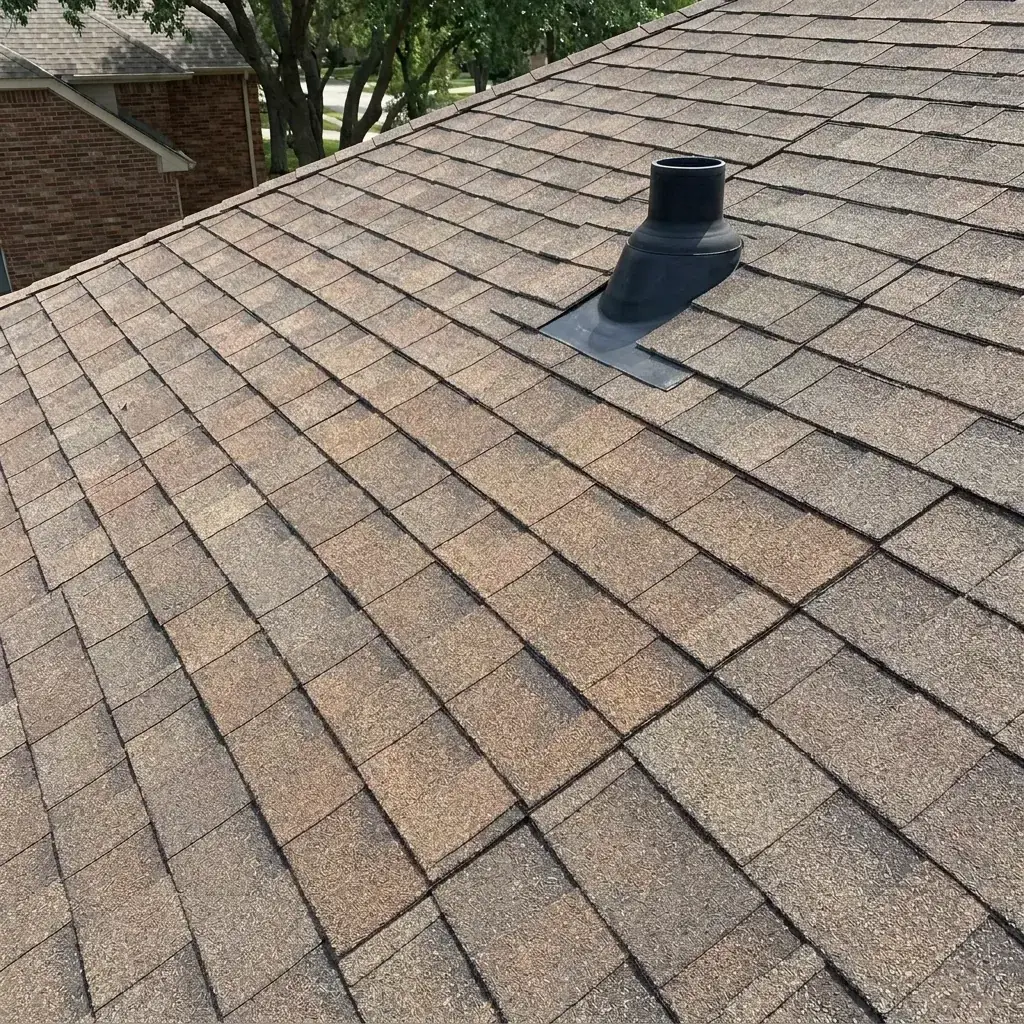
Most of our work is on houses, and that usually means a pitched roof in shingle, metal, tile, or slate. On a pitched roof, gravity is on your side. Water hits it and runs downhill to the gutters, and a leak usually means something broke that flow. A shingle blew off, a seal let go, or a piece of flashing pulled away.
Fixing it generally means replacing the damaged pieces and making sure the new ones lap and seal with the shingles around them, so water keeps moving the way it's supposed to. We repair every one of those roof types, so you don't need a different company for a tile roof than for a shingle roof.
Some homes in Farmers Branch have a pitched shingle roof over the main house and a low-slope section over a back porch or an addition. Water moves slower on that low part and tends to sit there, so it's worth checking first.
Frequently Asked Questions
Why does the stain on my ceiling show up somewhere different from where the roof is leaking?
Water travels before it drips, so the stain is rarely right under the leak. It can run along the decking or down a rafter and show up over the flashing near a chimney or a cracked vent boot several feet away. That is why tracing a leak means starting in the attic and following it uphill toward the real source, instead of guessing from where the stain sits inside the house.
Is it worth having someone check my roof regularly even if I don't see a leak yet?
Yes, a quick check every couple of years catches small problems before they become leaks. Nail pops, worn seals on vent boots, and loose flashing are cheap to fix early but can let water in once our summer sun and spring hail work on them. Catching these spots while they're small keeps a minor repair from turning into a bigger one.
Should I worry if a neighbor's tree branch is rubbing against my roof?
Yes, a rubbing branch can wear through shingles over time and open a path for water. It won't cause an overnight leak, but the constant rubbing scrapes away granules and weakens the shingle underneath. Having the limb trimmed back before it touches the roof again protects that spot from turning into a repair.
Will homeowners insurance pay for my roof repair?
It depends on what caused the damage and what your policy covers. Storm damage from hail or wind is usually the kind insurance pays for, while age-related wear often isn't covered. Ask your adjuster to show you exactly what they inspected and why they approved or denied a repair, so you know the reasoning behind the decision.
Who should I call first when my roof is actively leaking?
Call a roofer who will trace the leak before quoting a fix, not just patch the spot where the stain appeared. Since water can travel along the decking before it drips through the ceiling, the real damage is often several feet from where you see it. A proper inspection starts in the attic and works up to the roof to find the true source.
Does a small repair cost less than filing an insurance claim?
For a single isolated issue, like one cracked vent boot or a few lifted shingles, a straightforward repair is often simpler than going through a claim. Insurance makes more sense when damage is spread across multiple slopes from a storm. Get an inspection first so you know whether you're dealing with a small fix or storm-wide damage before deciding which route to take.
Ready for Your
Roof Repair?
Get a free, no-obligation evaluation from our GAF certified team in Farmers Branch. We'll inspect your property, provide a written estimate, and walk you through every option.
Want to pay over time? Check your financing options.


Need A Roofing Contractor? Request An Estimate!
Fill out the form and we'll get back to you promptly.