Commercial Roof Replacement in Farmers Branch
Tear-off, recover, and full system replacement on TPO, built-up, and modified bitumen roofs
Get a Free Inspection: (214) 649-5984When a commercial roof reaches the end, it usually does not announce it. You get a leak over a tenant's space, somebody patches it, and six months later there is another one somewhere else. Then a third. At some point the patching stops being maintenance and starts being a payment plan on a roof that is already done.
We replace commercial roofs across Dallas and the rest of the metroplex, working out of Farmers Branch. Warehouses, light industrial buildings, retail centers, office buildings, and multi-tenant properties where the building has to keep operating while we work.
Replacement is a bigger decision than a repair, and it is not always the right one. If the membrane still has life in it and the damage is isolated, you want commercial flat roof repair instead, and we will tell you that when we see it. This page is about what happens when the roof really is finished.
Going Over the Old Roof Isn't Always an Option
Owners ask about this first, because going over an existing roof costs less and moves faster. On the right building it is a legitimate option.
It is not only a cost question though, it is a code question. The building code does not permit a recover where the existing roof is water soaked, or where it has broken down far enough that it will not hold up as a base for the new roof, or where there are already two or more layers of roofing up there.1 On an older commercial building that has been patched and added to over the years, one of those three usually applies, so the decision has already been made for you.
That is also why we open a roof up before quoting a number. You can walk a roof and feel the soft spots, and that tells you something, but it does not tell you how far the wet area runs or what shape the deck is in underneath.
If it were my building, I would want to know whether the roof is coming off and whether any of the deck is being replaced before I signed anything, because that is where the price actually lives.
A Gravel Built-Up Roof, Taken Down to the Deck
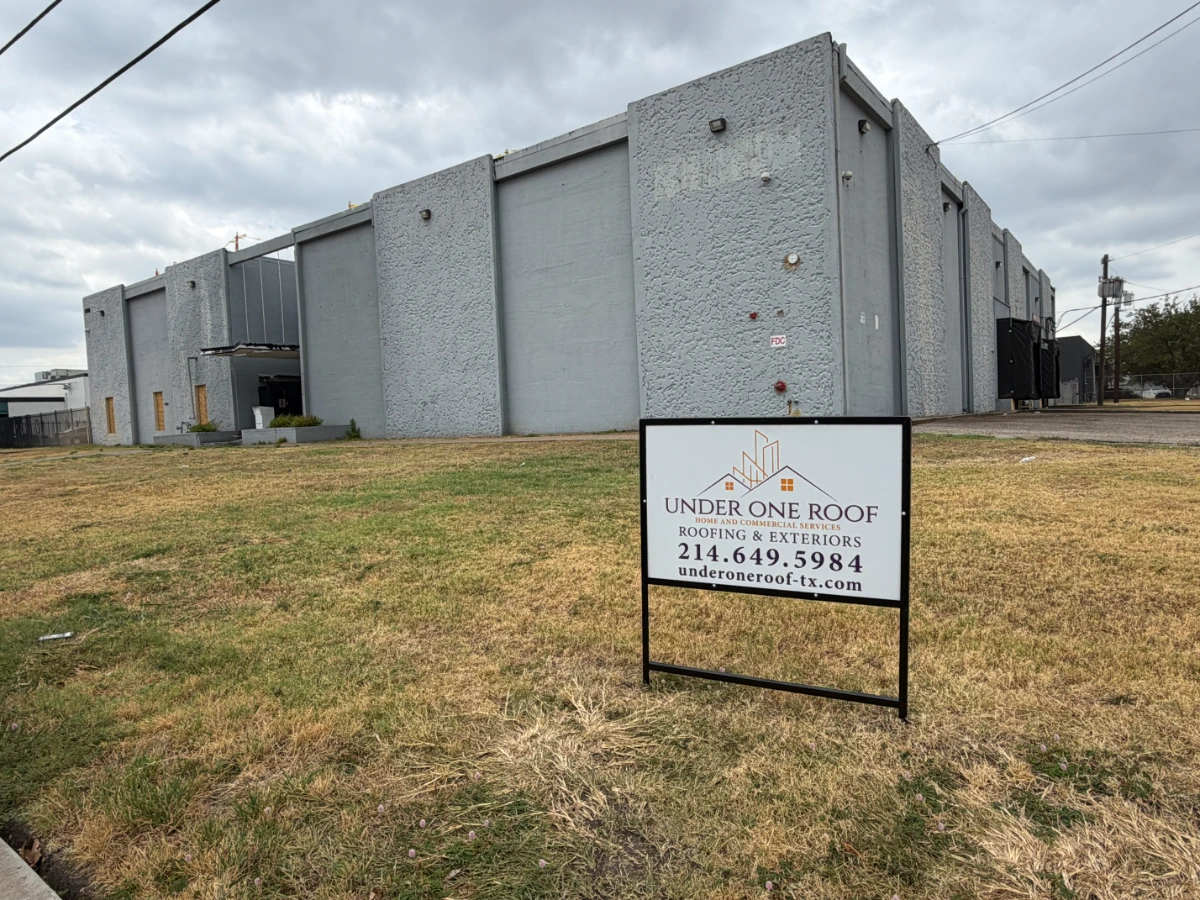
One of our commercial jobs sits on a light industrial building between Love Field and the Medical District, and it shows what a tear-off looks like on an older gravel roof.
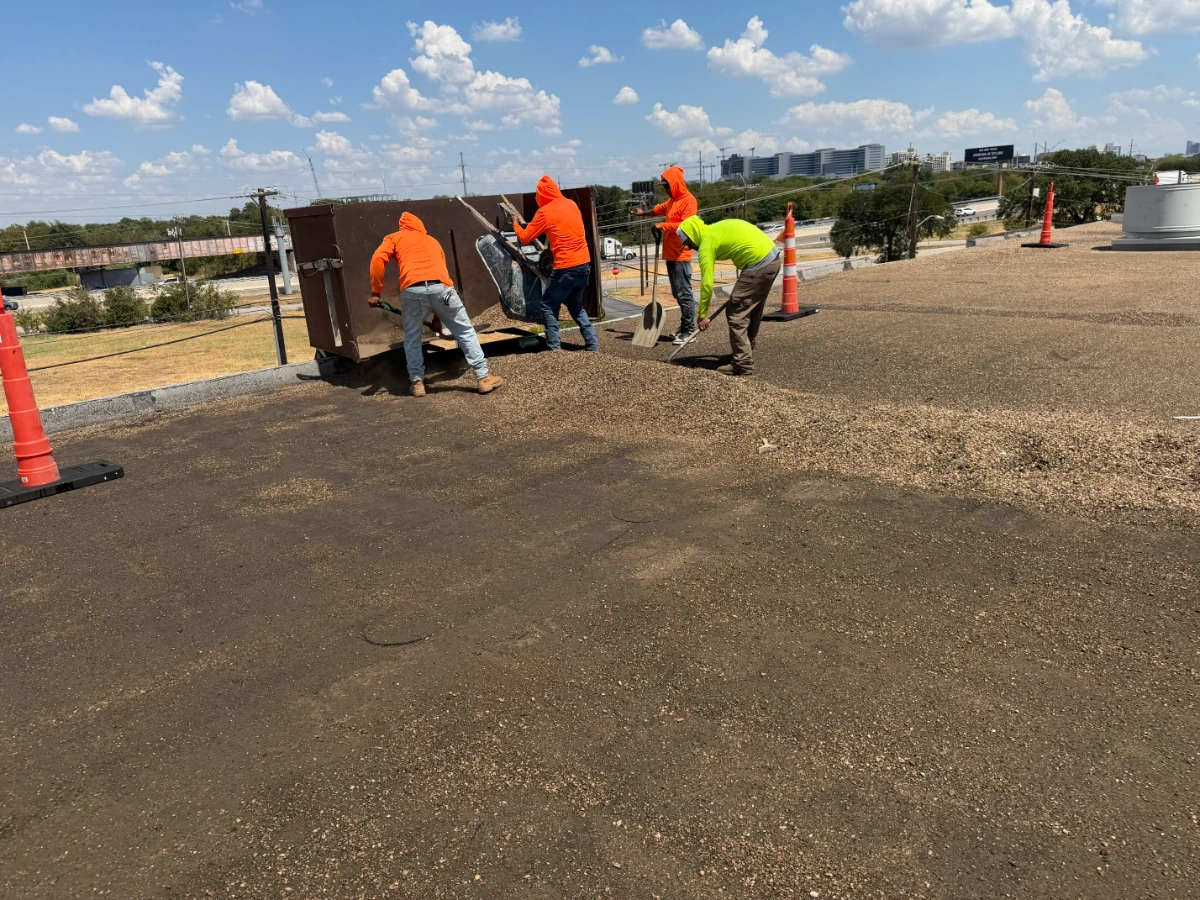
The existing system is a gravel-surfaced built-up roof, so the first order of business is scraping all of that aggregate off and hauling it away. That is the shoveling you see in the photos, and on a roof that size it is a real share of the labor before anyone gets to the roofing itself. Once the gravel is clear, the built-up layers come off too, down to the deck.
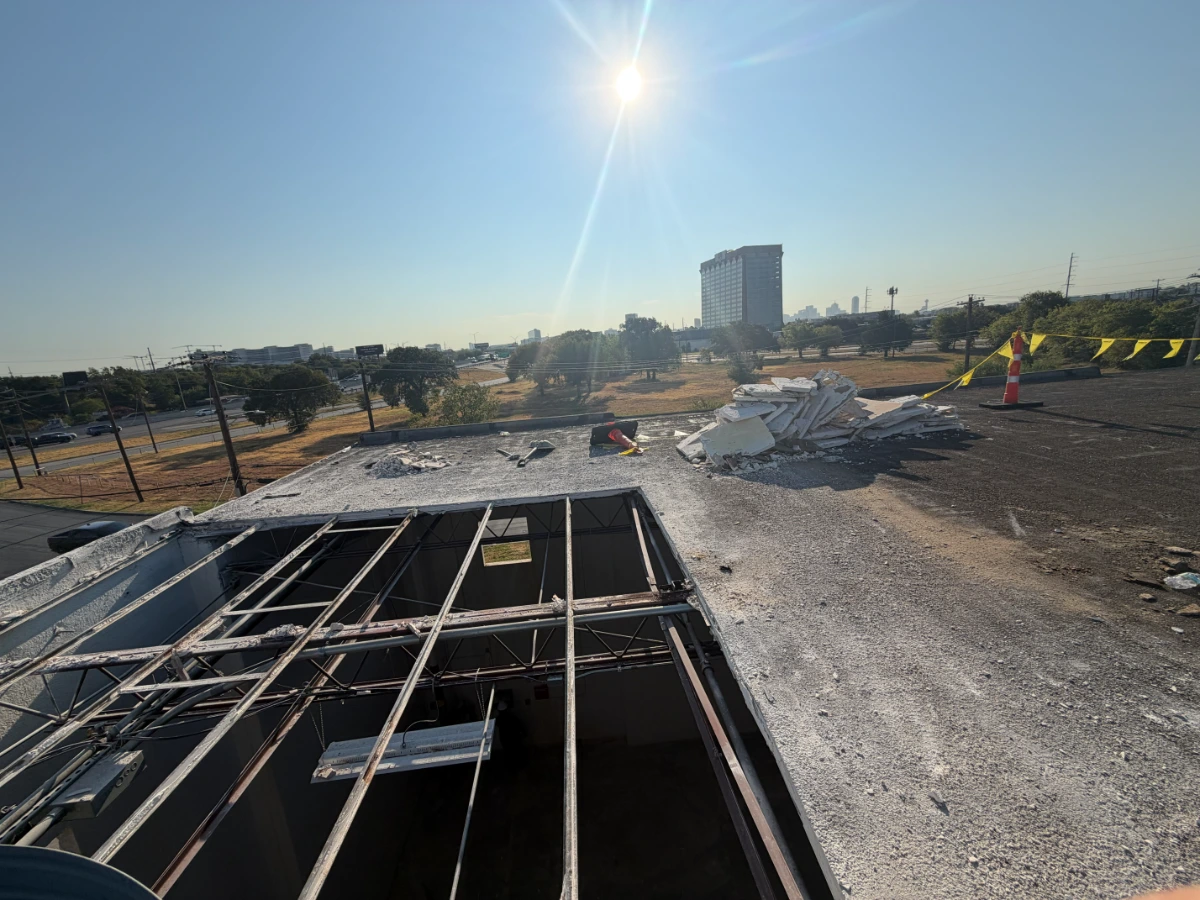
Underneath is a gypsum deck, which was common on commercial buildings of that era around Dallas. Where the gypsum had taken on water, it is not something you can build on, so those sections come out down to the bar joists and go back as steel deck. Where the deck is still sound, it stays and the new system goes on over it.
So the roof covering comes off across the whole building, and what varies section to section is whether the deck under it survives. Then insulation and a TPO membrane go on over the top.
That is the part owners rarely see on a bid. Two buildings can look identical from the parking lot and price very differently, because one has a deck you can build on and the other does not.
What a Commercial Roof Replacement Includes
- Roof walk and moisture survey. We find out how much of the assembly is wet before anyone quotes anything, because that decides recover versus tear-off and it decides the price.
- Written scope with both options priced where both are possible. If a recover is legal and sensible on part of the roof, you see that broken out rather than buried in one number.
- Tear-off down to the deck. On a gravel-surfaced built-up roof the aggregate gets scraped off and hauled first, then the built-up layers come off. On a single-ply system it is the membrane and whatever is bonded to it.
- Deck inspection, then repair or replacement. With the roof off, we can see what we are building on. Anything soft, rotted, or water soaked comes out. On older buildings that can mean pulling wet gypsum deck panels and putting steel deck back on the joists, while the sound sections stay.
- Insulation and membrane. The new system goes on, and on most of our commercial work that is TPO, with the seams heat welded so the surface fuses into one piece rather than relying on tape or adhesive.
- Flashing at every penetration. Curbs, pipes, drains, and roof edges. Most flat roof leaks start at a detail, not out in the open field of the membrane, so this is where the time goes.
- Final walk and cleanup. Gravel and debris are a real cleanup job on a commercial tear-off, and the lot has to go back the way we found it.
We pull the permit and handle the inspection. That is our job, not yours, and it matters later when an insurance carrier or a buyer wants to see the roof's paperwork.
Your Building Stays Open While We Work
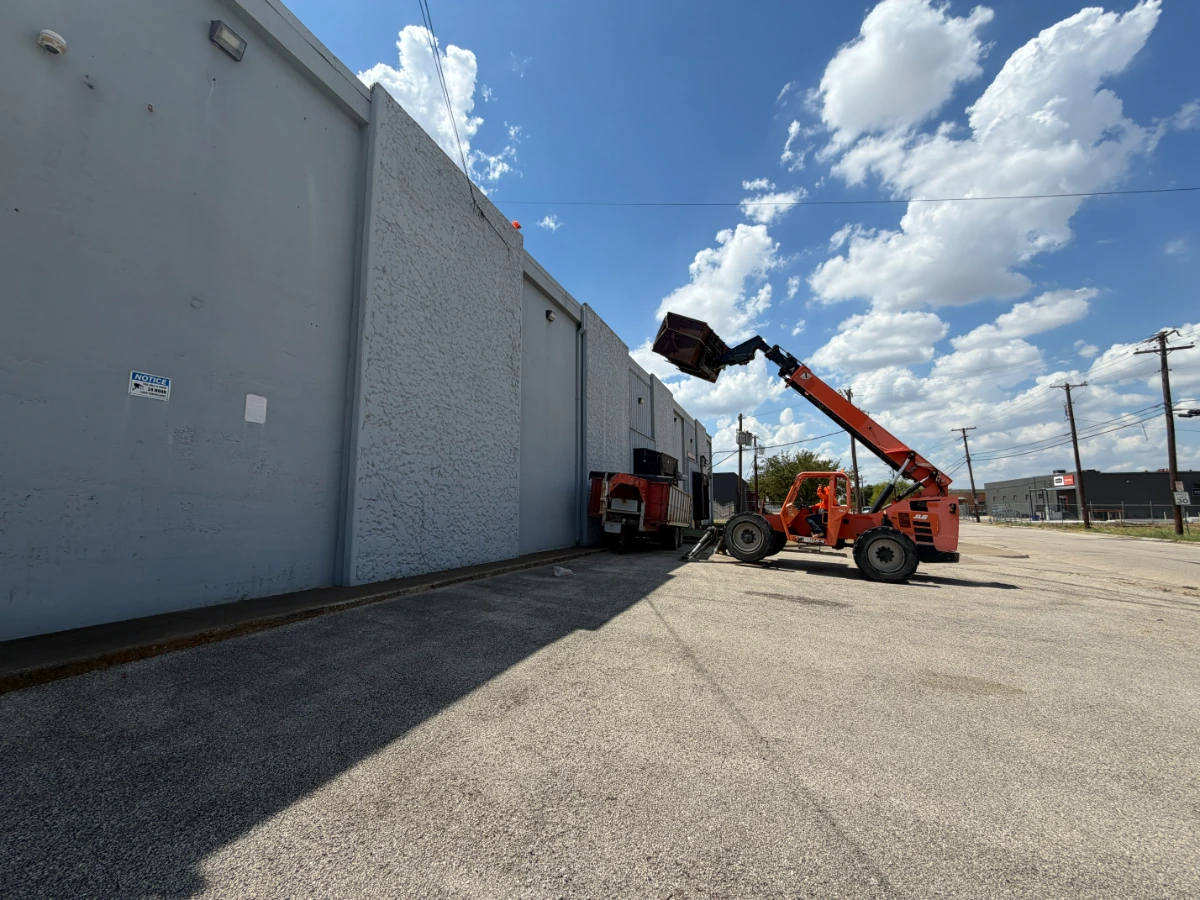
This is what owners and property managers ask about before they ask about price. Almost always, you keep operating.
A commercial tear-off is loud and there is equipment moving, so we plan the site before we start instead of showing up and working it out. We walk the property and map where the debris box sits, where material gets staged and lifted, and which doors and drive aisles stay clear. A multi-tenant center needs a different plan than a standalone building with its own lot.
- Parking gets closed off in sections rather than all at once, so customers and staff still have access.
- Debris boxes and deliveries stage away from the entrances people actually use.
- The loudest tear-off work goes early in the day where the schedule allows it.
- Walkways under any overhead work stay covered or marked off.
Most of a flat roof job happens up top, so there is less falling debris and less noise below than a steep residential tear-off, and that is one of the things that makes an occupied commercial building workable in the first place.
It is worth asking any commercial roofer how they handle access and staging during business hours. If the answer is vague, they probably have not done many occupied buildings.
How Storm Damage Moves the Timeline
Our North Texas weather is what drives most of the replacement conversations we have. Hail bruises a membrane, wind lifts a seam at the edge, and the roof keeps shedding water for another season, so nothing looks urgent from the parking lot.
We see this a lot during storm season. The damage is real but the building is still dry inside, so the decision gets put off, and then July heat works on that bruised area until it turns soft.
The timing question usually comes down to the roof's age when the storm hit. A ten year old TPO system with wind damage at the edge is a repair conversation. A twenty year old built-up roof with the same damage is a replacement conversation, because the rest of that roof was running out of life anyway and the storm just moved the date up.
That is why we walk the whole roof after a storm rather than only the section that is leaking. You cannot make a timing decision on one wet spot.
Ponding is the other thing we look at closely. Water that is still standing 48 hours after the rain stops is considered ponding, and it works on the membrane, adds load the deck was not designed to carry, and can affect coverage.2 If your roof ponds in the same places after every rain, that is a drainage and slope problem, and a new membrane alone will not solve it.
Frequently Asked Questions
Can you install a new commercial roof over the old one?
Sometimes, but not always, and it is not only up to you or to us. The code does not allow a recover where the existing roof is water soaked, where it has deteriorated past being a usable base, or where there are already two or more layers up there. We check for all three before we scope the job. On older commercial buildings at least one of them usually applies, which is why most of our replacements are a full tear-off down to the deck.
How long does a commercial roof replacement take?
Usually a few days to a couple of weeks, weather permitting. Size is the main factor, along with how many layers have to come off and how much deck needs replacing. Our storms can get a little crazy in the spring, and we are not going to leave a membrane half welded with a system rolling in, so the weather has a real say in the schedule.
Will my business have to close during the work?
Almost never. We plan staging, parking, and access around your hours before the first truck shows up, and most of the work happens on the roof rather than at ground level. Multi-tenant properties take more coordination, so we walk the site and sort out the details ahead of time.
What happens if the deck underneath turns out to be bad?
It gets replaced before anything new goes down. On older commercial buildings around Dallas we sometimes find gypsum deck panels that have taken on water, and those come out down to the bar joists and go back as steel deck, while the sound sections stay. Building a new roof over a deck that already failed is how you end up doing the job twice.
Do you have to take the gravel off an old built-up roof?
Yes, on a tear-off. The aggregate has to come off before anything else happens, and on a large roof that is a significant part of the labor. It is one of the reasons a gravel built-up roof takes longer to replace than a single-ply system of the same size.
Who pulls the permit on a commercial roof replacement?
We do, and we schedule the inspection. Keep that documentation once the job is finished, because insurance carriers look at roof permit history when they work a claim, and buyers ask for it when a building changes hands.
Ready for Your
Commercial Roof Replacement?
Get a free, no-obligation evaluation from our GAF certified team. We'll inspect your property, provide a written estimate, and walk you through every option.
Need A Roofing Contractor? Request An Estimate!
Fill out the form and we'll get back to you promptly.
Citations & Resources
- International Code Council, 2018 International Building Code, Section 1511.3.1, Roof recover. https://codes.iccsafe.org/s/IBC2018P6/chapter-15-roof-assemblies-and-rooftop-structures/IBC2018P6-Ch15-Sec1511.3.1
- Asphalt Roofing Manufacturers Association, Ponding Water Basics. https://www.asphaltroofing.org/ponding-water-basics/
Explore Our Commercial Roofing Services
Commercial Roof Replacement Throughout Dallas-Fort Worth
We provide commercial roof replacement services across the DFW metroplex:
Related Services
Explore our comprehensive range of home improvement services