
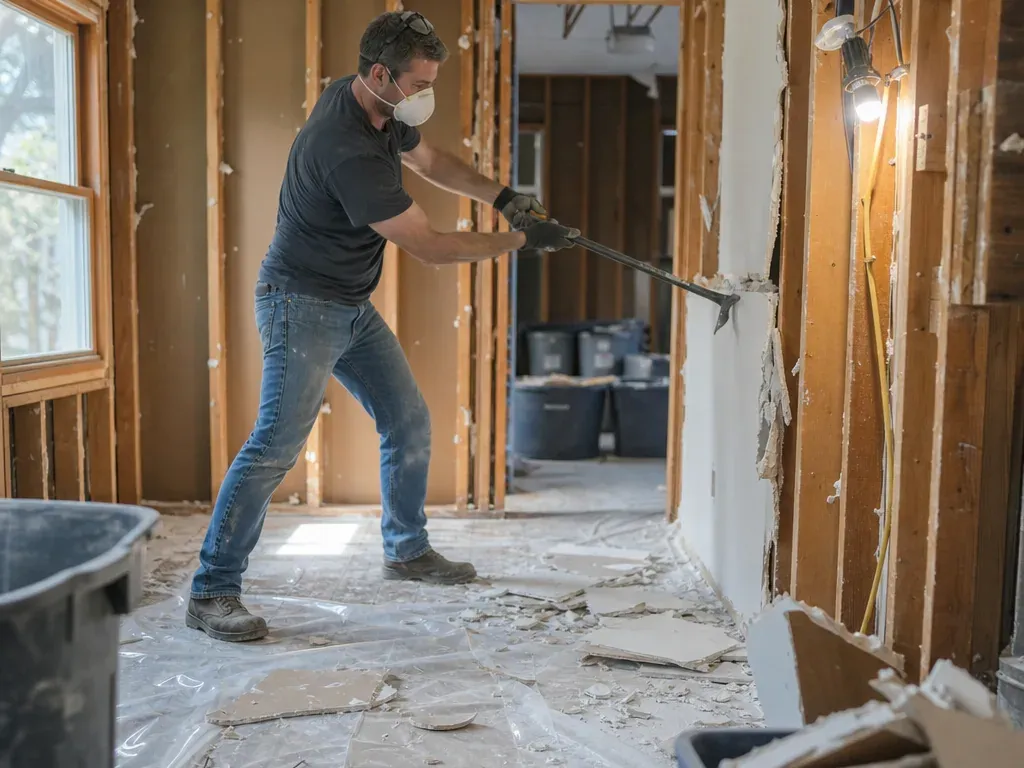
Interior Demolition in Farmers Branch
We tear it out to the studs and haul everything off, so your rebuild starts clean.
Call for a Free Estimate- Fully Insured
- BBB Accredited A+ Rating
- Family Owned and Local
Under One Roof is a family-owned demolition contractor in Farmers Branch. We do interior demolition here and across Dallas and the surrounding area. That means kitchens, bathrooms, and whole-home gut jobs before a rebuild.
We tear out to the studs and haul everything off. The structure stays put. You get a clean, open shell, ready for the next crew to start building.
What Interior Demolition Covers
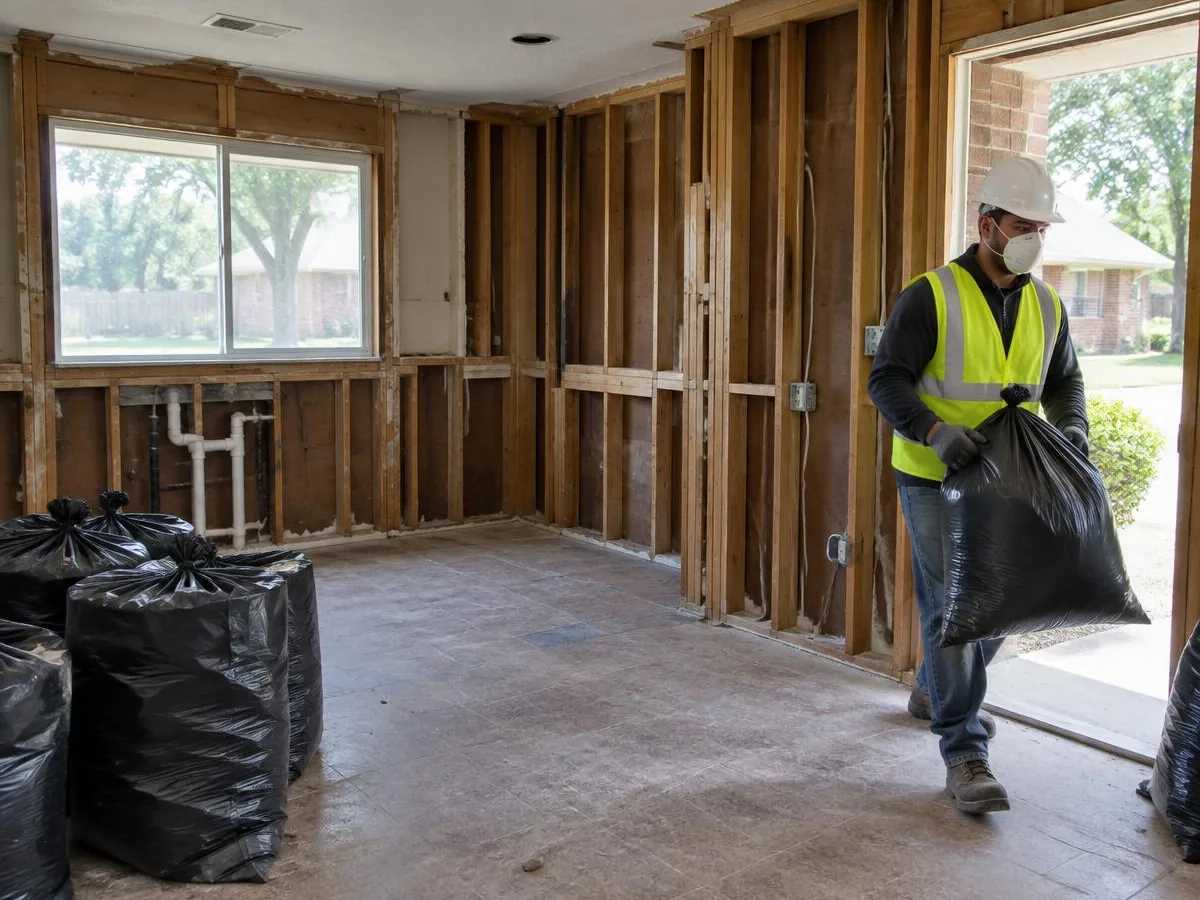
Interior demolition takes a room back to the framing. Most people call because a remodel is coming, and the old stuff has to come out first. Sometimes that's one bathroom. Sometimes it's every room in the house.
Here's what usually comes out on a gut job:
- Drywall and plaster, off the walls and ceilings down to the studs
- Flooring, like carpet and pad, vinyl, laminate, glued-down wood, or tile set in mortar
- Cabinets, countertops, vanities, and built-ins
- Tubs, showers, toilets, sinks, and light fixtures
- Interior doors, trim, baseboards, and closet shelving
- All the debris, hauled off so the space is clear
What stays matters just as much. The framing stays. The walls stay where they are. The roof, the foundation, and the rest of the structure stay too.
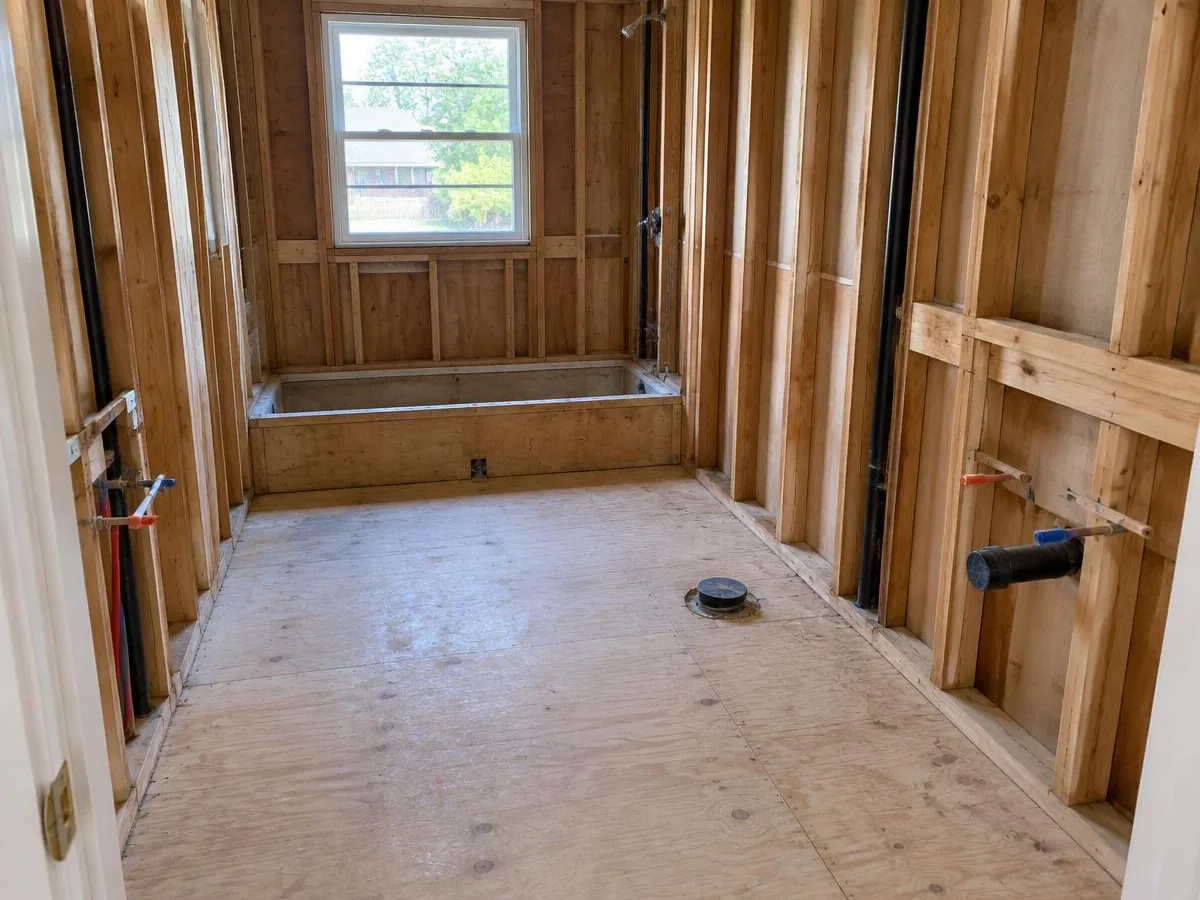
Interior demo clears out what's on and inside the framing, and that's where it stops. Think of it as taking the house back to its bones. The new plan gets a clean place to start.
If you're taking the whole house down instead, that's a different job. Our house demolition page walks through how that works.
Common Reasons People Gut a Room or a Home
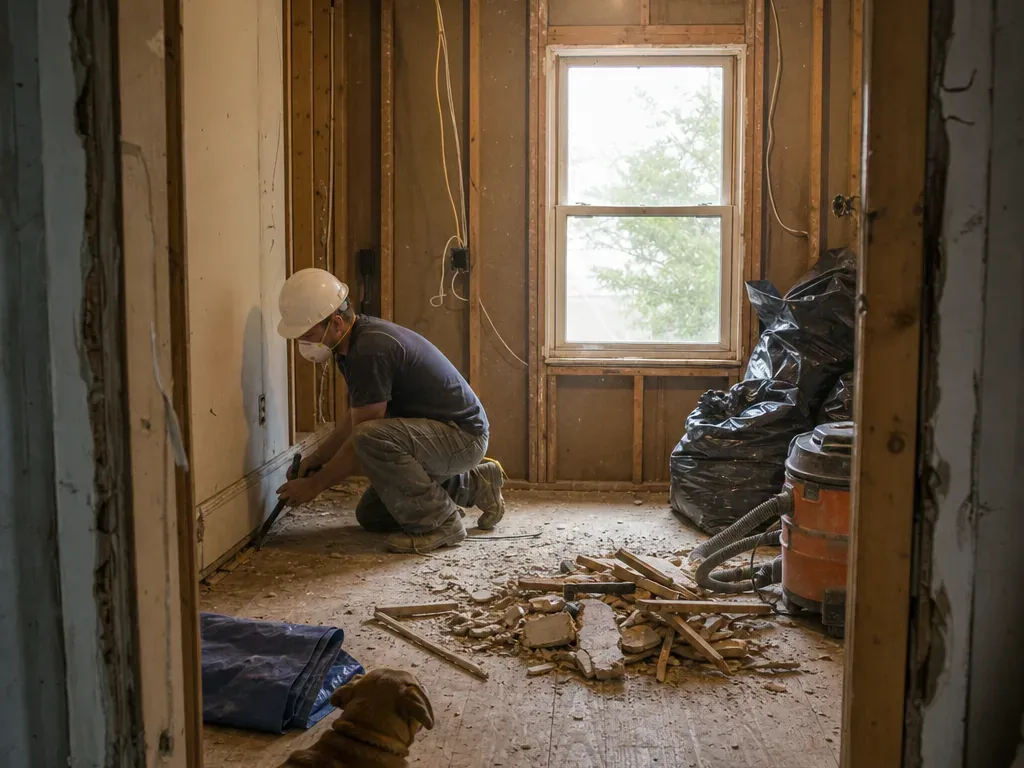
Most interior demo calls start one of two ways. Either you've got a remodel planned, or something happened inside the house and the rooms need to come open.
- A kitchen or bathroom remodel, where everything has to come out before anything new goes in
- Water damage from a plumbing leak, where wet drywall and insulation have to go
- A whole-home gut before a full renovation
- An older home being taken back to the studs before it's rebuilt
- An office or retail space being cleared to a shell for the next tenant
Remodels are the planned version, so they tend to go the smoothest. You know what's coming out, and the plan says where the tear-out stops. Sometimes that's down to the studs. Sometimes it's just the cabinets and the floor.
Water damage is messier. By the time a stain shows on the ceiling, the drywall above it has usually been soaking for a while. The source isn't always obvious. It might be a supply line, a drain, or an old wax ring under a toilet. Many times you don't know until the drywall is off.
On the commercial side, offices and retail spaces change tenants all the time. The last tenant's carpet, ceilings, and fixtures rarely fit the next one. Those come out, we haul it all off, and the space goes back to a clean shell.
Before We Start: Utilities and Permits
A couple of things have to happen before anybody picks up a pry bar. Getting them done early keeps the job on track.
Utilities are on the owner. Before work starts, have the gas, electric, and water disconnected by the providers. Sewer gets capped too, if that's required. We don't disconnect utilities, and a demo crew shouldn't be guessing whether a line is live.
Permits are on us. We pull the demolition permit and handle the haul-off. Every city writes its own rules, so we check what your job needs before work starts. You're not sorting out the paperwork alone.
Older homes and buildings can bring one more step. In Dallas, the city's demolition permit checklist[1] calls for an asbestos survey before work starts. Older buildings may need one first. If your place has some age on it, bring this up early so it doesn't hold up the start date.
What to Expect on Demo Day
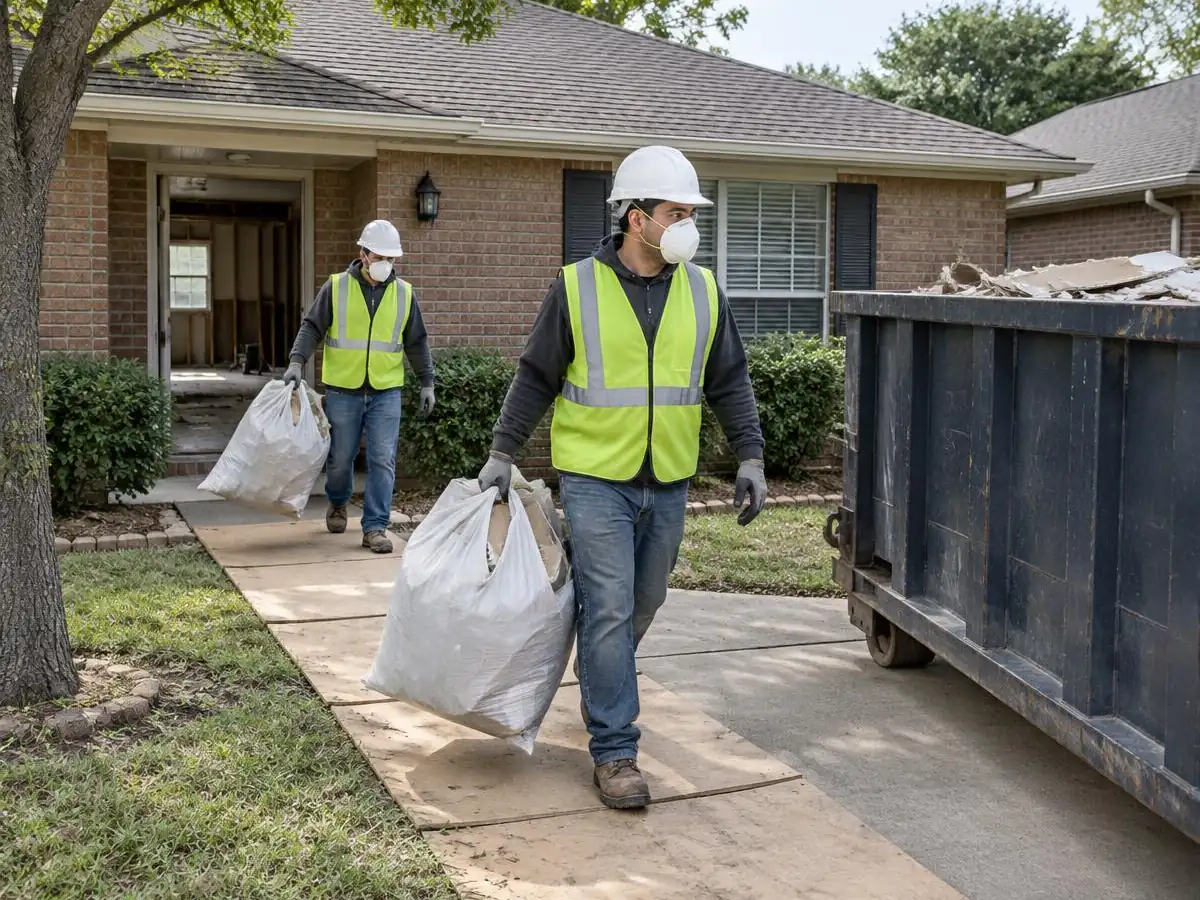
Once the utilities are off and the permit is in hand, the work follows a steady order. Knowing that order helps. Day one can look like a mess, and you'll want to tell a normal mess from a problem.
The work usually goes from the top down and the inside out:
- Fixtures, doors, trim, and anything mounted on the walls come out first
- Cabinets, counters, and vanities come off next
- Ceilings and then walls get stripped to the framing
- Flooring usually goes last, so it catches the debris from above
It's loud. Drywall comes off fast and isn't too bad. Tile set in a mortar bed is a different story. It has to be chipped up, and that's the part your neighbors will hear.
If you're living there during the work, plan to be out for the loudest days if you can. Dust happens too. It's fair to ask how the work area will be closed off from the rooms you're still using.
What Shows Up Behind the Walls
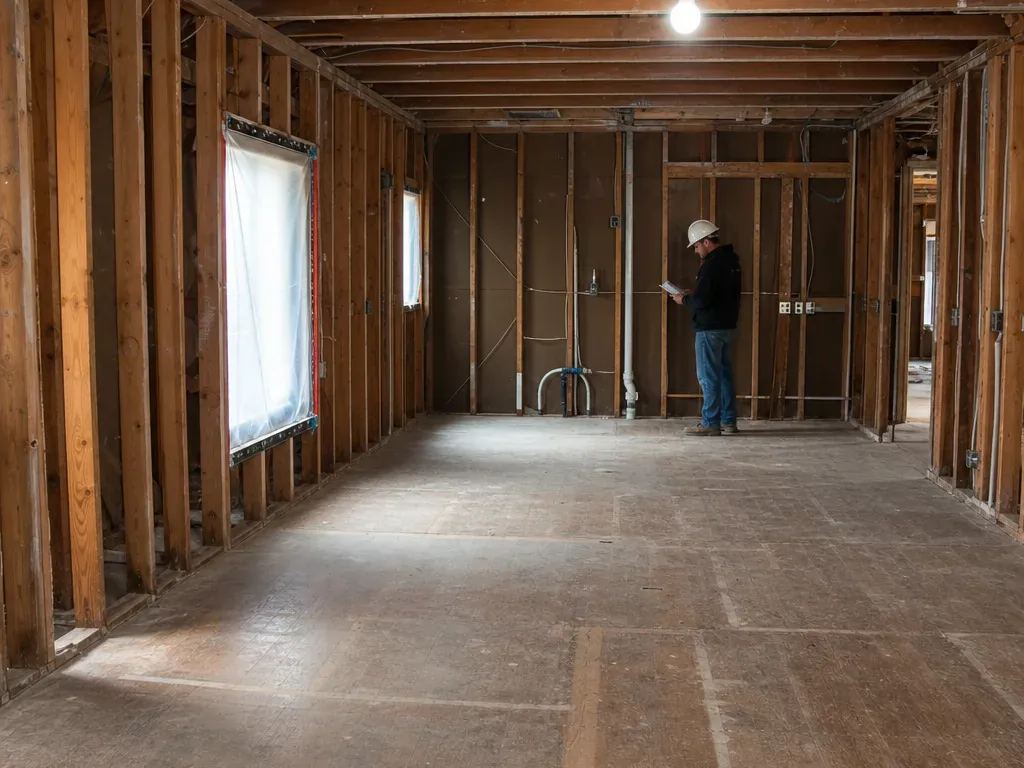
Nobody can promise what's behind the walls until they're open. With the drywall off, you can see the framing, wiring, pipes, and subfloor. Many times something shows up that wasn't on the plan.
It might be a soft spot in the subfloor next to a toilet. It might be a dark stain running down a stud. It could be wiring somebody spliced in during a past remodel. That's the moment to stop and talk it through with your builder. Don't let it get covered back up.
I'd always rather find a problem with the walls open than after the new cabinets are hung. That's why it's smart to keep a little room in your budget and schedule. Surprises don't show up on every job. When they do, catching them early usually costs less.
At the end, the debris is hauled off and the space is left clear, down to the studs. Walk the room before the crew leaves. Check that everything on the plan came out. Then the next crew can start on day one without cleaning up somebody else's mess.
Why Farmers Branch Calls Under One Roof
We're family owned and locally operated, based right here in Farmers Branch on Rosser Road. We started in 2021, and our team brings more than 30 years of combined experience. We're BBB Accredited with an A+ rating and fully insured.
Max is on the jobs himself. We work in Farmers Branch and across Dallas and the surrounding area. That's from Preston Hollow to Carrollton and the Dallas-Fort Worth area.
If your remodel starts with a tear-out, call (214) 649-5984 or request a quote. Tell us what's coming out and what's going back in. We'll gut it to the studs, haul it all off, and leave you a clean shell to build from.
Frequently Asked Questions
Do I need to shut off the utilities before interior demolition?
Yes, and that part is on the owner. Have the gas, electric, and water disconnected by the providers before we start. Sewer gets capped too, if that's required. We don't disconnect utilities.
Do you pull the permit and haul off the debris?
Yes. We pull the demolition permit and haul off all the debris. You're left with a clean shell, ready for the next crew.
How far does interior demolition go?
Usually down to the studs and the subfloor. Drywall, flooring, cabinets, fixtures, and trim come out. The framing and the rest of the structure stay where they are.
Can you gut just one room, or does it have to be the whole house?
Either one works. It can be a single kitchen or bathroom, or a whole-home gut job before a full rebuild.
How loud and messy is interior demolition?
It's loud, especially on tile days. Drywall comes off fast, but tile in a mortar bed has to be chipped up. If you're living there, plan to be out for the noisiest days.
Can I do some of the tear-out myself?
Ask us first. Some homeowners pull out cabinets or flooring on their own. Anything near power, water, or gas should wait until those lines are shut off.
Ready for Your
Interior Demolition?
Get a free, no-obligation walkthrough from our family-owned team in Farmers Branch. We'll look at the property, give you a written quote, and walk you through what comes down and what stays. We work from Preston Hollow to Carrollton and the Dallas-Fort Worth area.
Need a Demolition Contractor? Request An Estimate!
Fill out the form and we'll get back to you promptly.