
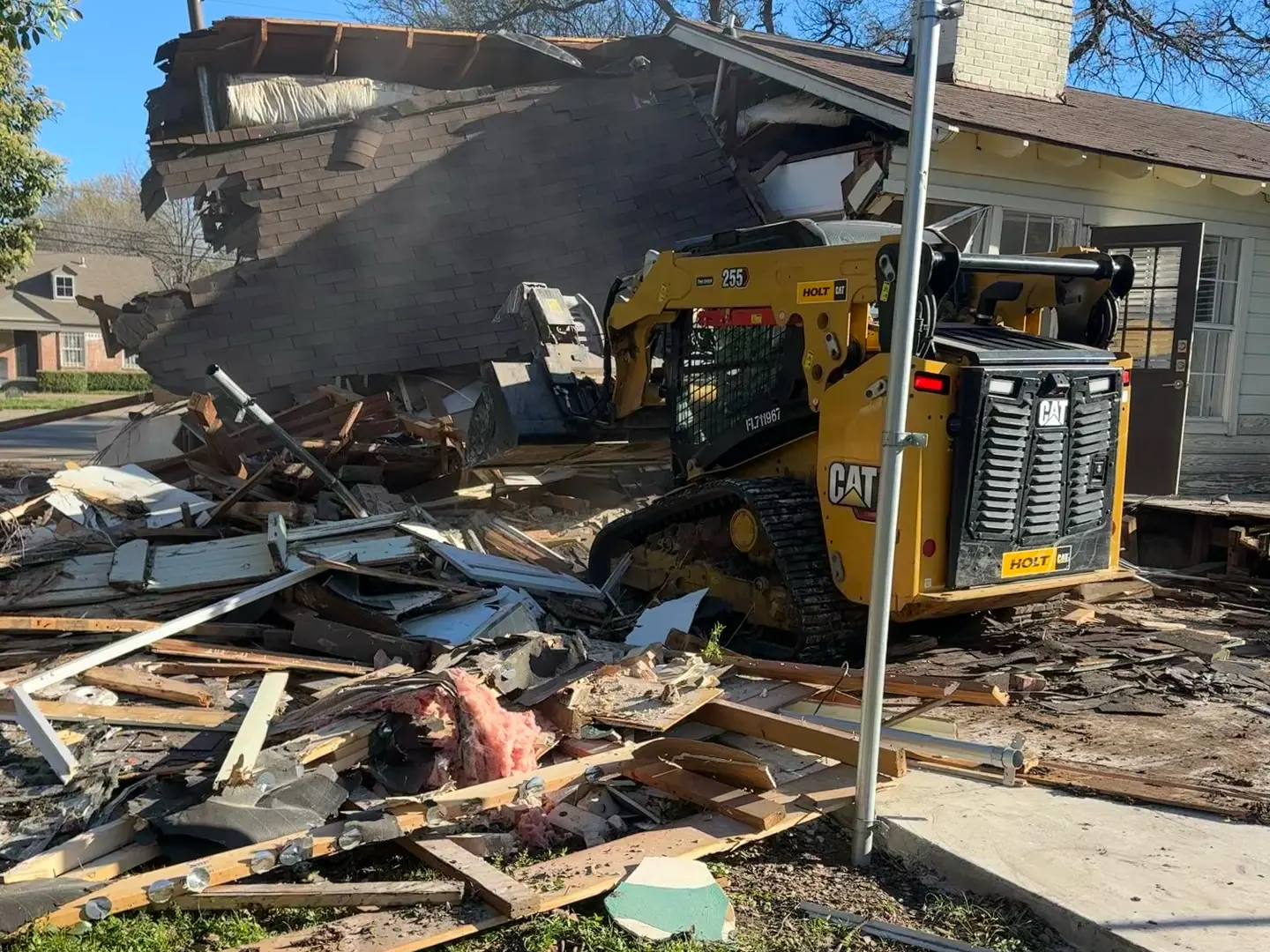
House Demolition in Farmers Branch
The whole house comes down, the debris goes away, and you get a clean lot back.
Call for a Free Estimate- Fully Insured
- BBB Accredited A+ Rating
- Family Owned and Local
Tearing down a house is a big step, and you only get to do it once. Under One Roof is a family-owned demolition contractor in Farmers Branch. We take houses down in Farmers Branch and across Dallas and the surrounding area.
We take the house down safely, pull the permit, and haul off the debris. Max, the owner, is on the jobs himself. You're left with a clean lot, ready for a rebuild or a sale. Here's how a full house teardown usually goes, step by step.
Step 1: Decide What "Done" Looks Like
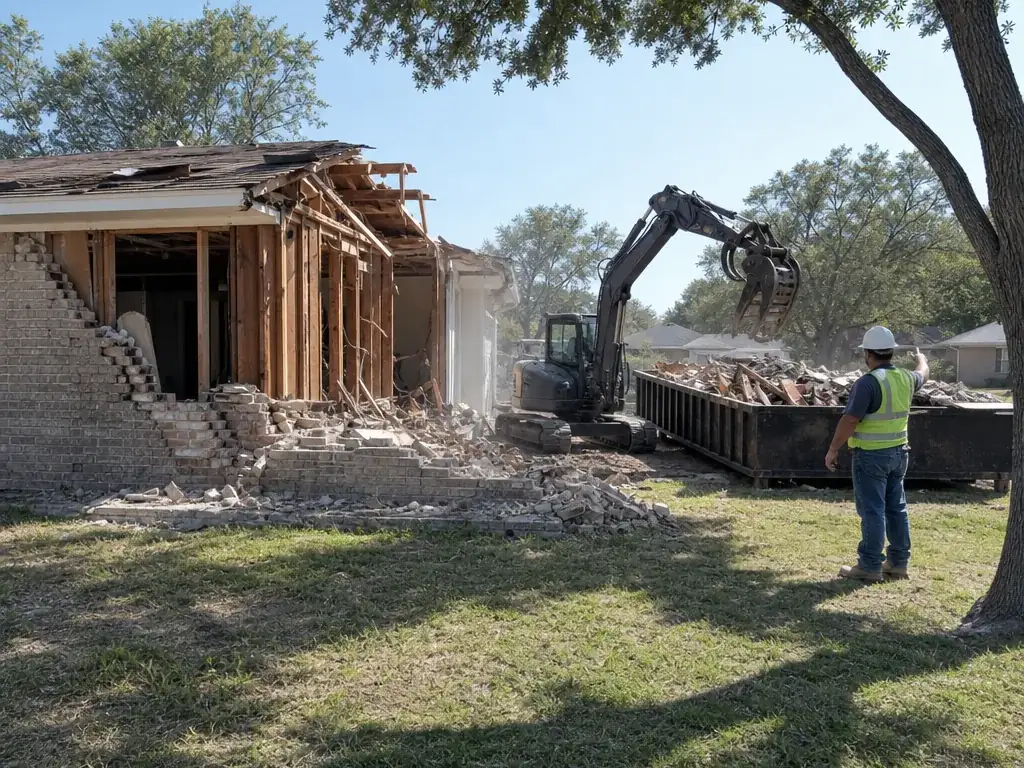
Most people picture the house coming down and figure that's the job. It's the loudest part, but it's usually the middle of it. What you're paying for is what's left on the lot when the trucks pull out.
Two bids can both say house demolition and stop in very different places. One might stop at the slab. Another might take the slab, the driveway, and the walks too. So read the last line of the scope before you sign.
A full house teardown usually covers these pieces:
- The whole house, plus anything attached to it, like a carport or back porch
- The foundation, whether it's a slab or pier and beam
- Flatwork, like the driveway, walks, and patio
- Haul-off of every load
The foundation is where bids split the most. Stopping at the slab looks cheaper on paper. Then your builder needs it gone, and you're paying a second crew to break it out. Taking the slab and flatwork in the same job is usually the cleaner way to run it.
Some things are often left off a bid unless you ask. Think trees and stumps, a pool, fencing, or a detached garage or shed. If the lot has other buildings to clear, our residential demolition page covers lot clears for homeowners and builders.
Step 2: Permits and Utilities
We pull the demolition permit. Each city runs its own checklist, and the details can change. Take Dallas as an example. Its demolition permit checklist[1] lists items like a tree survey and notice that the utilities are off. The same checklist calls for an asbestos survey before work starts, so older houses may need one first.
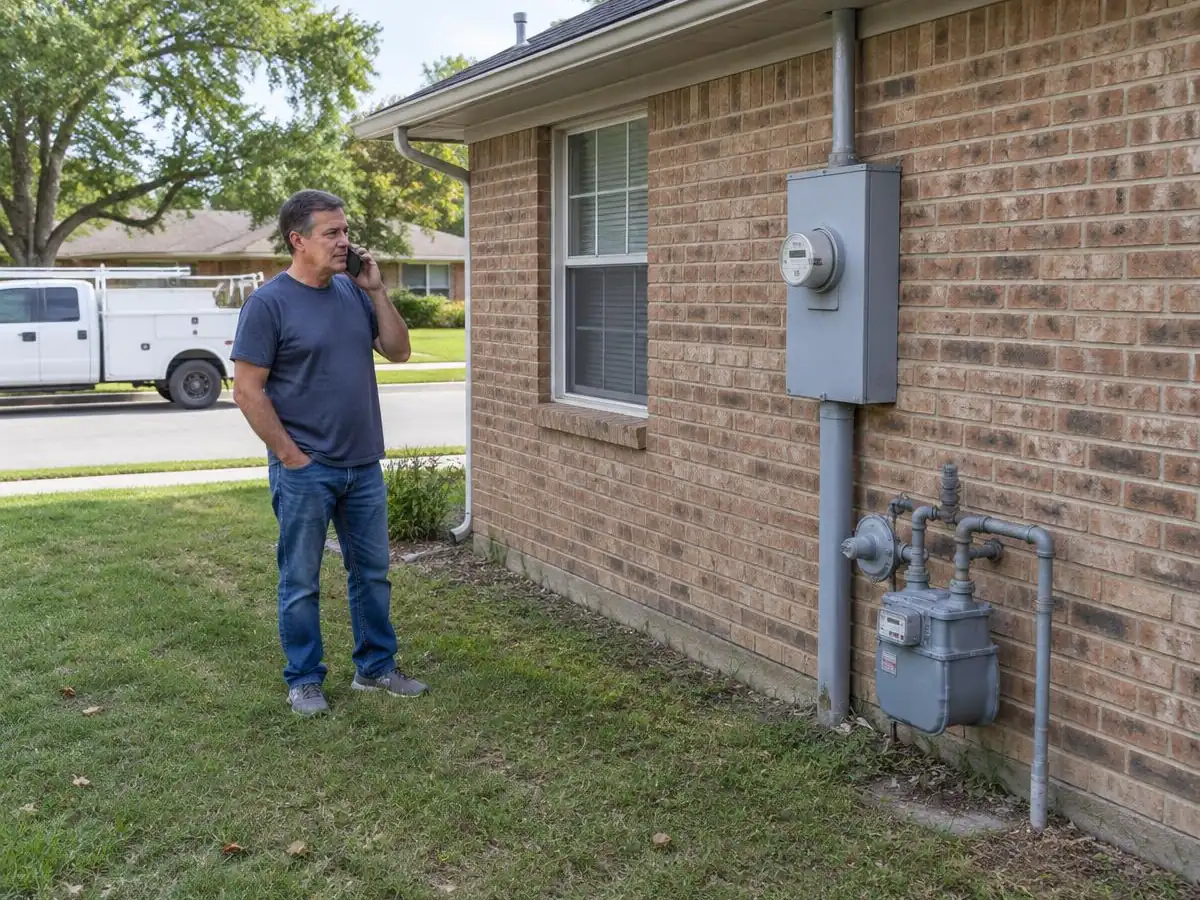
Utilities are the owner's job. You have the gas, electric, and water providers shut off service, and the sewer capped if it's required. We don't disconnect utilities. The gas and electric providers usually pull their own meters, on their own schedule, so call early.
A house can sit empty for months and still be hooked up. Check for a second service, too, like a separate power feed to a detached garage or workshop. Tell each provider about every building on the lot.
Timing can go either way. Sometimes the utilities are off fast and the paperwork is the wait. Other times it's the other way around. Once the lot is clear, it's smart to check that the permit gets closed out. An open permit can raise questions later.
Step 3: Clear the House Out
The common way is to leave everything inside, figuring it all goes in the same pile. A better way is to clear it out first. Whatever's left behind adds to every load, and some of it can't go in a regular load at all.
This is your last chance to keep anything. Ceiling fans, light fixtures, solid wood doors, cabinets, and a good water heater are all worth a look. Even the mailbox. Once the house is down, anything you meant to keep is debris.
A house that's been lived in for years usually holds more than people expect. The attic, the garage, and the back closets fill up over time. It helps to start clearing a few weeks out, not the weekend before.
Get these out before we start:
- Refrigerators, freezers, and window units
- Paint cans, motor oil, and pool chemicals
- Propane tanks and small gas cylinders
- Mattresses, couches, and furniture you don't want hauled with the house
Outside, walk the lot and mark what stays. That can be a tree you want to keep, a shared fence line, or the neighbor's side of a driveway. Think about how the trucks get in, too. Low limbs, overhead lines, or a narrow side yard all change where things go.
Step 4: Teardown Day and Haul-Off
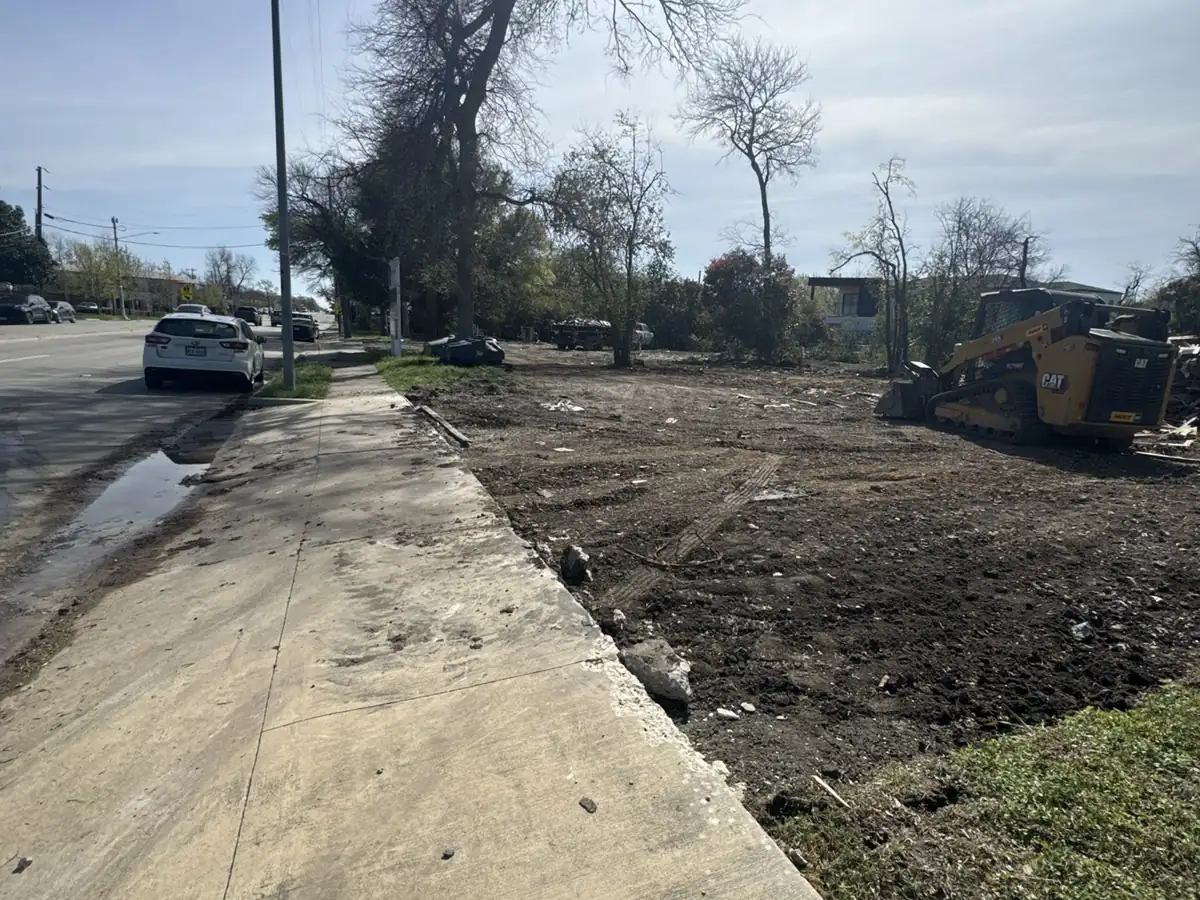
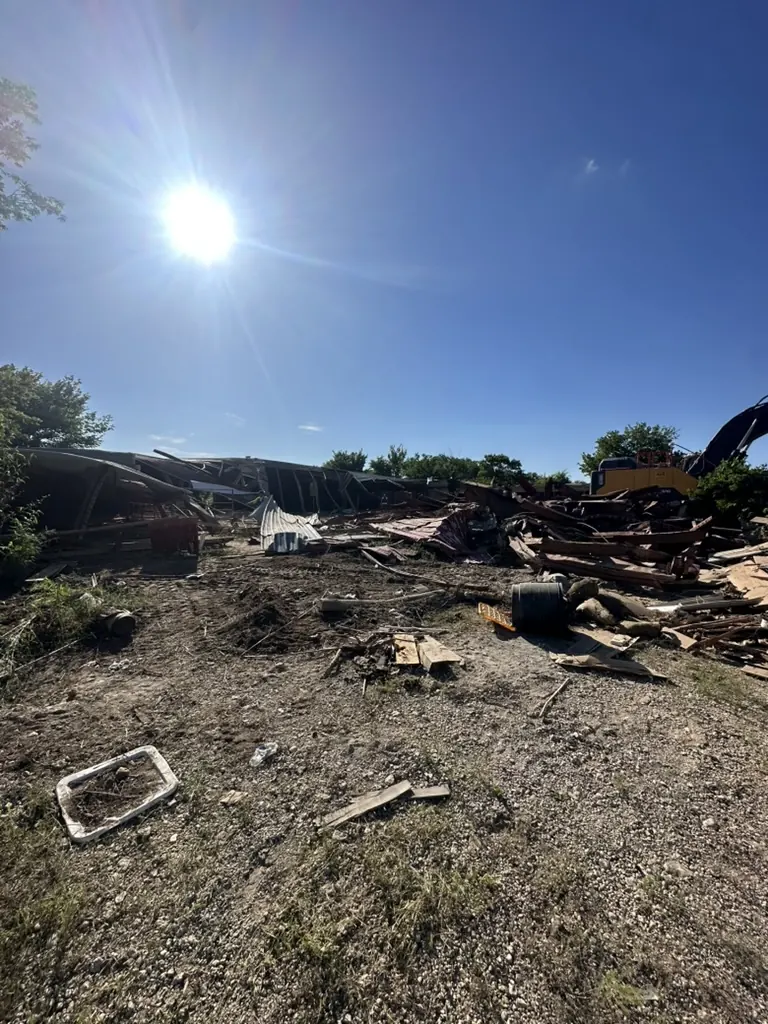
Once the permit is in and the utilities are off, the job goes on the calendar. The house comes down, and the debris gets loaded and hauled. Then the slab and flatwork come out, if they're part of the scope.
Haul-off is part of the job. Every load leaves the lot. A little rain can turn a cleared lot muddy for a day or two, so the schedule can slide some. That's normal.
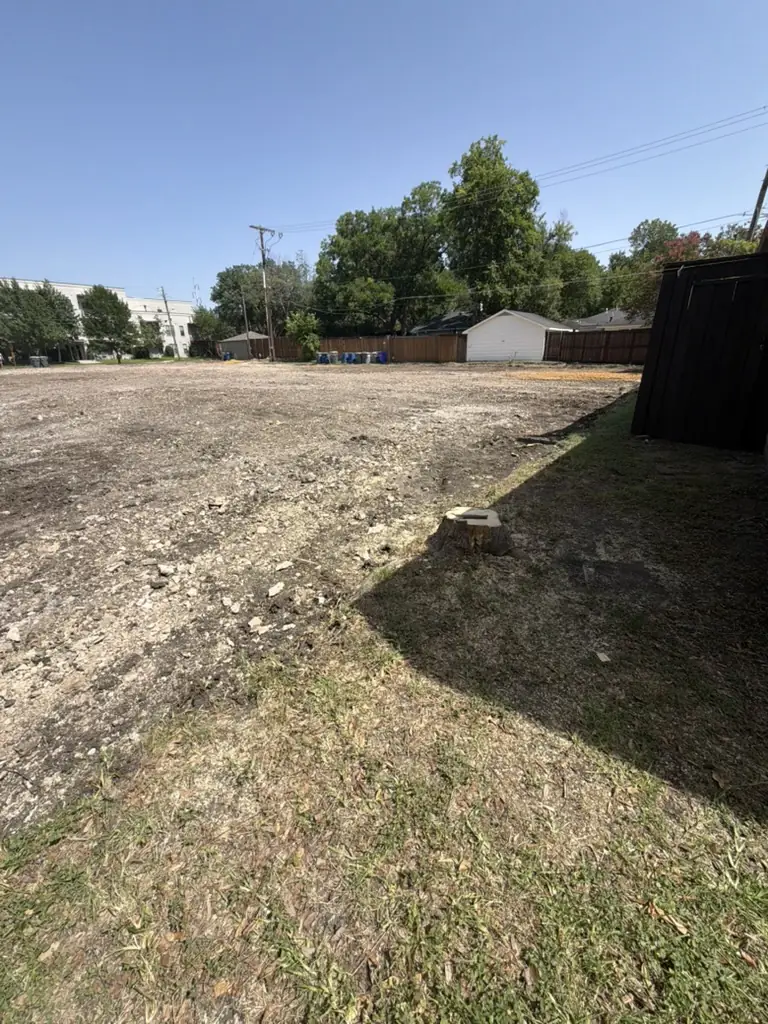
A clean lot means no nails in the yard and no chunks of concrete at the curb. It means no leftover pile at the back of the lot for you to deal with later. Walk it with your quote in hand before the final payment. Match what you see to what was written down.
Max, the owner, works the jobs with the crew. So the person who walked the house for the quote is usually there when the last load leaves.
Step 5: Teardown or Interior Gut?
Plenty of people call about tearing a house down when what they want is a new layout. Before you commit, it's fair to ask whether the bones are worth keeping. A house that comes down can't be put back.
A full teardown usually makes sense in a few cases. The foundation has failed, or the frame has been through fire or long-term water damage. Or your plans need a different footprint than the one you've got. I'd ask any contractor to walk you through both options before you sign for a teardown.
If the slab and frame are sound, interior demolition may fit better. That takes the inside down to the studs and keeps the shell standing. We don't take selective demolition jobs, where one part of a building comes out and the rest stays.
Selling the lot instead of building? A clean lot is easy for a buyer to see a new home on. Many times it's a simpler sale than an old house that needs work.
There's no sticker price on a teardown.
These are the things we usually look at when we price one:
- The size of the house and what it's built from
- The foundation, slab or pier and beam
- How much flatwork comes out
- How easy it is to get trucks in and out
- How much debris has to be hauled off
Frequently Asked Questions
Who handles the utilities before a house comes down?
The owner does. You have the gas, electric, and water providers shut off service, and the sewer capped if it's required. We don't disconnect utilities. Call early, since the providers work on their own schedule.
Do you pull the permit and haul off the debris?
Yes, both are part of the job. We pull the demolition permit, take the house down, and haul off every load. You get a clean lot when we leave.
Do you take out the slab too?
We can, and most builders want it gone. The slab, driveway, and walks can all come out in the same job. Tell us what you need, and we'll put it in the quote.
Is it worth tearing down a house instead of remodeling it?
It depends on whether the foundation and frame are still sound. A teardown usually makes more sense if the slab has failed or the frame has fire or water damage. It also fits if you need a new footprint. If not, keeping the shell is often the simpler path.
What should I take out of the house before demolition?
Take out anything you want to keep, plus a few items that can't go in a regular load. Salvage fans, fixtures, doors, and cabinets before the crew arrives. Clear out refrigerators, paint cans, propane tanks, and pool chemicals too. Once the house comes down, anything left inside is debris.
Can you take down just part of the house?
No, we only take down whole buildings. If you want the inside gutted and the shell kept, that's interior demolition. Want a detached garage or shed gone and the house kept? We can take that building down on its own.
Ready for Your
House Demolition?
Get a free, no-obligation walkthrough from our family-owned team in Farmers Branch. We'll look at the property, give you a written quote, and walk you through what comes down and what stays. We work from Preston Hollow to Carrollton and the Dallas-Fort Worth area.
Need a Demolition Contractor? Request An Estimate!
Fill out the form and we'll get back to you promptly.