
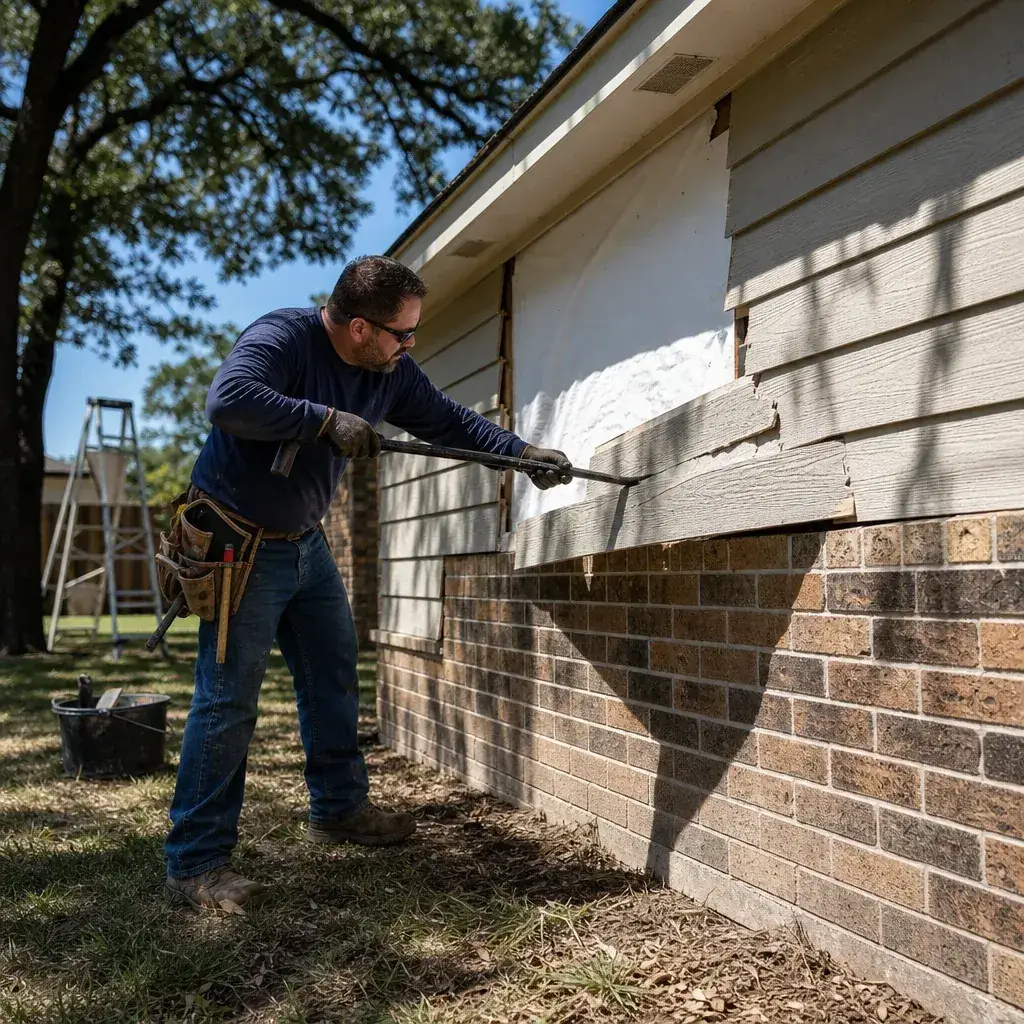
Siding Repair in Farmers Branch
Fix the section, not the whole wall.
Call for a Free Estimate- GAF Certified Contractor
- BBB Accredited A+ Rating
- Family Owned and Local
Signs Your Siding Needs Repair Now
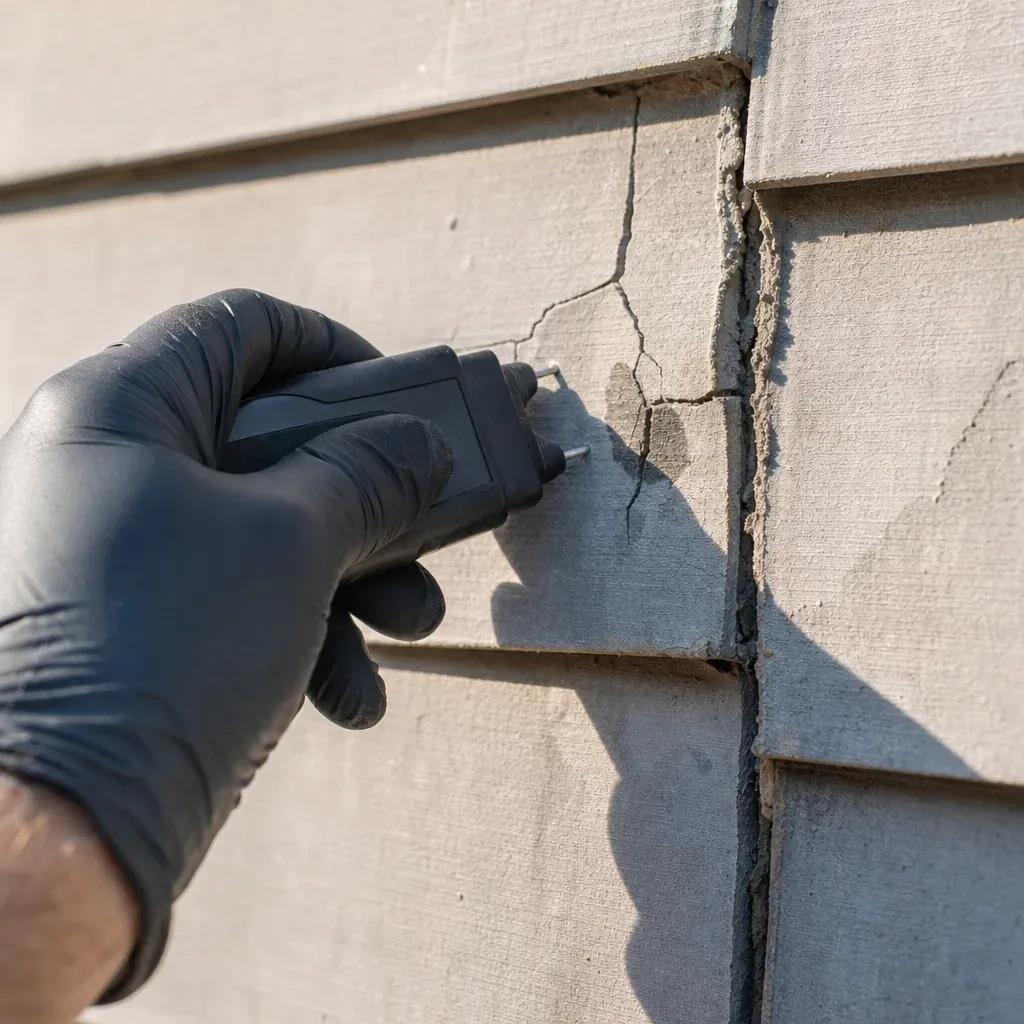
Siding repair is cheapest when you catch it early and fix whatever caused the damage. Cracks, soft spots, gaps, and stains tend to point to water getting behind the wall, and the board you can see is usually the smaller problem.
Most siding repair calls start with something small, a cracked board or a panel that's come loose after a little bit of wind blew through, and the homeowner figures it can wait. Sometimes it can. But siding is there to keep water off the wall behind it, and once that water gets in, you're not fixing a board anymore. You're fixing what's under it.
So here's what we look for when we walk a house:
- Cracks, holes, or dents, especially on the side that faced the storm after spring hail
- Boards that feel soft when you press a thumb into them
- Panels that are warped, buckled, or pulling away at the seams
- Gaps around windows, doors, and trim where caulk has shrunk or split
- Dark streaks, bubbling paint, or mildew that keeps coming back in the same spot
Soft spots are the one to take seriously. A soft board generally means moisture has been sitting in it a while, and it can be a failed seam, or it can be water running down from a gutter or a roof edge above it, and you don't know which until somebody pulls a piece and traces it. Patch the board without finding the source, and the new one goes soft too.
Our North Texas weather is part of this. Summer heat sits on the west and south walls for months, and that heat can dry out caulk and warp panels faster than you'd think, so it's usually the first place we find gaps. Then spring hail finds those weak spots.
Paint that's peeling on one wall and fine on the others? That's telling you something. If you look really closely, you'll see the damage tends to follow the weather, and that tells us where to start looking.
Repair is one of three siding services we handle out of Farmers Branch, along with installation and inspection.
Repair Versus Replacement: How the Call Gets Made
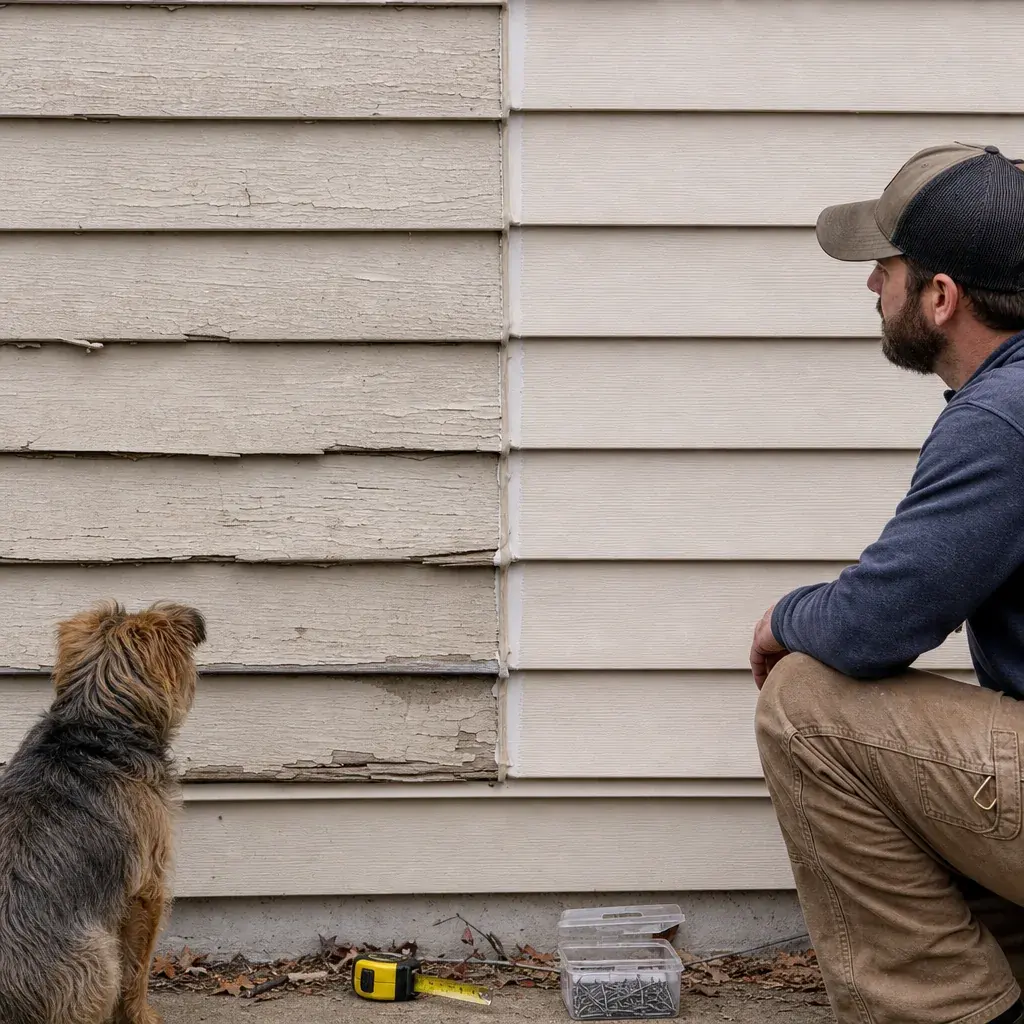
Usually it starts small. A cracked board by the back door, a panel that came loose after a windy night, a dent or two from spring hail.
The common way to handle that is to swap the face piece and caulk it up. We pull the damaged section and look behind it first, at least we do, because the board you see is usually not where the real problem is. What's behind it is the sheathing and the house wrap. If those are dry and solid, a repair makes sense, and it tends to hold up for a long time.
But sometimes it's soft back there.
A soft spot under a window can be failed caulk at the trim, or it can be the window flashing itself letting water in. You don't know which until somebody opens the wall and traces it. Guess wrong and you've put new siding over the same leak.
So how do we make the call? A few things tend to tip it toward a full re-side on that wall or the whole house:
- Rot or water staining that runs past the boards we pulled
- A discontinued profile or color that can't be matched on a wall people will see
- Hail hits spread across a whole elevation instead of a few pieces
- Boards that have warped or pulled loose from years of summer heat
Matching matters more than people expect. Older siding fades in our North Texas sun, and a brand new board can stand out on the front of the house even when it's the same product. On a back wall that nobody sees, many times you can live with it. On the street side, you usually can't.
I'd push any contractor who says replace everything to pull a board and show you what they found. And if the damage stops at a few pieces, the right answer is a repair, plain and simple.
When the damage doesn't stop there, here's how we approach siding installation in Farmers Branch.
When Siding Repair Isn't What You Need
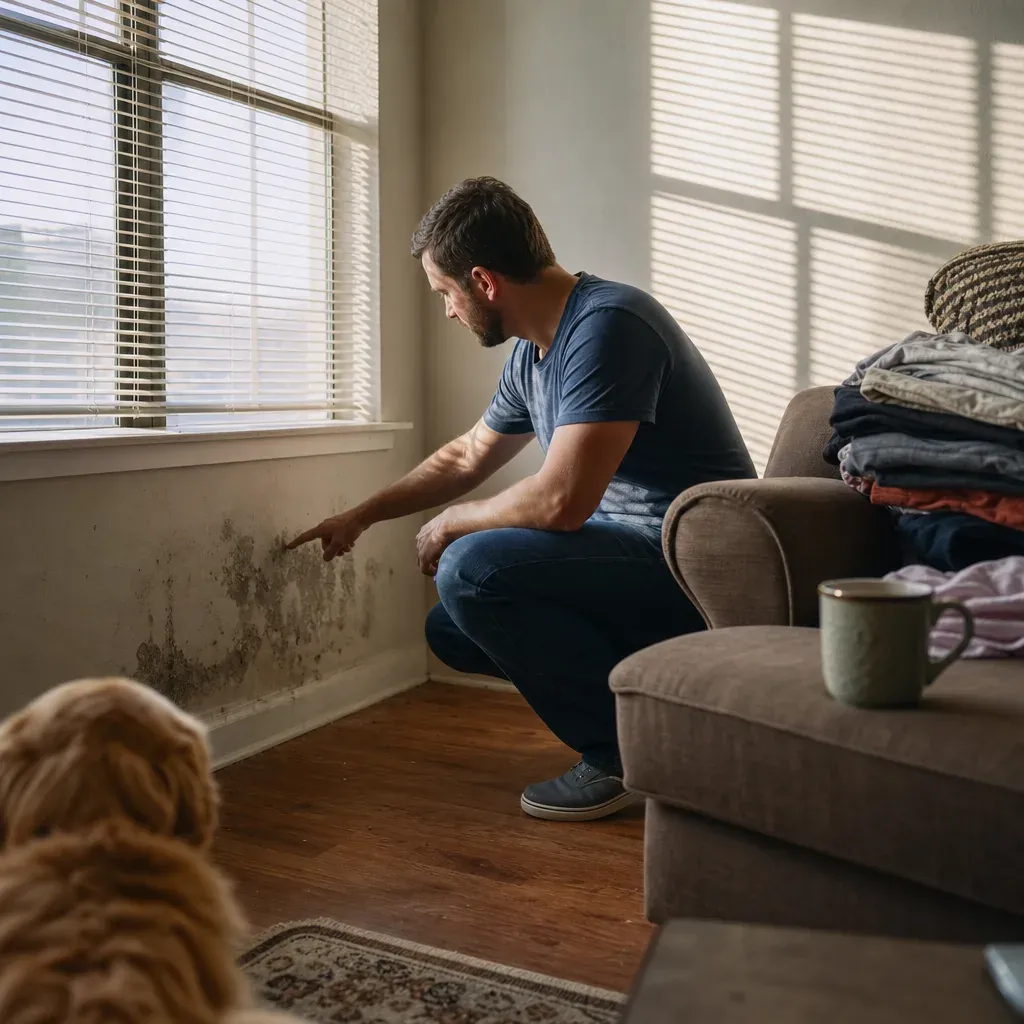
Not everything that looks bad on a wall is a siding repair job. A lot of what folks call us about is cosmetic, and some of it you can take care of yourself on a Saturday morning with a ladder and about twenty minutes.
Here's where we'd tell you to hold off or skip us:
- Green film or dirt on the north side. That's mildew and grime. A soft brush and a garden hose usually handle it. Don't blast a pressure washer up under the laps, because that pushes water behind the panels.
- One vinyl panel popped loose after a windy night. If it isn't cracked, a cheap zip tool from the hardware store lets you lock it back in place.
- Faded or chalky color on fiber cement. That needs paint. Nothing is broken.
- Small caulk gaps where the siding meets window trim. A tube of exterior caulk fixes it.
But sometimes the siding is just where the problem shows up, and fixing the panel won't stop it.
Say you've got a dark streak running down the wall below where the roof meets the siding. It can be a gutter that's overflowing, or it can be missing kickout flashing at the roofline, and you don't know until somebody gets up there and traces the water. Swap that panel without finding the source and the new one stains the same way, usually within a season or two. So the fix is up top.
And then there's the other end. If soft, rotted spots show up on more than one wall, or your siding profile's been discontinued and nothing out there matches, patching tends to cost you twice. At that point you're looking at siding installation, not repair, and a straight contractor should say so.
Timing matters too. If a spring hailstorm just dinged the panels and storm season isn't over yet, it can make sense to wait a few weeks before replacing small dents, since the next storm could hit the same wall. Just don't wait on the paperwork. Take your photos and report the claim to your insurance company quickly, which is what the Texas Department of Insurance recommends[1].
Have questions? We're happy to help.
(214) 649-5984What Happens During a Siding Repair Visit
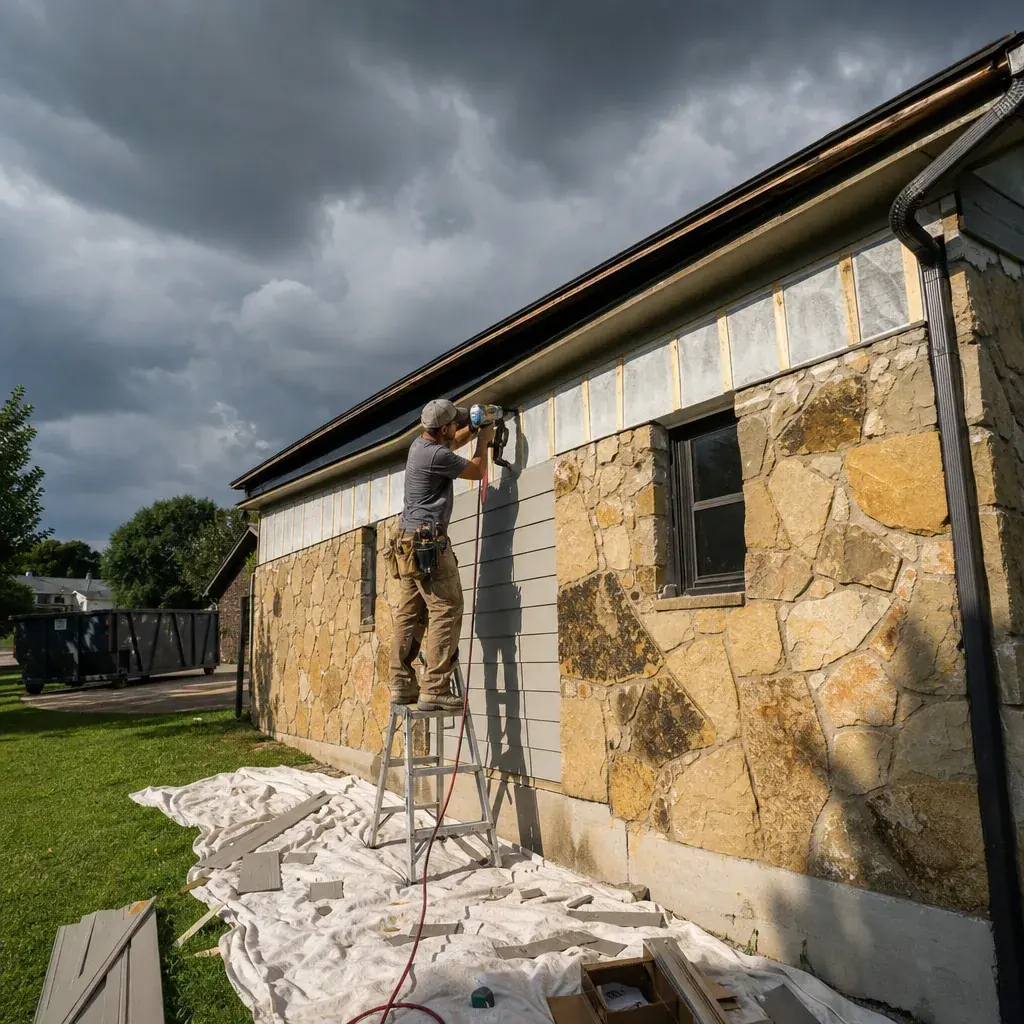
Most siding calls start with something you noticed from the driveway. It might be a board bowed out, a crack along the bottom edge, or paint bubbling right under a window. So when we get there we walk the whole house, not just the wall you called about, because damage from a little bit of hail or a long August usually doesn't stop at one board.
From there the visit generally goes like this:
- Look and press. We push on boards near windows, doors, and the bottom course. Soft spots tend to mean water's been getting in for a while.
- Pull the damaged pieces. We take off the bad boards and usually a little past them, so we can see what's behind.
- Check the sheathing. That's the layer the siding nails into. It has to hold a nail, can't be rotted, and if it's soft that section gets cut out and replaced first.
- Find where the water came from. It can be the flashing over a window, or it can be caulk that dried out and pulled away. You don't know until the boards are off.
- Put new siding back. We match the profile and the exposure as close as we can, then fasten into solid framing.
- Seal and finish. Joints get caulked, and fiber cement gets primed and painted so the new boards don't soak up moisture.
The other option would be nailing a new board right over the damage. Some crews do that, and it looks fine for a season, but the rot underneath keeps going and you end up tearing off twice as much later.
Nothing gets closed back up over wet or soft wood.
Color match is the part people ask about most. Older vinyl fades in our North Texas sun, and a brand new board can sit a shade off from the rest of the wall. We'll tell you that before anything comes off, so there aren't surprises when the ladder comes down.
Storm Damage, Insurance Claims, and Siding
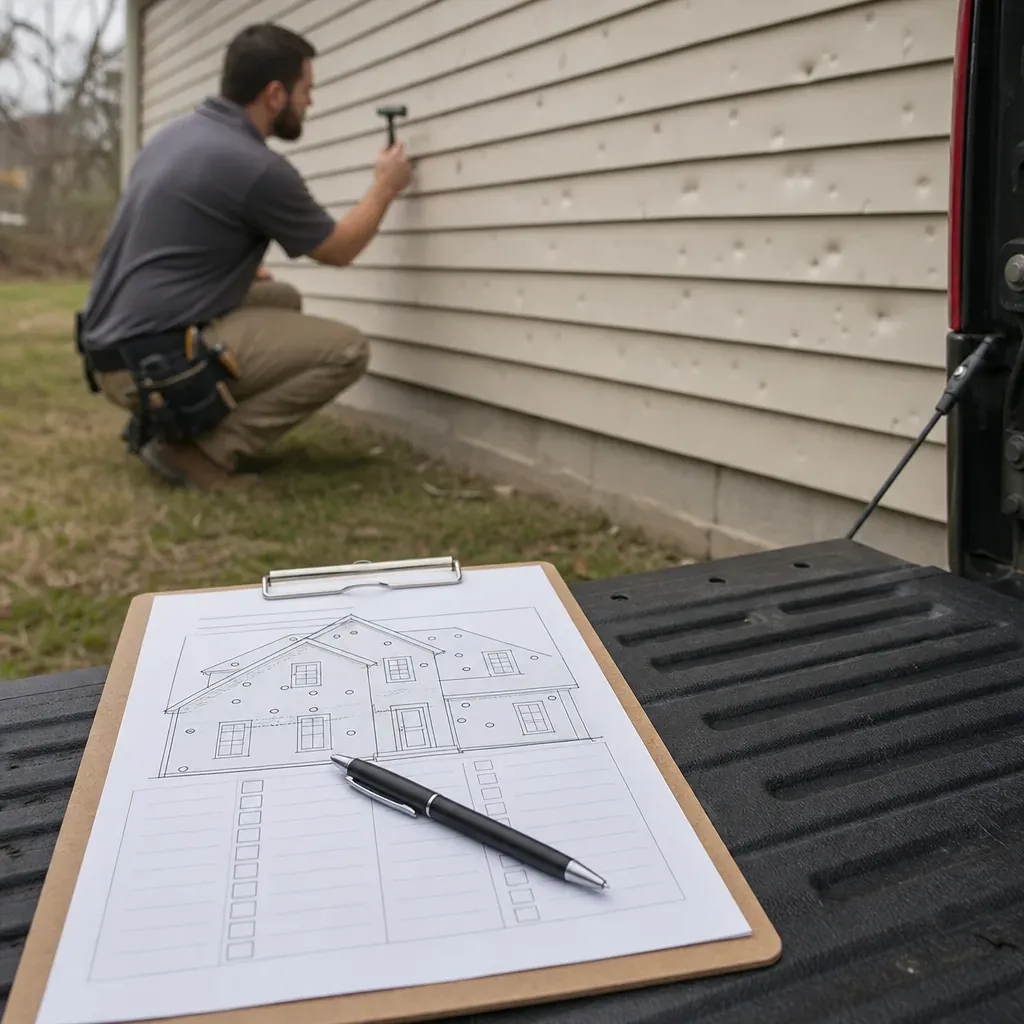
A lot of our siding repair calls in Farmers Branch come right after spring, when a little bit of something blows in with hail and wind behind it. From the driveway the house looks fine. But on the wall that faced the storm, you'll often find small cracks in the vinyl, chips along the bottom lap, or a busted corner on fiber cement.
Easy to miss.
Now, not every wavy panel is storm damage, and this is where it gets tricky. A panel that's bowed out can be wind that pulled it loose from the lock, or it can be our North Texas heat warping it over a few summers, and you don't know until somebody pulls it and looks at the nailing. That difference matters, because an adjuster is looking for storm damage, not normal wear.
So before you call anybody, do a few things while it's fresh, most of which line up with the Texas Department of Insurance's own claim tips[1]:
- Take photos the same day, a wide shot of each wall and close-ups of every crack or hole
- Write down the date and roughly what time the storm hit
- Check the gutters, window screens, and AC unit fins on that same side, since dents there help show it was hail
- Hang on to any pieces that blew off instead of tossing them
We're experienced with storm damage and insurance claims, so we can do a siding inspection and write up what we found, wall by wall, in plain language your carrier can follow. We don't decide the claim, your insurance company does. What we can do is make sure the damage that's really there gets seen and written down.
One thing comes up almost every time, and that's matching. If three panels get replaced on a wall that's been sitting in the sun for fifteen years, the new vinyl can look a shade off from the faded stuff around it. How that gets handled depends on your policy, so it's a good idea to ask your adjuster about it early, before the new panels go up.
Frequently Asked Questions
How do I know if my siding needs a repair or a full re-side?
You need a full re-side when the damage spreads past a few boards, or when rot and staining run deeper than the panels you can see. If we pull a damaged board and find dry, solid sheathing behind it, a repair holds up fine. Hail hits across a whole wall or a color that can't be matched usually push the call toward replacing that elevation.
What should I expect when you come out for a siding repair?
We start by walking the house and looking at whatever you noticed from the driveway, like a bowed board or bubbling paint under a window. Then we pull the damaged section to check what's behind it, since the visible board is usually not the real problem. That tells us if it's a simple panel swap or something tied to moisture behind the wall.
Why does my siding keep failing on the same wall every year?
Summer heat sits hard on west and south-facing walls for months, drying out caulk and warping panels faster than the other sides of the house. That weak spot is usually where spring hail does the most damage too. If paint keeps peeling or gaps keep opening in the same place, sun exposure on that wall is usually the real cause.
Can I fix a loose or popped siding panel myself?
Yes, if the panel isn't cracked, a cheap zip tool from the hardware store can lock a popped vinyl panel back in place in about twenty minutes. Green film on north-facing walls is usually just mildew, so a soft brush and a garden hose handle that too. Save the call for soft spots, spreading stains, or damage on more than one wall.
Why does a repaired siding board sometimes fail again a season later?
A new board fails again when nobody found the actual water source before patching it. A dark streak below a roofline can come from an overflowing gutter or missing kickout flashing, and swapping the panel won't stop the stain if the leak is up top. That's why we trace the water path first.
Should I fix hail damage on my siding right away?
Report it right away, but the repair itself can sometimes wait. Take photos and file the claim quickly. If storm season isn't over, holding off a few weeks on small cosmetic dents can make sense, since another storm could hit the same wall. Anything cracked, soft, or letting water in should get fixed now.
Ready for Your
Siding Repair?
Get a free, no-obligation evaluation from our family-owned team in Farmers Branch. We'll look at your siding, give you a written estimate, and walk you through every option.
Want to pay over time? Check your financing options.


Need a Siding Contractor? Request An Estimate!
Fill out the form and we'll get back to you promptly.