
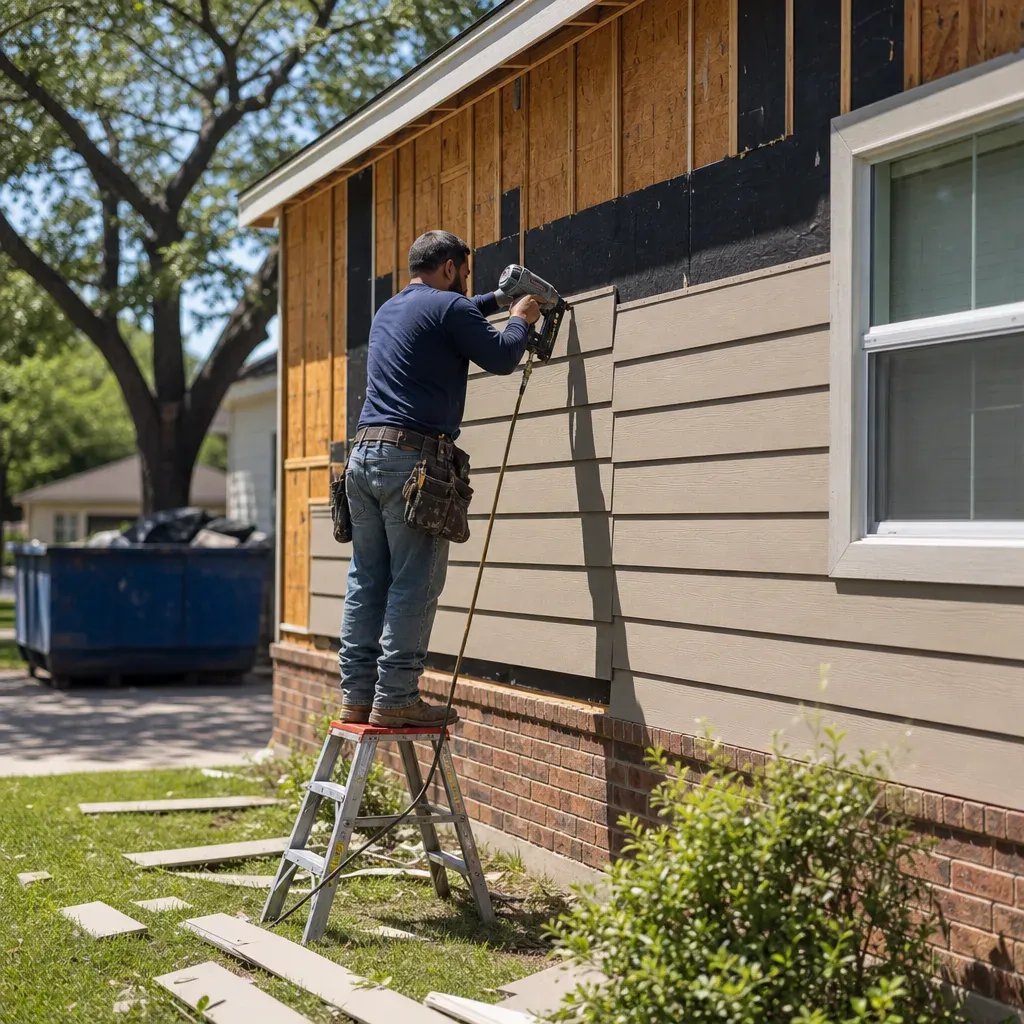
Siding Installation in Farmers Branch
Repair or replace? Here's how we decide.
Call for a Free Estimate- GAF Certified Contractor
- BBB Accredited A+ Rating
- Family Owned and Local
Signs a Home Needs New Siding, Not Just a Patch
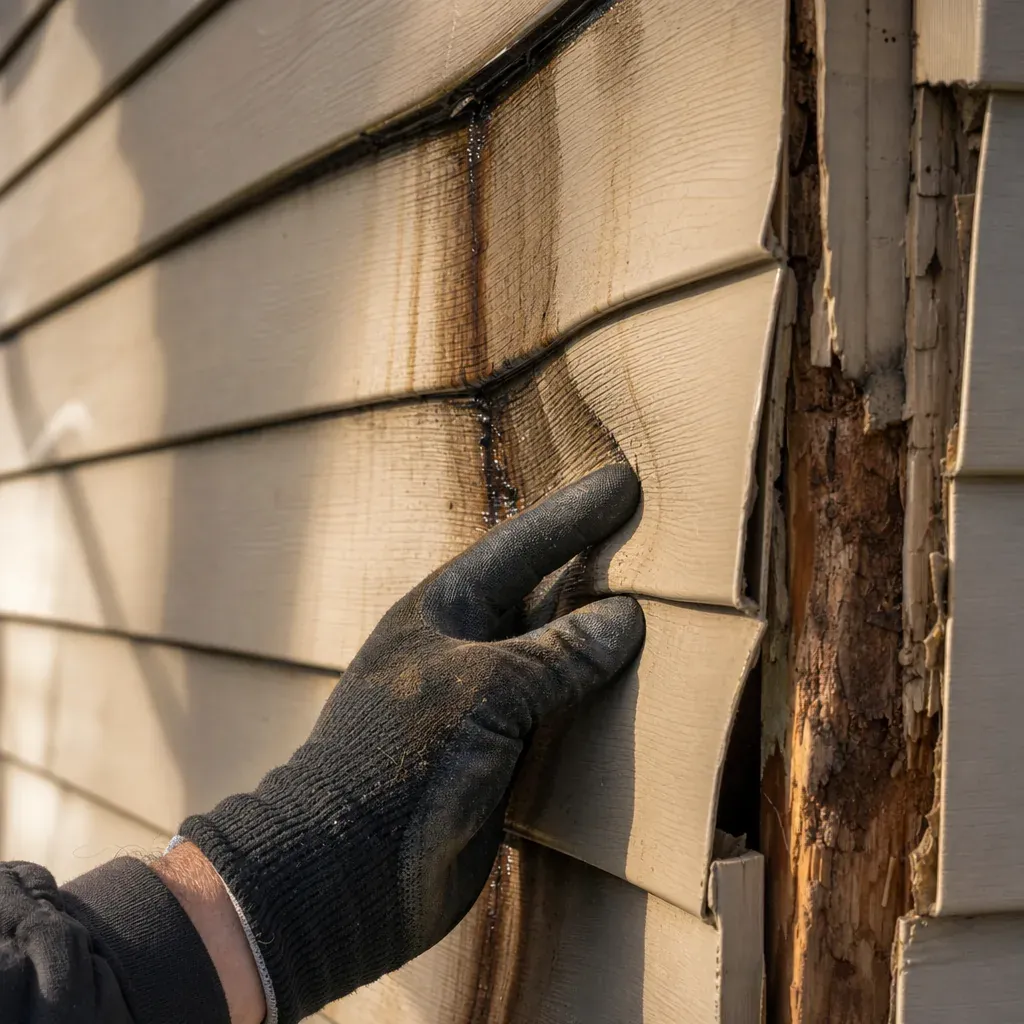
A patch works when the damage is in one spot, the cause is obvious, and a matching board still exists. When damage shows up on more than one wall, the boards feel soft, or moisture is showing inside, the problem is usually behind the siding, and that's when siding installation makes more sense than a repair.
Most folks call us because of one ugly board, a cracked one by the hose bib or a piece the weed trimmer chewed up, and a lot of the time a patch is the right answer. But the board you can see isn't always the problem. So before anybody talks about siding installation, we press on the boards around the damage and look at what's going on behind them, because that's what decides the job.
Here's what tends to push it from a patch to new siding:
- Boards that feel soft or give a little when you push on them, usually a sign of rot underneath
- Paint bubbling or peeling on an inside wall, which can mean water is getting past the siding
- Hail cracks or splits across a whole side of the house, not just one or two boards
- Warped or buckled rows that won't lay flat again
- A profile or color that's been discontinued, so nothing new will match what's up there now
Take moisture. It can come from the siding itself, or from flashing around a window that was never sealed right. Nobody knows the real cause until someone pulls a board and looks at the sheathing. The sheathing is the layer the siding nails into. It has to be solid, can't be soft.
Our North Texas weather doesn't help, either. Spring hail usually hits hardest on the wall that faced the storm, and then months of summer heat bake whatever cracks it left behind. A patch on one wall while the other side is quietly soaking up water doesn't solve much.
Age plays into it too. Plenty of the older ranch homes around Farmers Branch still have their original siding, and once a board that old comes off, the ones next to it often crack coming loose. Look closely at the nail lines and you'll see whether the boards are still holding tight or pulling away from the wall. If it's just one bad board with a clear cause, patch it. We'll tell you that straight.
Installation is one of three siding services we handle out of Farmers Branch, along with repair and inspection.
Full-Elevation Replacement vs. Partial Section Repair
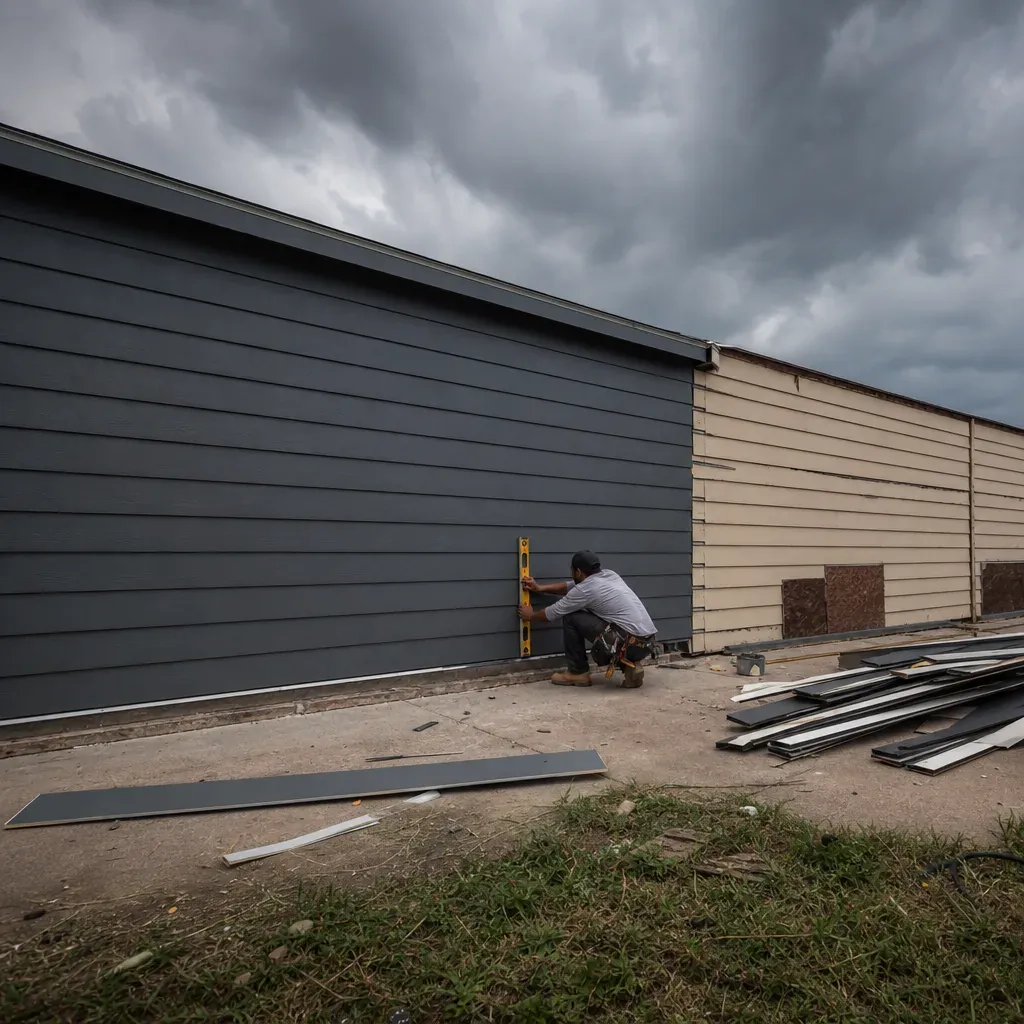
A little bit of hail blows through, and one side of the house takes most of it. That's usually the side that faced the storm, and the other three walls can look almost untouched.
So the first question is whether you need that whole wall redone or just the boards that got hit. An elevation is one full side of the house, front, back, or either end. We plan siding work by the elevation, at least we do, because that's usually how the damage and the color line up.
Partial section repair can make a lot of sense. Maybe a few boards cracked, or a mower threw a rock, or a downspout let water sit against one spot for a couple of seasons, and we can pull those pieces, check what's behind them, and put new ones in. Small job. Nothing wrong with it.
The trouble is matching. Siding that's been baking in our North Texas sun for years fades, and a brand new board next to it can stand out enough to spot from the street. Sometimes the profile's been discontinued too, and then there's nothing to match at all.
We usually lean toward the full elevation when we find:
- Hail hits spread across most of one wall instead of a handful of boards
- A color or profile nobody makes anymore
- Soft sheathing or water staining behind the pieces we pulled
- Old patches that already don't match, stacked on top of each other
That water staining is the one that decides a lot of jobs. It can come from a gap at a window, or from missing house wrap behind the siding, and nobody can tell which until the boards come off. If it runs past the damaged area, patching the front just covers it back up.
But if the wall behind it is dry and solid and the boards match close enough, repair it. I'd rather tell you that straight than put a whole new wall on a house that doesn't need one.
One wall at a time. That's generally how we look at it, and it keeps the decision tied to what's behind the siding instead of what's easiest to quote.
When Siding Repair Is the Right Call Instead of Full Installation
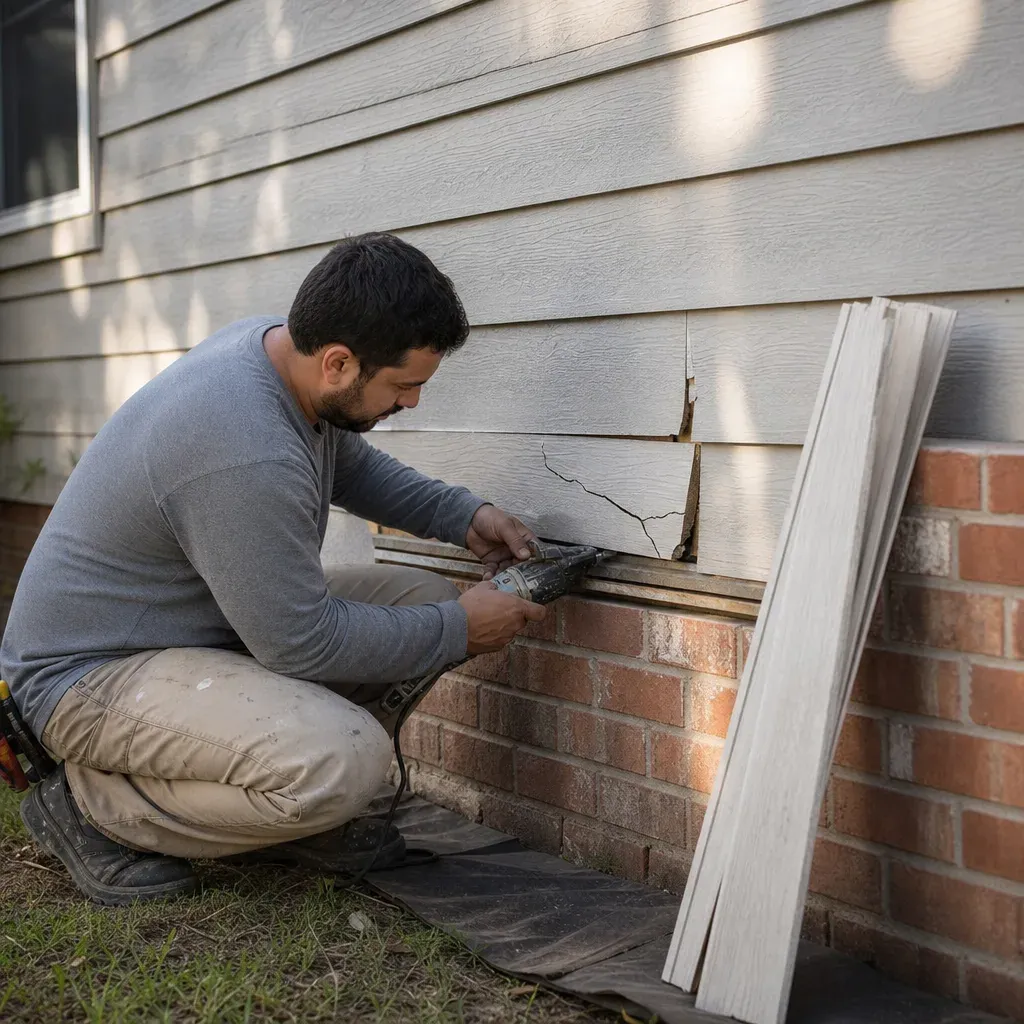
Not every beat-up wall needs new siding. A good share of the calls we get about siding installation end up being a repair, and we'd rather tell you that up front.
Our North Texas weather tends to hit siding in spots and not all at once, so you'll get a spring hailstorm that cracks a few boards on one side of the house, or a sprinkler head that's been soaking the same corner for years, and the rest of the house is holding up fine.
Repair is usually the right call when these things line up:
- The damage is on one wall or a handful of boards, not spread around the house.
- You can still get the same profile in a color close enough to blend in.
- The sheathing behind it is dry and still nailable.
- The rest of the siding is fastened tight, with no warping, bulging, or boards pulling loose.
Matching is where people get tripped up. Siding fades, especially on a wall that takes the afternoon sun from June into September, and a new board next to a ten-year-old board can look off even in the same color. Many times we'll pull a good board from a spot nobody sees, like behind the AC unit, and move it to the front, so the new board goes where it won't stand out.
Now, the one thing that can flip the answer is what's behind the siding. A soft spot or a dark stain can mean water is getting in at a window, or it can be a gutter spilling over onto that wall, and nobody knows for sure until the board comes off and somebody looks. It has to be dry. Can't be rotted. If the rot runs past a board or two, patching the face just covers it up.
So if it's a few boards and the wall underneath is solid, fix it and keep your money in your pocket, and the rest of the siding can go years longer. Full siding installation makes sense when the damage is everywhere, the product's been discontinued, or the wall behind it is wet.
If that sounds more like your house, here's how we handle siding repair in Farmers Branch.
Have questions? We're happy to help.
(214) 649-5984What Happens Underneath Matters More Than the New Panels
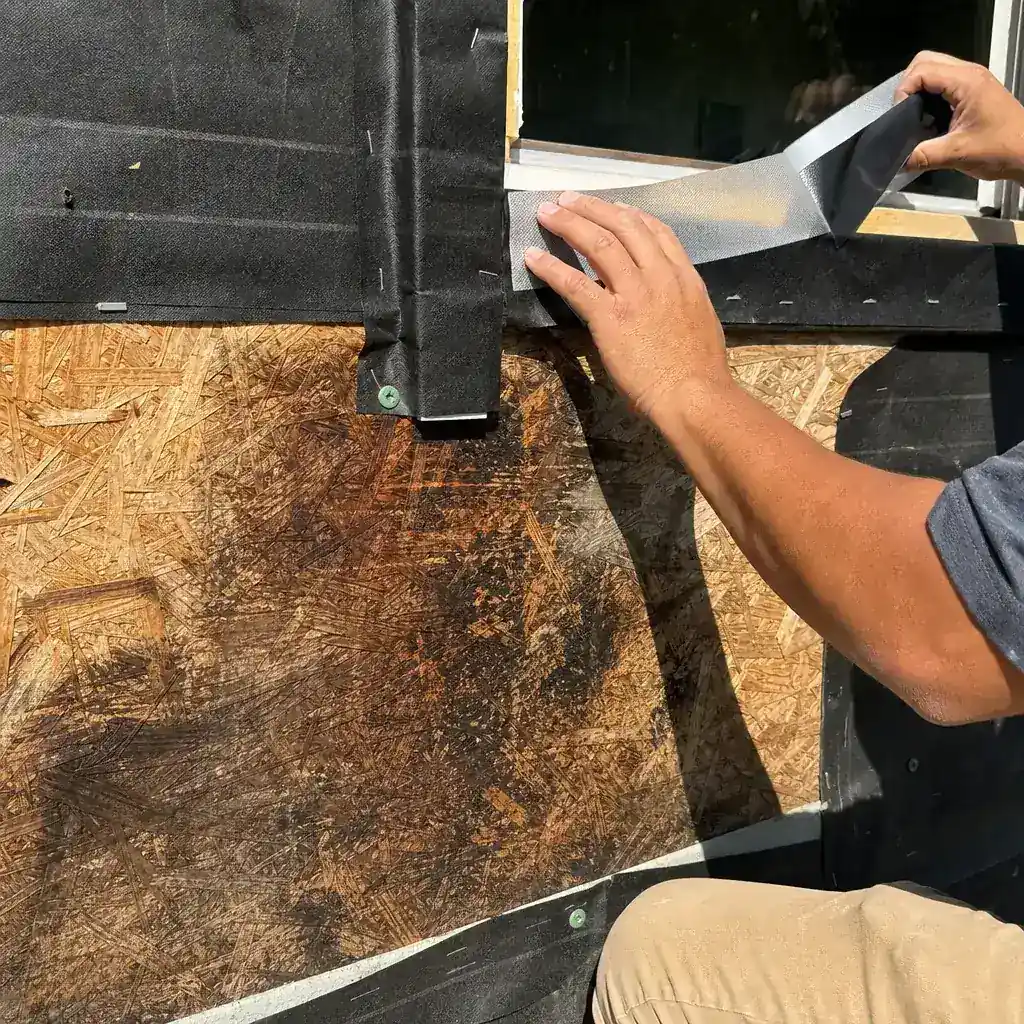
Most folks shopping for new siding are looking at colors and panel styles, and that's fair, it's the part you see from the street every day. But the panels are really just the skin.
The common way to do a siding job is to go right over what's there, or pull the old boards and hang new ones fast without really looking at the wall behind them. We take the old siding all the way off, if you wanna do it the right way, because that's the only time anybody gets a clear look at the sheathing. Sheathing is the layer of boards nailed to the studs. It has to be solid, can't be soft or rotted.
So what tends to turn up once the wall is open?
- Soft sheathing under windows, where water's been sneaking behind the trim for years
- Torn or missing house wrap, the barrier that sheds whatever gets past the siding
- Rotted wood along the bottom edge of the wall near the slab
- Old flashing around doors and windows that was never lapped the right way
Look closely at the back of the old boards and you'll sometimes see dark staining. It can come from a flashing problem, or from a gap at the window frame itself, and nobody can say which until the trim comes off and somebody traces it. Anybody who tells you the wall is fine without pulling a board is guessing.
Our North Texas weather doesn't help any. Summer heat sits on a west wall for months, and then spring brings hail and the kind of wind that pushes rain sideways into any seam that isn't sealed. Water that gets behind new siding usually stays there, and a nice-looking panel over wet sheathing just hides the problem for a few years.
When a board is soft, it comes out and gets replaced before the house wrap goes back on. Then the flashing gets lapped so water runs down and out, not in. None of that shows up in the finished photos. But it's the part that decides whether your new siding lasts.
How Siding Pricing Works and What Drives the Estimate Up or Down
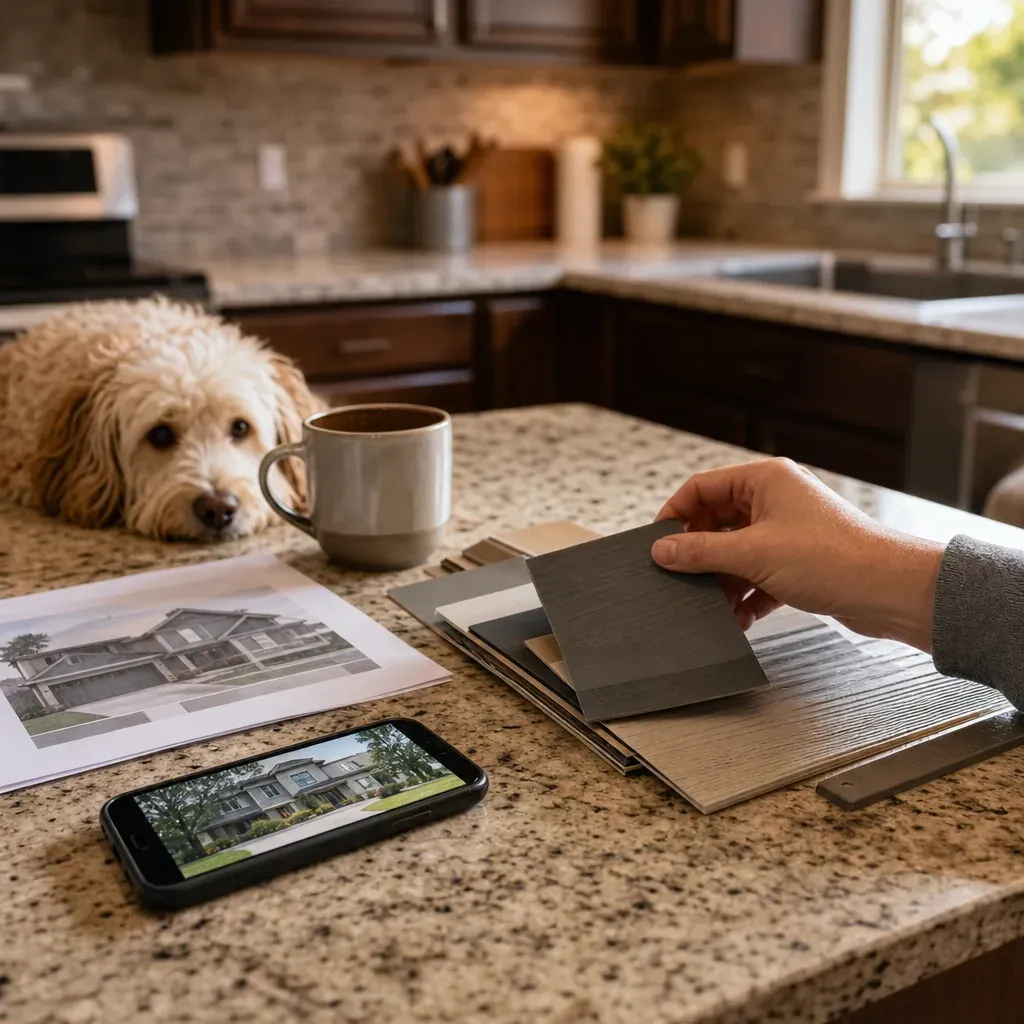
It usually starts with one question. What's this going to run me?
Siding installation is priced by the square, same as a roof, and a square is 100 square feet of wall. We measure every wall that gets siding, take out the big openings, and that gives us the square count. It keeps the math simple, so you can line up two quotes and see if they measured the same house.
But the square count is only the starting point. A lot of our North Texas homes are mostly brick with siding up on the gables and upper walls, and those small areas can take more time per square than one big flat wall does. Ladder work. Lots of cuts.
These are the things that usually move the number:
- The material you pick, since different siding products cost and install differently
- Whether the old siding has to come off first, and how many layers are hiding under it
- Rotted sheathing or soft wood we find once the wall is open
- Second-story walls and steep gables that need staging or lifts
- Windows, doors, corners, and trim, because every cutout is hand work
The sheathing is the one nobody can price ahead of time. You pull a panel near a window and the wood behind it can be solid, or it can be soft from years of water getting past bad flashing, and nobody knows which until it's open.
So a good estimate should tell you how that gets handled, per sheet or per foot, before the job starts. The other option would be finding out on the invoice, and nobody likes that.
Frequently Asked Questions
How do you tell if my siding needs a full replacement or just a repair?
We check what's behind the damaged boards, not just what you can see. If the sheathing underneath is soft or shows water staining, new siding usually makes more sense than a patch. When the problem is one bad board with a clear cause, like a weed trimmer or a hose bib crack, a repair is usually enough.
Why does hail usually hit one side of my house harder than the others?
Hail rides in on the storm's wind, so the wall that faced the storm, often the west side, takes most of the hits. That's why one elevation can look beat up while the other three look almost untouched. Summer heat then bakes whatever cracks the hail left, so small spring damage can turn into soft boards by fall.
Can you match new siding to my existing boards, or will it look patched?
It depends on how faded your current siding is and whether the profile is still made. Boards baking in North Texas sun fade enough that a brand new piece can stand out from the street. Sometimes we move a good board from a hidden spot, like behind an AC unit, to the front so the new piece goes where it blends in.
My older ranch home in Farmers Branch has original siding. Is that a problem?
It can be, mostly because of how the boards come loose. Once one aging board comes off, the ones next to it often crack too. We check the nail lines first to see if boards are still holding tight or already pulling away from the wall before we start any work.
What causes moisture problems behind siding, and how do you find it?
Moisture usually comes from the siding itself or from flashing around a window that was never sealed right. We can't know the real cause until we pull a board and look at the sheathing underneath. Paint bubbling or peeling on an inside wall is often the first sign something is getting past your siding.
How soon can someone come look at my siding?
We schedule visits quickly once you call, and we look at every wall, not just the spot you noticed first. We press on boards around the damage and check the sheathing before recommending a repair or full installation, so you get an honest answer instead of a guess.
Ready for Your
Siding Installation?
Get a free, no-obligation evaluation from our family-owned team in Farmers Branch. We'll look at your siding, give you a written estimate, and walk you through every option.
Want to pay over time? Check your financing options.


Need a Siding Contractor? Request An Estimate!
Fill out the form and we'll get back to you promptly.