
Siding Inspection in Farmers Branch
What a real walkthrough finds.
Call for a Free Estimate- GAF Certified Contractor
- BBB Accredited A+ Rating
- Family Owned and Local
Siding Damage Rarely Stays Where It Started
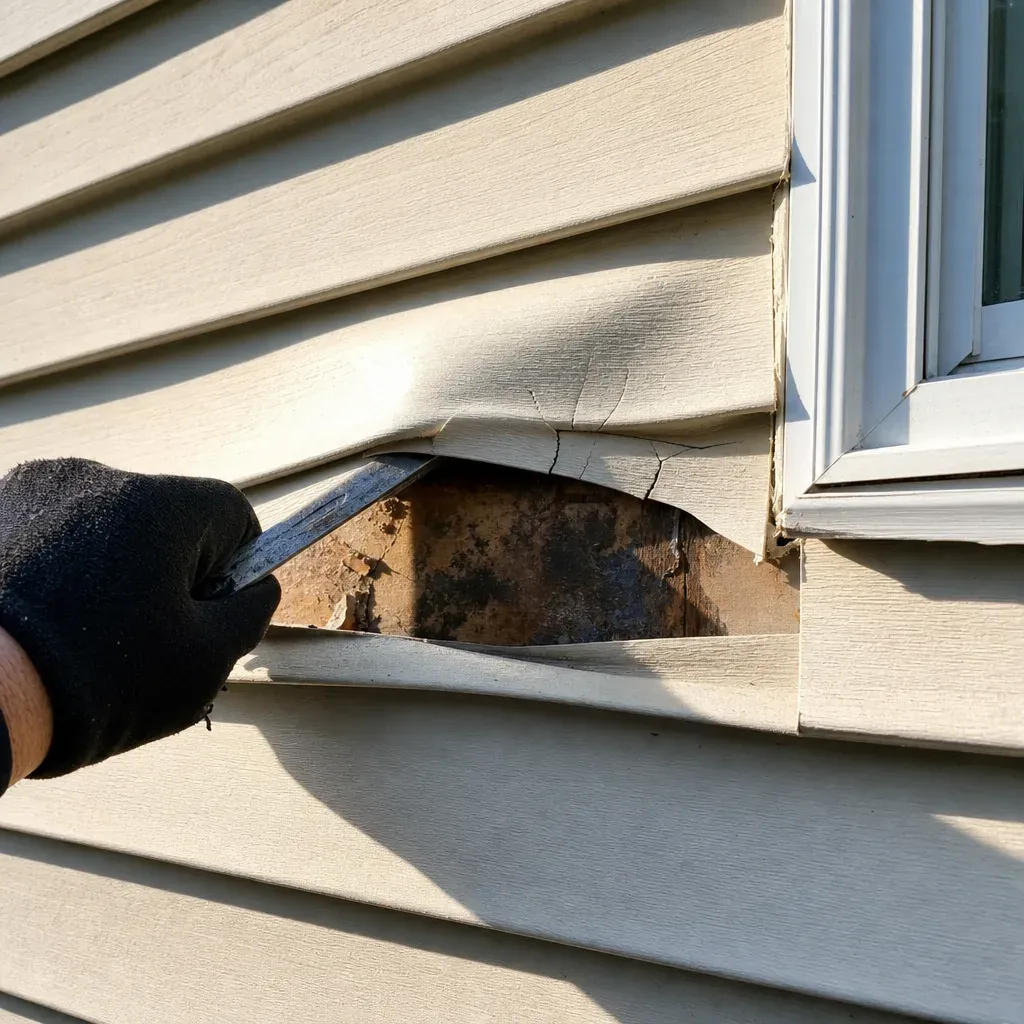
Water that gets past siding doesn't stay behind that one board. It runs down the sheathing, soaks the insulation, and generally shows up somewhere you weren't looking. A siding inspection follows the water instead of stopping at the panel that caught your eye.
Most folks call us about one spot. A soft board under a window, a seam that opened up, a piece of trim that looks a little chewed. And that one spot is usually the exit, not the entrance.
Here's how it generally runs. Water gets behind a lap or a failed caulk joint, and it doesn't sit there, it runs down the back side of the siding until something stops it, and that something is usually a horizontal framing member or the top of a window. Then it soaks in. Sheathing goes soft. Insulation mats down and quits working. By the time a stain shows up on the drywall inside, that wall has been wet for a while.
And it can be the siding itself, or it can be the flashing above the window, or it can be a roof edge dumping water where it shouldn't. You don't know until somebody gets up there and traces it back.
Things we're checking once we start following the water:
- Whether the sheathing behind a soft board is still solid, or whether a screwdriver sinks into it
- Flashing at windows, doors, and where siding meets the roof line
- Caulk joints at corners and trim, which tend to be the first thing to fail
- Nail heads that have backed out, since wind uplift works on siding the same way it works on shingles
- The bottom course and the bottom few inches of wall, where splash and grade contact do their damage
A lot of our North Texas homes around Farmers Branch are brick on the front with siding on the gables and the sides, and those gable ends take the worst of a spring hail-driven wind. That's the side nobody walks past. The front can look fine while the west gable is coming apart.
So one soft board is worth a look. Not a panic, just a look.
Inspection is one of three siding services we handle out of Farmers Branch, along with installation and repair.
What Happens During a Full Siding Walkthrough
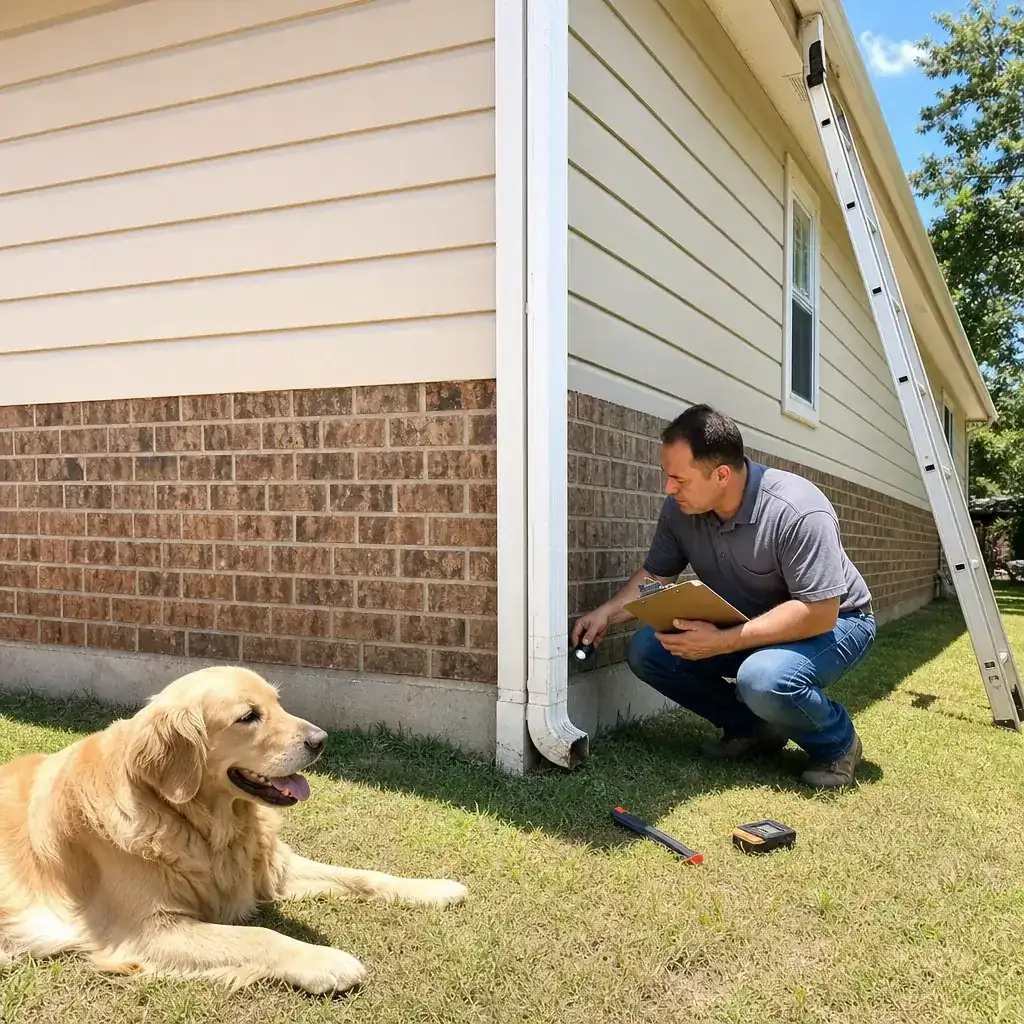
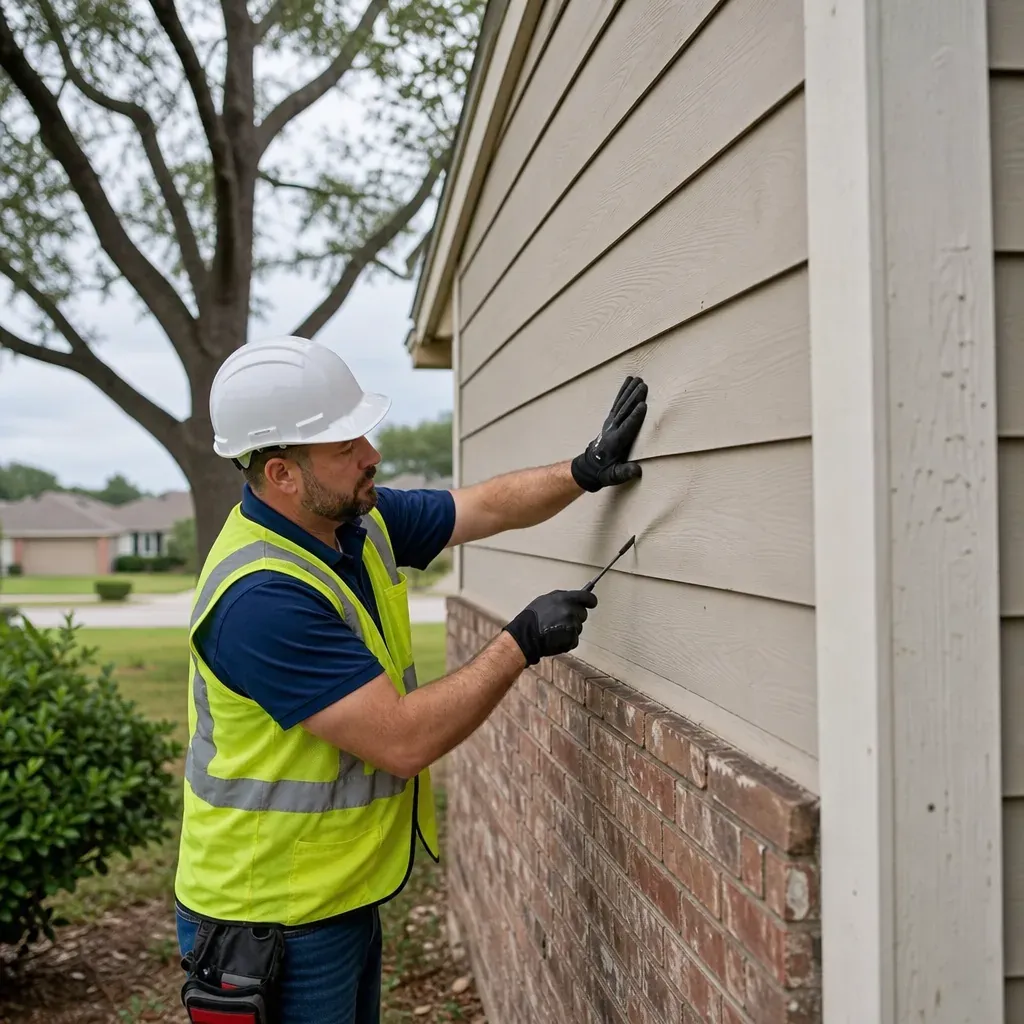
Walking a house takes us somewhere in the range of an hour, sometimes longer on a two story with a lot of corners. We start at ground level and work the whole perimeter, because siding problems generally show up low before they show up anywhere else.
- Full perimeter walk at eye level, checking every seam, butt joint, corner post, and J-channel for gaps, buckling, or panels that have worked loose from the nail hem.
- Bottom course and starter strip check, since that's where water collects and where rot usually announces itself first on wood and fiber cement.
- Penetration check at every hose bib, dryer vent, light fixture, outlet, and window opening, because sealant fails there years before the siding itself does.
- Wall to roof transitions, where the siding meets a roofline or a dormer cheek, and the step flashing and kickout have to be right or water runs behind the wall.
- Ladder work on the upper elevations and anything we couldn't read clearly from the ground.
- A look at the soffit, fascia, and gutter line, because a gutter dumping over the back edge soaks siding all season long.
- Written findings with photos of what we found and where.
On the older brick and wood combination homes around the Valley View and Webb Chapel corridor, a lot of the siding is up in gables and dormers you can't see from the driveway at all. That's ladder work, no way around it. Anybody telling you what your siding needs from the street is guessing.
Now, we tap and press too, which sounds simple and tells you a lot. Solid siding sounds solid. Soft spots, hollow spots, panels that flex under a thumb, those all mean the sheathing behind them may have taken on water, and you don't know how far it went until somebody pulls a piece and looks.
It can be a failed caulk joint, or it can be flashing that was never installed right when the house was built, and the two look identical from outside.
We write it all down either way. You get the photos, you get what we found, and you get to decide what to do with it on your own timeline.
Signs Your Siding Needs a Closer Look
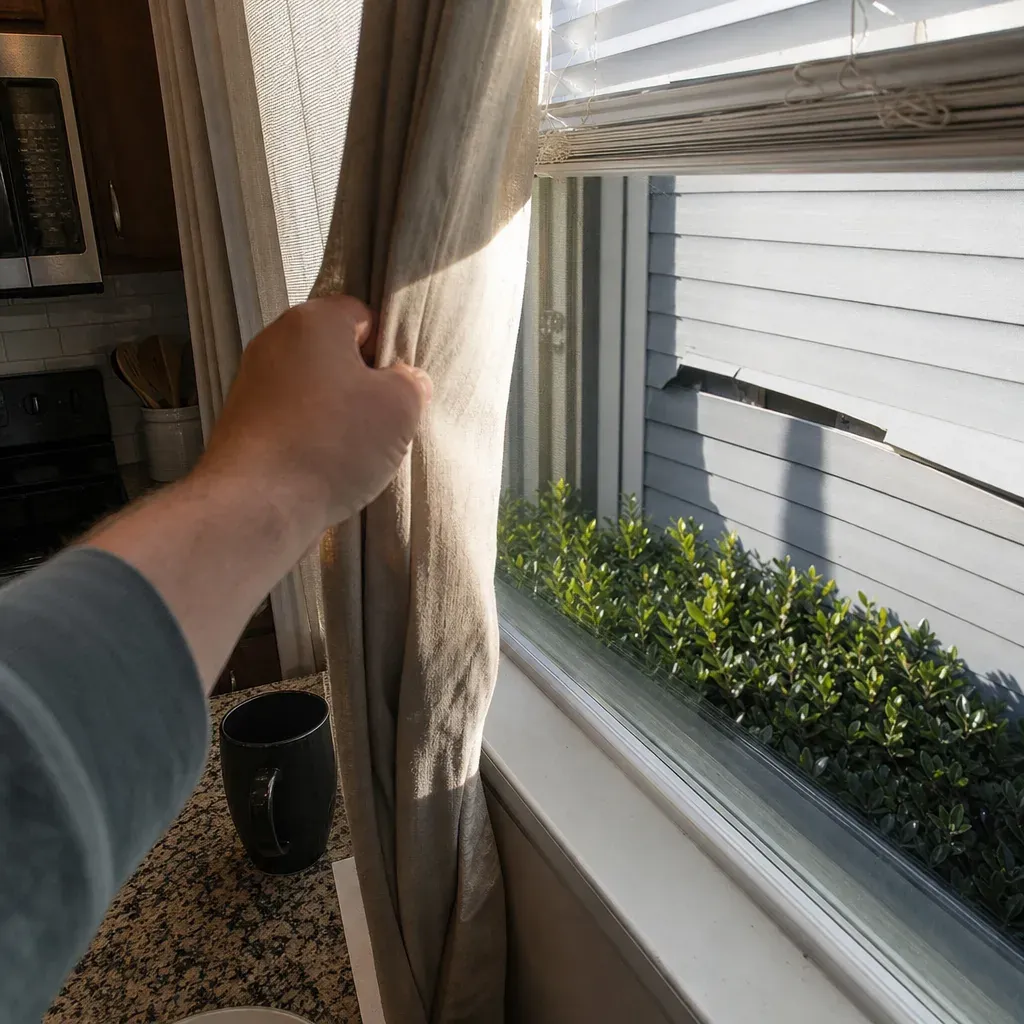
Most folks don't go looking at their siding. They notice something by accident, usually from the driveway, usually in the late afternoon when the sun comes in low across the wall and throws a shadow on every dent and wave that's out there. If you look really closely, you'll see it. That low-angle light is the best free tool you've got.
Hail is the big one around here. Our North Texas spring storms tend to hit hardest on the walls facing the storm, and on fiber cement or hardboard the hits show up as chipped spots or little craters, while on vinyl they can look like pale bruises or a spiderwebbed crack near a seam. A lot of that damage doesn't leak right away. It just opens a door.
Here's what usually gets somebody to call us:
- Panels that look wavy, buckled, or pulled loose along the bottom edge after a windy night
- Paint peeling in one section while the rest of the wall looks fine
- Soft spots you can press with a thumb, especially low on the wall near the grade
- Gaps opening around window trim, door casing, or where two panels butt together
- Interior clues, like a stain in a corner of a bedroom ceiling or a musty smell in a closet on an exterior wall
That last one is the one people misread. A stain on an interior wall can be the siding, or it can be a flashing detail up at the roofline, and you don't know until somebody gets on a ladder and traces where the water came in.
Age counts too. A lot of Farmers Branch homes go back to the fifties and sixties, and the original wood or hardboard siding on those houses has taken sixty-plus summers of Texas heat, so it moves, it swells, it lets go of its fasteners. We see that a lot on the older streets.
And sometimes nothing looks wrong at all. That's still a fine reason to have someone walk it, especially after a storm season, because a siding inspection catches the small stuff while it's still small.
Have questions? We're happy to help.
(214) 649-5984When You Can Skip the Full Inspection
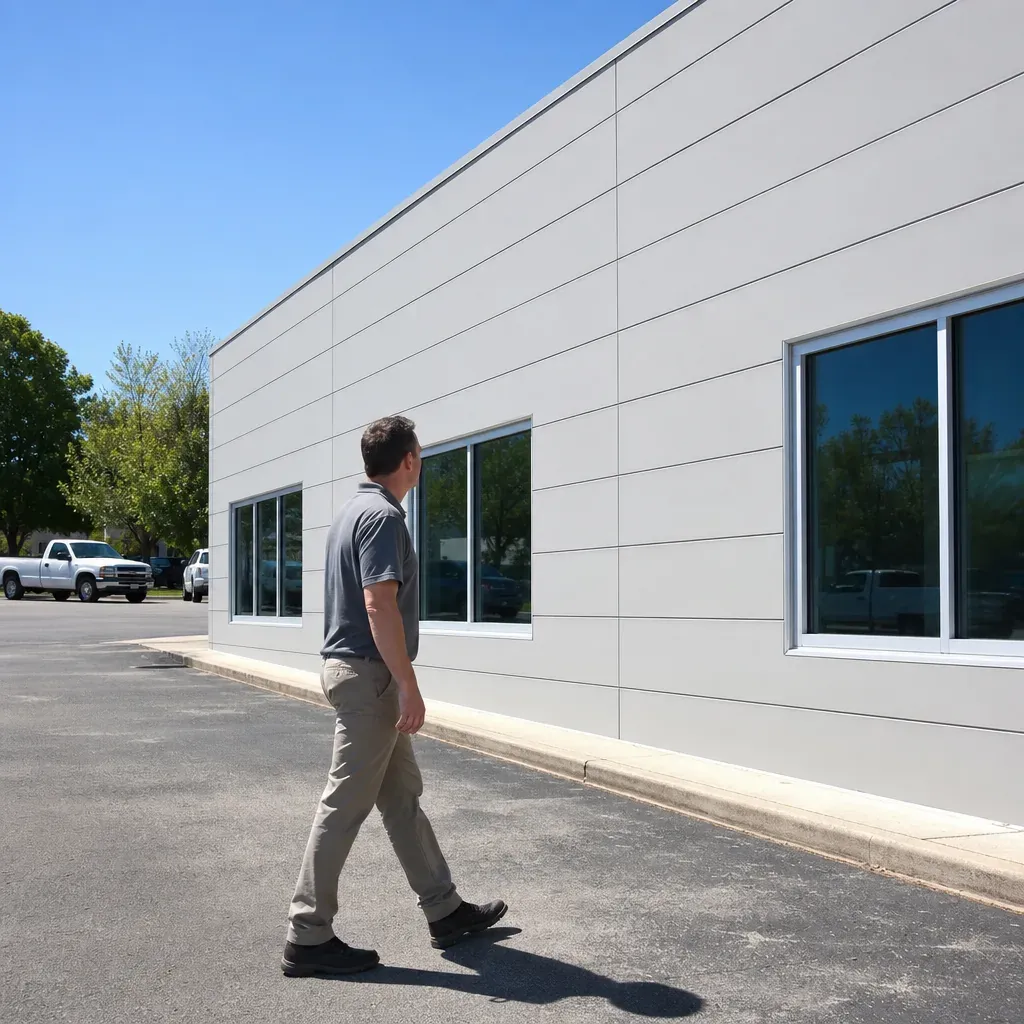
Not every call needs a siding inspection, and I would rather tell you that up front than sell you one you don't need. If one panel came loose in a gusty afternoon and the rest of the wall looks tight, that's a repair conversation, not an inspection. Same with a single cracked board down low where the mower kicked a rock. You can see the whole problem from the driveway, so there isn't much left for us to find.
Brand new construction is another one. If the siding went on last year and nothing has hit it, an inspection is usually early.
You can do a fair amount of the looking yourself. Walk the perimeter on a bright morning when the sun is low and raking across the wall, because that angle shows waviness and bulges that disappear at noon. Press your palm flat against the siding under windows and near the bottom courses. It should feel firm. If it gives, or it sounds hollow and soft, that's when you call. Look at the caulk joints around windows and where the siding meets brick. Gaps you can slide a business card into should go on your list, but they're not usually an emergency.
Timing is the one thing to keep separate. If a hailstorm just came through, get the photos taken and the claim reported right away, since the Texas Department of Insurance recommends filing quickly[1]. The inspection and the repairs can follow on a normal schedule.
Where we'd push you the other direction is any interior sign. Stained drywall, a musty smell in a closet on an exterior wall, paint bubbling inside. That water came from somewhere, and it can be the siding, or it can be a window flashing detail, and nobody knows until somebody pulls a piece and traces it. That's not a walk-around job. That's a full inspection.
Documenting Siding Damage for an Insurance Claim
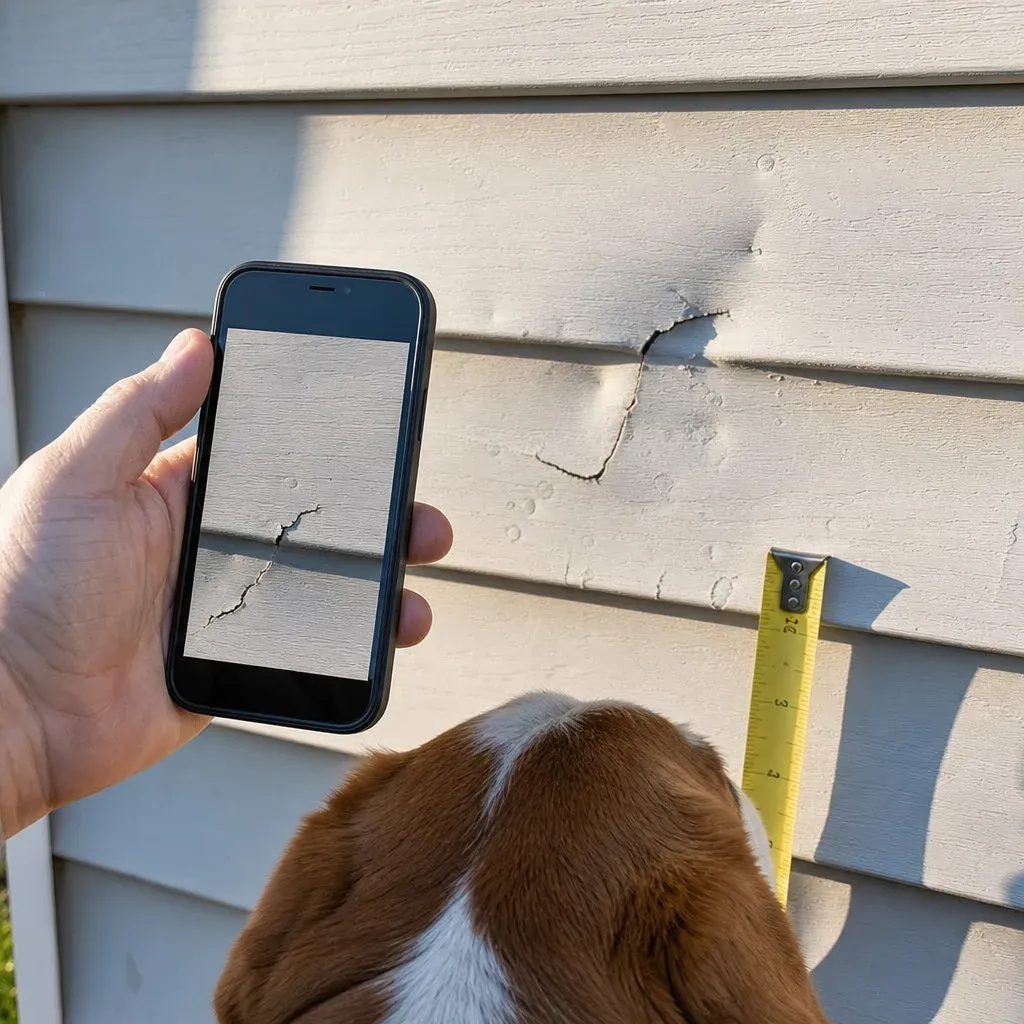
After a hail run through Farmers Branch, the calls tend to come a few days later, once the sun hits the wall at the right angle and somebody standing in the driveway sees dents they never noticed before. That's usually late afternoon on a west-facing wall. The strike pattern generally shows up in a scatter, not a straight line.
An adjuster is not going to take your word for any of that.
So what a siding inspection is really doing in a claim situation is building a record. We walk every elevation, note which direction the damage faces, and photograph close up and pulled back so there's context for where each shot came from. Close-ups by themselves don't help much, because nobody can tell what wall they belong to. We also check the soft metal on the property, gutters, downspouts, window wraps, and vent caps, because those dent easier than siding does and they can help show when the storm hit.
- Photos of each elevation, plus close-ups with a reference point in frame
- Direction each damaged wall faces, since hail usually drives from one side
- Condition of gutters, vent caps, and window trim as supporting evidence
- Any cracked, punctured, or loose panels and where water could get behind them
- Notes on what looks like storm damage versus normal wear and age
That last one matters more than people expect. Chalking, fading, and old settling cracks are not storm damage, and a report that lumps them together gets picked apart fast. We separate them out.
Now, we can't tell you what a carrier will decide, nobody can. Two houses on the same street can go different directions. But we've handled plenty of storm damage and insurance claim work, and a documented inspection gives you something to stand on instead of a memory of what the wall looked like. That's the part you can control.
Frequently Asked Questions
How long does a siding inspection take?
A full siding walkthrough usually takes about an hour, sometimes longer on a two-story home with lots of corners. We work the whole perimeter at ground level first, then get on a ladder for the upper walls and gables. You get written findings with photos when we're done, so you know exactly what we saw and where.
What should I expect when you show up for a siding inspection?
We walk the entire perimeter at eye level first, checking every seam, corner, and butt joint for gaps or buckling. We tap and press to feel for soft or hollow spots, and we check penetrations like hose bibs, vents, and window openings, because sealant fails there first. We finish with ladder work and a written report with photos.
Why is my siding damaged on one side of the house but not the other?
Spring storms drive wind and hail into the walls facing the storm, often the west side, so that's where damage shows up first. A lot of local homes are brick on the front with siding on the gables and sides, and those gable ends take the worst of it. It's common to find a gable falling apart while the front looks perfectly fine.
Can I tell if my siding is damaged just by looking from the ground?
Not reliably, especially on older homes where siding sits up in gables and dormers you can't see from the driveway. Low-angle afternoon sun can reveal dents and waves you'd otherwise miss, but only on the surface. Anybody telling you what your siding needs without getting on a ladder is guessing.
Does a stain on my ceiling always mean my siding is leaking?
Not always, and that's exactly why it needs a real look. A stain can come from failed siding, but it can also come from flashing at a window or roofline that was never installed right, and the two look identical from inside. We trace the path from where the water shows up back to where it got in.
How old does siding have to be before it needs a closer look?
Age alone doesn't mean failure, but older siding has had more chances to develop soft spots or failed caulk joints. A lot of Farmers Branch homes date to the fifties and sixties, and original wood or hardboard siding on those houses has taken decades of North Texas heat and hail. If yours falls in that range, it's a good idea to have the sheathing behind it checked.
Ready for Your
Siding Inspection?
Get a free, no-obligation evaluation from our family-owned team in Farmers Branch. We'll look at your siding, give you a written estimate, and walk you through every option.
Want to pay over time? Check your financing options.


Need a Siding Contractor? Request An Estimate!
Fill out the form and we'll get back to you promptly.