
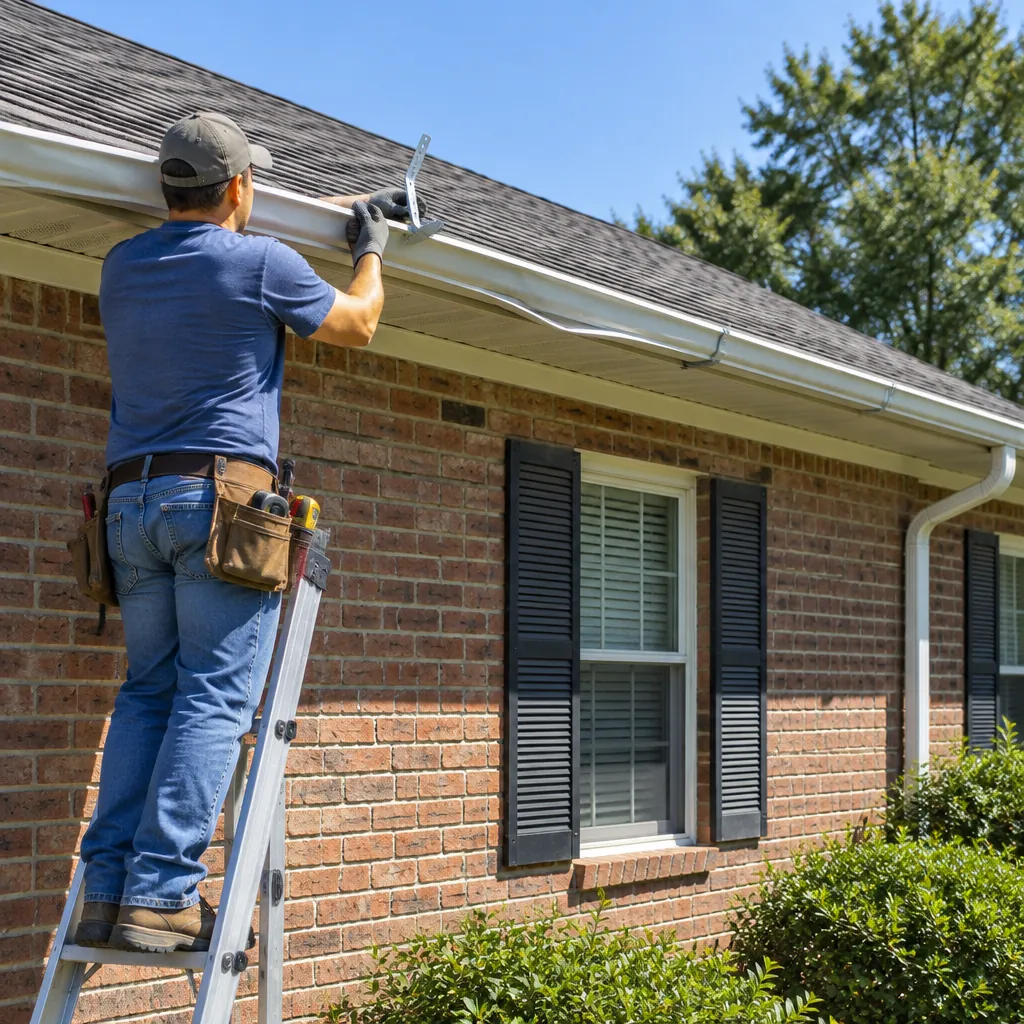
Gutter Repair in Farmers Branch
Leaks, sags, and storm damage fixed at the source, in Farmers Branch and across Dallas.
Call for a Free Estimate- GAF Certified Contractor
- BBB Accredited A+ Rating
- Family Owned and Local
Signs Your Gutters Need Repair, Not Just Cleaning
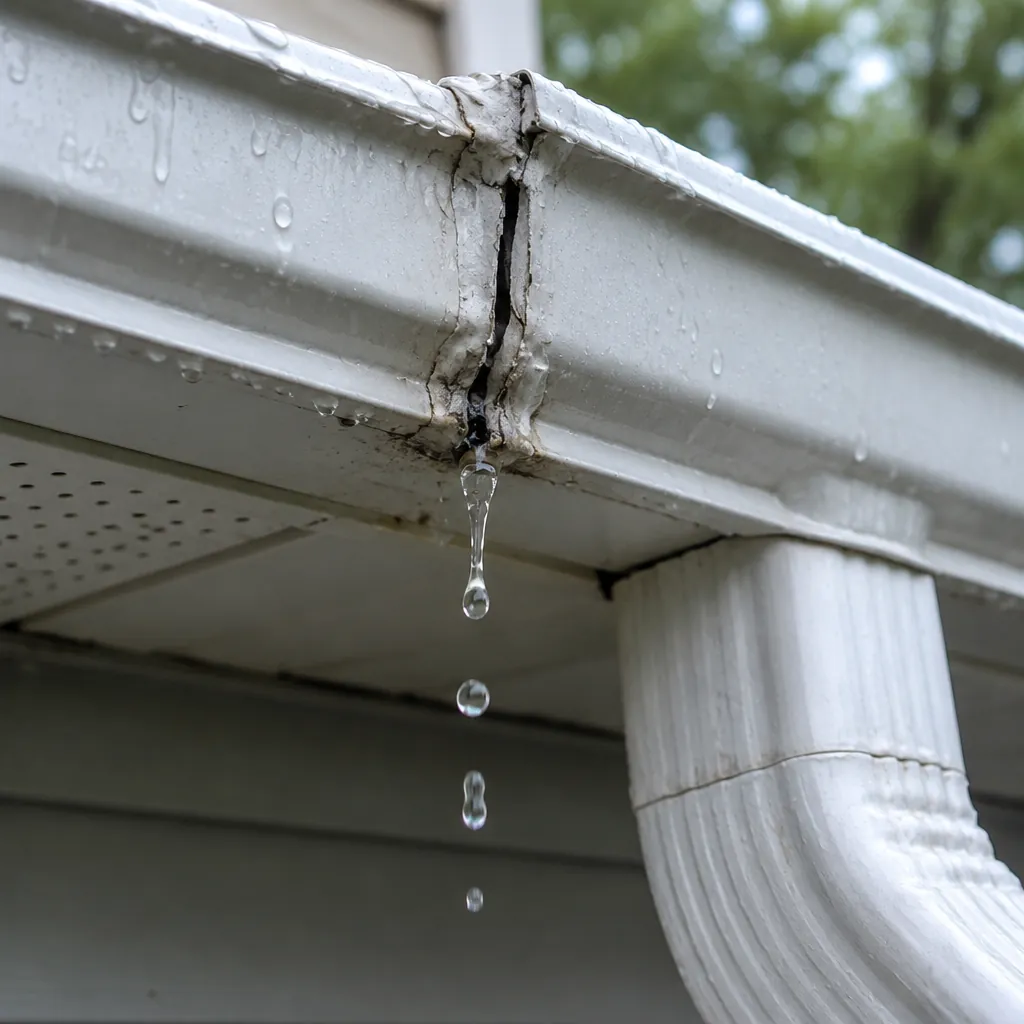
If your gutters still drip, sag, or spill after they've been cleaned out, cleaning won't fix it. That usually points to a leaking seam, a loose hanger, lost slope, or rot in the board behind it. We repair gutters in Farmers Branch and across Dallas and the surrounding area. We serve everywhere from Preston Hollow to Carrollton and the Dallas-Fort Worth area. It's one part of our gutter services.
A lot of folks call thinking their gutters are clogged, and sometimes they are. Plenty of gutters that look broken are just full. If that's all it is, gutter cleaning fixes it, and we'd rather tell you that than sell you parts. Other times, you clean them, and the next storm the same corner still pours water down the siding. That second case is what this page is about.
The easy test is to look at the gutters when they're empty. Clean gutters that still misbehave are telling you something is broken:
- Drips at the seams or corners. The sealant at joints and end caps dries out and cracks after enough North Texas summers.
- Sagging runs or gutters pulling off the fascia. Hangers loosen or back out, especially after holding wet leaves for a while.
- Standing water a day after rain. The gutter has lost the slight fall it needs toward the downspout.
- Dents and crimps from hail. A kinked section can back water up behind the dent.
- Water running behind the gutter. Streaks on the fascia or siding mean water is getting between the gutter and the house.
- Peeling paint, soft wood, or dark stains on the fascia. That board has usually been wet a long time.
- Loose or split downspouts dumping at the foundation. A whole roof's water landing in one spot washes out soil and beds.
Some of these overlap. Water behind a gutter can mean the gutter pulled away from the house. It can also mean missing drip edge at the roof line. You don't know which until somebody gets up on a ladder and looks.
The common move is to caulk the drip and move on. That can buy a season. A seam that leaks on a sagging run keeps leaking, though, because the gutter flexes every time it fills.
After a hailstorm, look at the gutters first. Soft metal dents more easily than shingles, so dents there can be a clue the roof took hits too. The Texas Department of Insurance advises taking photos and video of hail damage before repairs start.[1]
When a Section Repair Is Enough, and When It Isn't
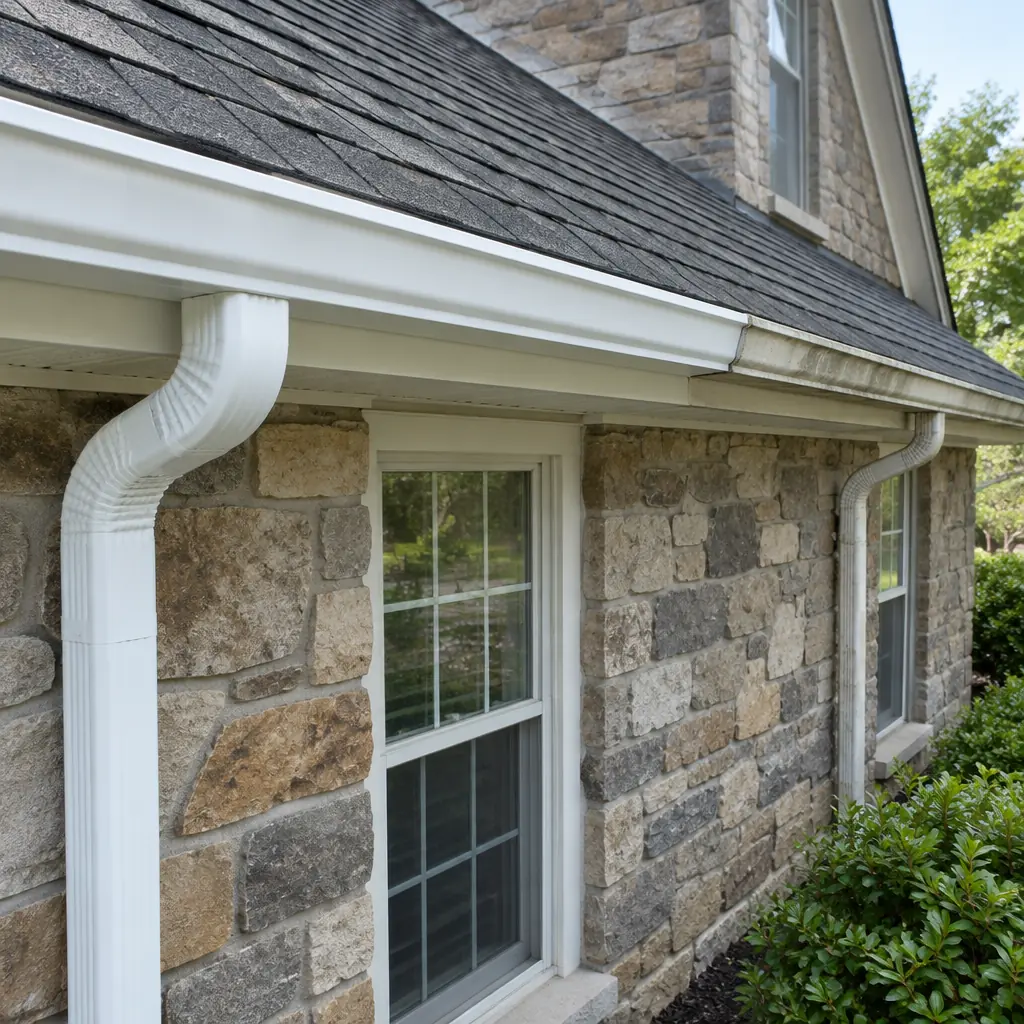
Most gutter problems are local, so you usually don't need a whole new system to fix one bad corner. If the trouble is in one spot and the rest is solid, a section repair usually does it. It's generally the cheaper one, too.
A section repair is usually enough when:
- One seam or end cap leaks, and the gutter on both sides is straight and holding its slope
- A single stretch got dented by hail, and the rest came through fine
- A few hangers backed out in one area, and the fascia behind them still holds a screw
- One downspout is split or knocked loose, and the gutter feeding it drains fine
- The fascia is soft in one short spot, so that piece of board can be replaced first
It stops being a section repair when the problem isn't in one place anymore. Leaks at seam after seam usually mean the whole run has aged out. Every joint went through the same summers, so fixing one just moves the drip down the line. It's the same with sag. One loose hanger is a repair. A sag along the whole back of the house means the hangers or fascia are giving up everywhere.
Replacement is usually the better answer when:
- Seams leak on more than one side of the house
- The metal is rusted through or has holes
- Hail dented most of the runs, not just one side
- Long stretches of fascia are rotted, so the gutters have to come down anyway
- The gutters overflow even when they're clean and straight, which can mean they're too small
- A new section can't match the old profile or color, and the patchwork bothers you
Seamless gutters change the math a little. A sectional gutter has a joint every so often, and every joint can leak. A seamless run only has joints at corners and downspouts. A dent in the middle of a seamless run can be harder to fix cleanly, so replacing that side is often the better fix.
Timing matters too. If your roof is due soon, it can make sense to hold off on new gutters until then. The gutters and drip edge tend to get worked on together. If it does come down to a full new system, that's our gutter installation work.
Gutter Damage Often Points to the Roof Edge
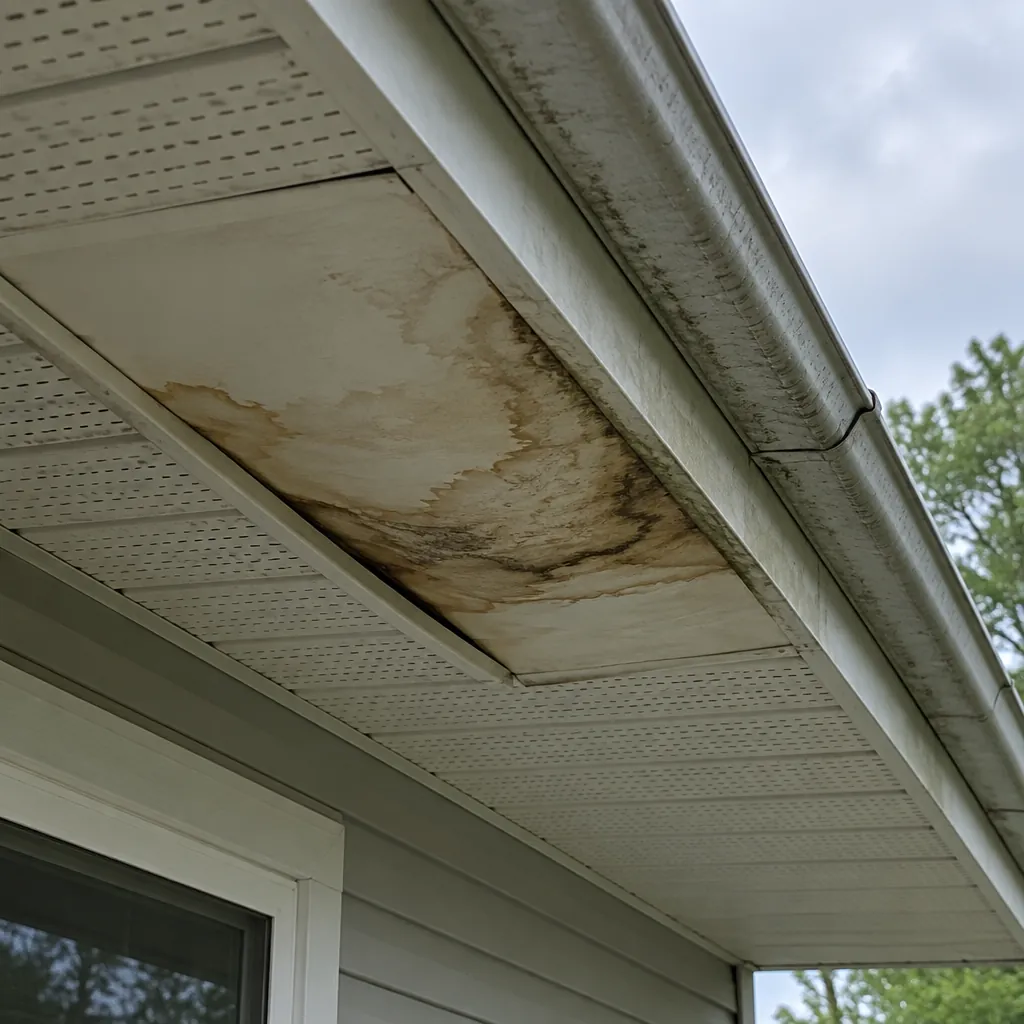
A gutter hangs off the very bottom edge of your roof. When it fails, damage tends to run into the fascia, the soffit, and the decking at the eave. That's why we don't like fixing a gutter without looking at what it's attached to.
Think about the order water travels. It comes off the shingles, crosses the drip edge, and drops into the gutter. If any piece of that handoff is off, water ends up somewhere it shouldn't. Shingles that don't hang far enough past the edge can let water curl back under. A gutter set too low can let it shoot right past.
Once the fascia has been wet long enough to go soft, the soffit is next. That's the flat panel under the overhang. On a lot of our North Texas homes, the attic pulls its air in through soffit vents. Years of spilling can leave stained soffit, clogged vents, and an attic that can't breathe in August.
It can reach the roof itself, too. The bottom row of decking sits right over the fascia. If water's been getting behind the gutter, the edge of that sheet can go soft. You won't see it from the ground. The shingles along that edge are the first ones a good wind will lift.
When a gutter has failed in one spot, we tend to check:
- The valley above it, since a valley dumps a lot of water into one short stretch
- The soffit right under the bad spot, for stains, sagging, or bubbled paint
- The siding behind the downspout, where splashing water can get in behind it
- The shingle edge above the gutter, for lifting, cracks, or short shingles
- The attic side of the eave if we can reach it, for dark wood or daylight
Sometimes none of that turns up anything, and it really was just a gutter that came loose. Other times the soffit has been soaking up a leak that started at the roof edge. You don't know which until somebody gets up there.
This is why it helps to have one crew look at the whole edge. Roofing, siding, gutters, and attic venting tend to come up in the same conversation. We handle all of them, so you're not stuck with three contractors pointing at each other.
Have questions? We're happy to help.
(214) 649-5984What Happens During a Gutter Repair Visit
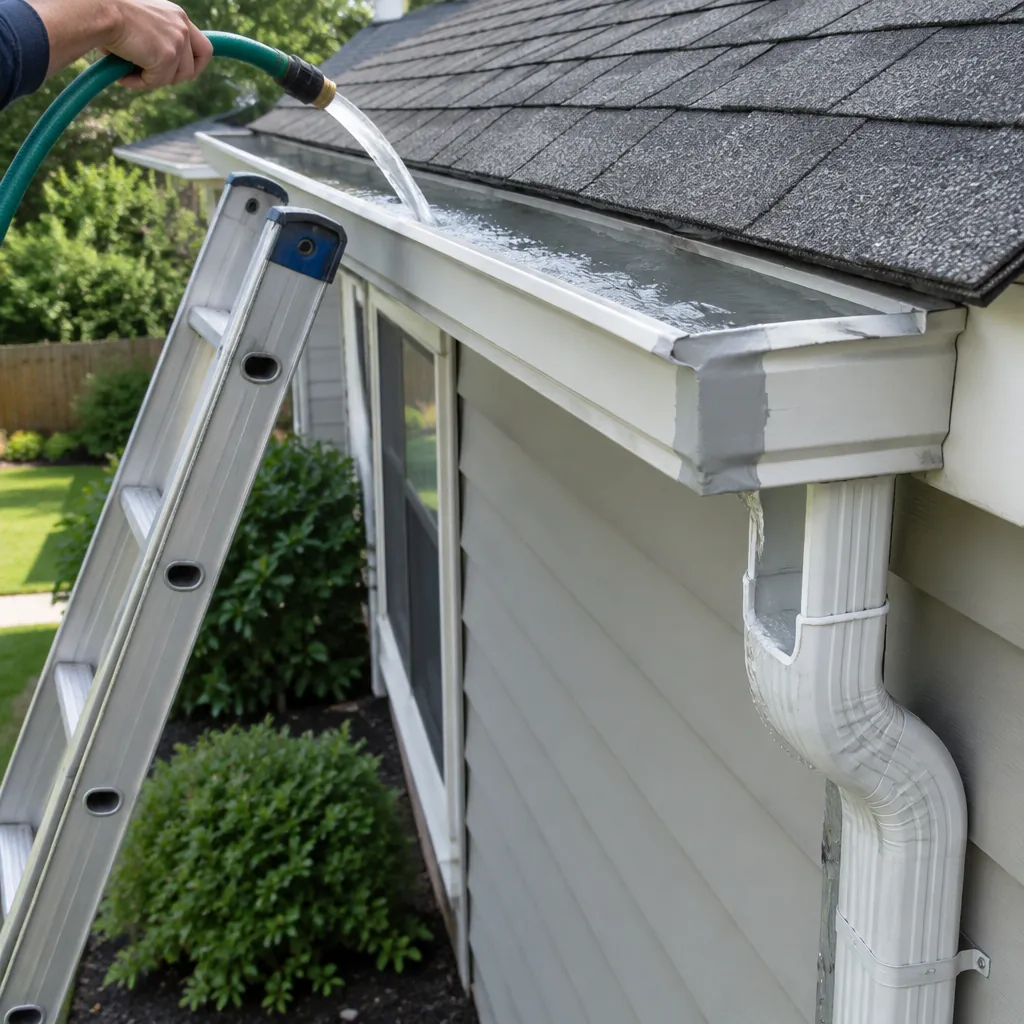
Most gutter repair visits are short and plain, and that's how they should be. Somebody gets up on a ladder, finds out why the water's going where it's going, and fixes that. Then they run water through it to prove it's fixed.
You can help before anybody shows up. The best clue is what the gutter does in the rain. If it rains before the visit, step outside and watch where it drips and whether the downspout runs. A quick phone video beats a description, because a leaking seam looks like a good one on a dry day.
A few other things help:
- Unlock the side gate and put the dogs up, since most bad corners are in the backyard
- Clear a flat spot for the ladder under the problem area
- Point out any ceiling stains near an outside wall, even if you're not sure they're related
Once the ladder's up, a good repair follows the same order. The problem spot gets cleaned first, because you can't judge a seam or slope under wet leaves. Then comes the look behind it. We push on the fascia where the hangers go in, since a new screw won't hold in soft wood. We check the drip edge and shingle line above, too.
The fix depends on what turned up:
- A leaking seam gets the old cracked sealant scraped out and resealed clean
- A sagging run gets new hangers set into solid wood, pitched back toward the downspout
- A hail-crimped piece or split downspout usually just gets swapped out
- Rotted fascia comes out first, and the gutter goes back up on new wood
Sometimes what shows up on the ladder changes the plan. The drip you called about can turn out to be water running behind the gutter from the roof edge. If it's bigger than a repair, you hear that before any work starts.
The last step is the one that counts. A hose goes in at the high end of the run, and everybody watches. Water should travel to the downspout, drop out the bottom, and leave the seams dry. If it doesn't, the job isn't done yet.
Frequently Asked Questions
Is gutter damage covered by homeowners insurance?
Often, yes, if hail or wind caused it and your policy covers wind and hail. Coverage and your deductible depend on your policy, so call your agent. We document the damage with photos, and we never waive a deductible, since Texas law doesn't allow it.
Can a leaking gutter seam be fixed?
Yes, a leaking seam can usually be fixed by scraping out the old sealant and resealing it clean. If seams leak all around the house, the whole run has likely aged out, and replacement may make more sense.
Why are my gutters sagging?
Gutters usually sag because the hangers have loosened or the fascia behind them has gone soft. Wet leaves and standing water add weight that pulls them loose over time. We reset the run on new hangers in solid wood, after replacing any rotted board.
Should I repair or replace my gutters?
Repair when the problem is in one spot and the rest of the system is solid. Replace when seams leak on several sides, the metal is rusted through, or the gutters overflow even when clean. Clean them first so you can see what's really wrong.
Can you replace just one section of gutter?
Yes, a single damaged section can usually be swapped out. The catch is matching, since older gutters fade in our sun. A new piece can stand out on the side facing the street.
Can bad gutters damage my roof?
Yes, failing gutters can soak the fascia, soffit, and the roof decking at the eave. Soft decking there makes the bottom row of shingles easier for wind to lift. That's why we check the roof edge on every repair.
Ready for Your
Gutter Repair?
Get a free, no-obligation evaluation from our family-owned team in Farmers Branch. We'll look at your gutters, give you a written estimate, and walk you through every option.
Want to pay over time? Check your financing options.


Need Gutter Service? Request An Estimate!
Fill out the form and we'll get back to you promptly.