
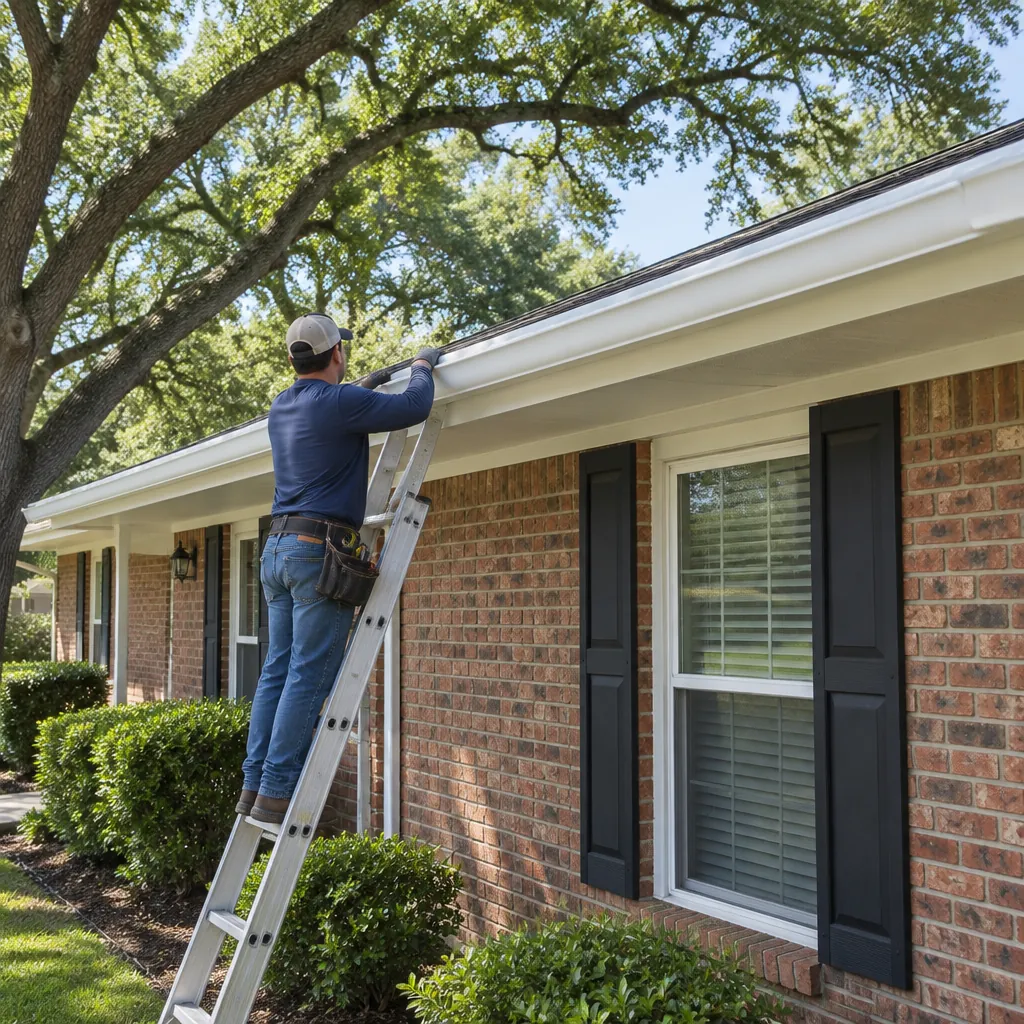
Gutter Installation in Farmers Branch
Seamless gutters sized and pitched for North Texas storms, in Farmers Branch and across Dallas.
Call for a Free Estimate- GAF Certified Contractor
- BBB Accredited A+ Rating
- Family Owned and Local
New Gutters Have to Handle More Than Rain
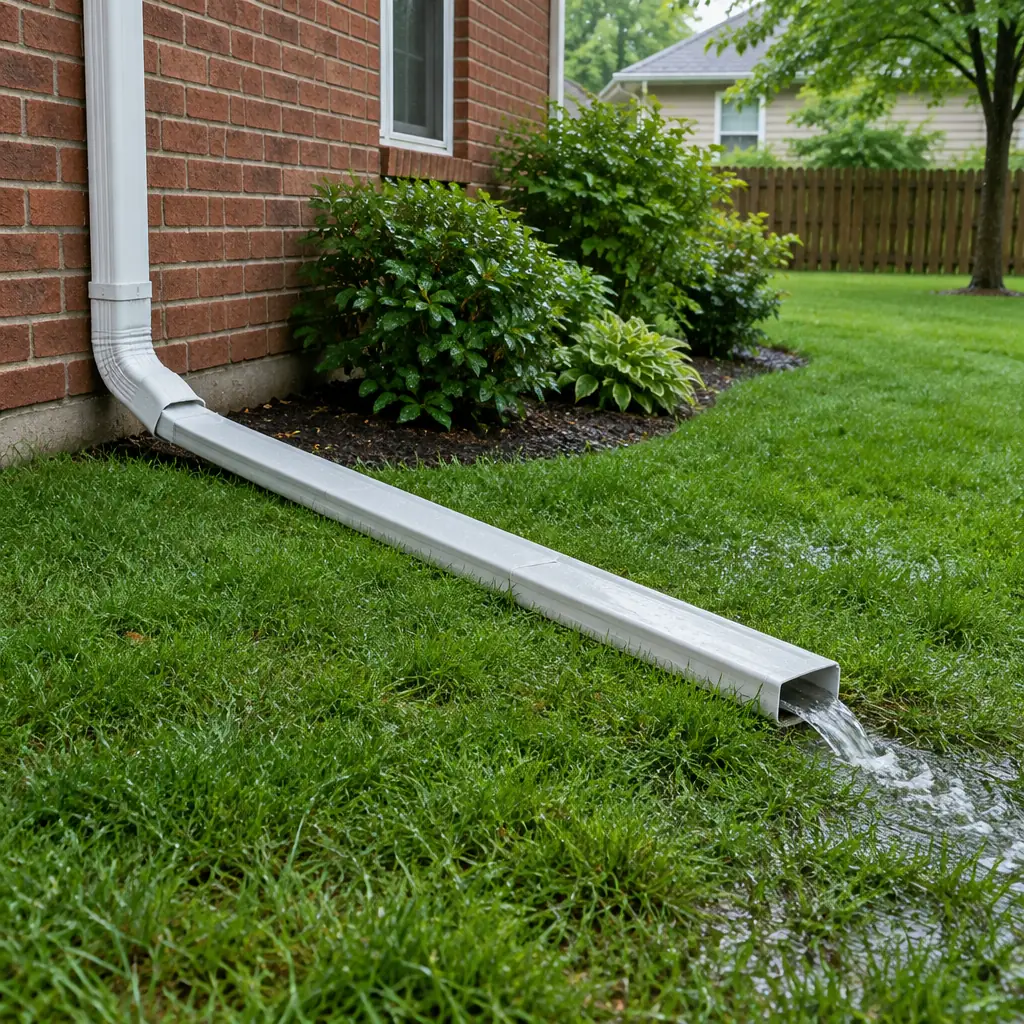
A new gutter system in Farmers Branch has to handle hard spring downpours, heavy leaf fall, and runoff near your foundation. We install gutters in Farmers Branch and across Dallas and the surrounding area. We serve everywhere from Preston Hollow to Carrollton and the Dallas-Fort Worth area. It's one part of our gutter services.
Most folks think of gutters as a trough that catches rain and dumps it at the corner. That's part of it. On our North Texas homes, a new set should be sized for everything that comes off the roof.
Start with the rain itself. A spring storm can drop a lot of water in a short window. An undersized gutter or a downspout in the wrong spot just overflows. Valleys usually show it first, because two roof slopes dump into one short stretch of gutter.
Then there's what the trees drop. Farmers Branch calls itself the City in a Park. Many older streets have big live oaks, pecans, and cedar elms over the roofline. Leaves, tassels, and twigs pile up at the downspout opening. A new system should keep draining when it's half full of oak leaves in November.
Where the water lands matters as much as catching it. Our clay soil swells when it's wet and shrinks when it dries. A downspout that empties against the slab keeps soaking one corner of the foundation. The Department of Energy's building science guidance calls for carrying downspout water more than 5 feet from the foundation.[1]
The part people don't think about is what the old gutters were hiding. When they come off, the fascia board behind them is in the open for the first time in years. It has to be solid enough to hold a fastener. While it's exposed, we look for:
- Soft or dark fascia wood behind the old gutter line
- Shingle granules piled in the bottom of the old gutters, which can point to a roof that's wearing out
- Stains on the soffit under corners and valleys
- Low spots where the old gutter sagged and held water
Hanging new gutters on a rotted board just means pulling them back down later. The roof edge is open now, so this is the one easy time to fix it.
Signs It's Time for New Gutters, Not Another Repair
A gutter full of oak leaves and pecan tassels can look a lot like a gutter that's shot. Water spills over the front edge, the downspout barely drips, and you figure the whole thing has to come down. Many times it doesn't. A clog is a cleaning problem.
So the first step is simple. Get the gutters cleaned and the downspouts flushed. Then wait for the next rain, or run a hose at the high end of each run. Whatever still goes wrong on a clean gutter is the real problem.
These signs tend to point past cleaning and toward new gutters:
- Seams and corners drip on a clean gutter. One bad seam can be resealed. Drips at most of the joints usually mean the system is worn out.
- Water stands in a clean gutter a day after rain. If it sits flat or tilts the wrong way along most of its length, it won't drain.
- Hangers keep backing out of the fascia. Older installs used long spikes, and those work loose as the wood swells and dries.
- Rust, pitting, or pinholes show up. Older steel gutters rust from the inside, and a patch only buys a little time.
- The same stretch overflows every storm. The gutter or downspout may be too small for the roof draining into it.
Some of these have two possible causes. A gutter pulling away can be loose hangers in good wood, which is a quick fix. Or the board behind it has gone soft. You don't know which until somebody puts a hand on it.
If the trouble is one leaky corner or one loose section, you probably don't need a new system. Gutter repair handles that for a lot less. If the gutters just haven't been cleaned since last fall, that's what gutter cleaning is for.
Timing matters, too. If a new roof is coming in the next year or so, it can make sense to patch the gutters and wait. The shingles, drip edge, and gutters all meet at the roof edge, so it's better to plan them together.
New gutters start to make sense when the problems stack up. Several seams leak, the slope is off across the whole run, and the hangers won't hold. At that point, every patch is money spent on a system you'll replace anyway.
Seamless Aluminum Gutters, Cut to Fit Your House
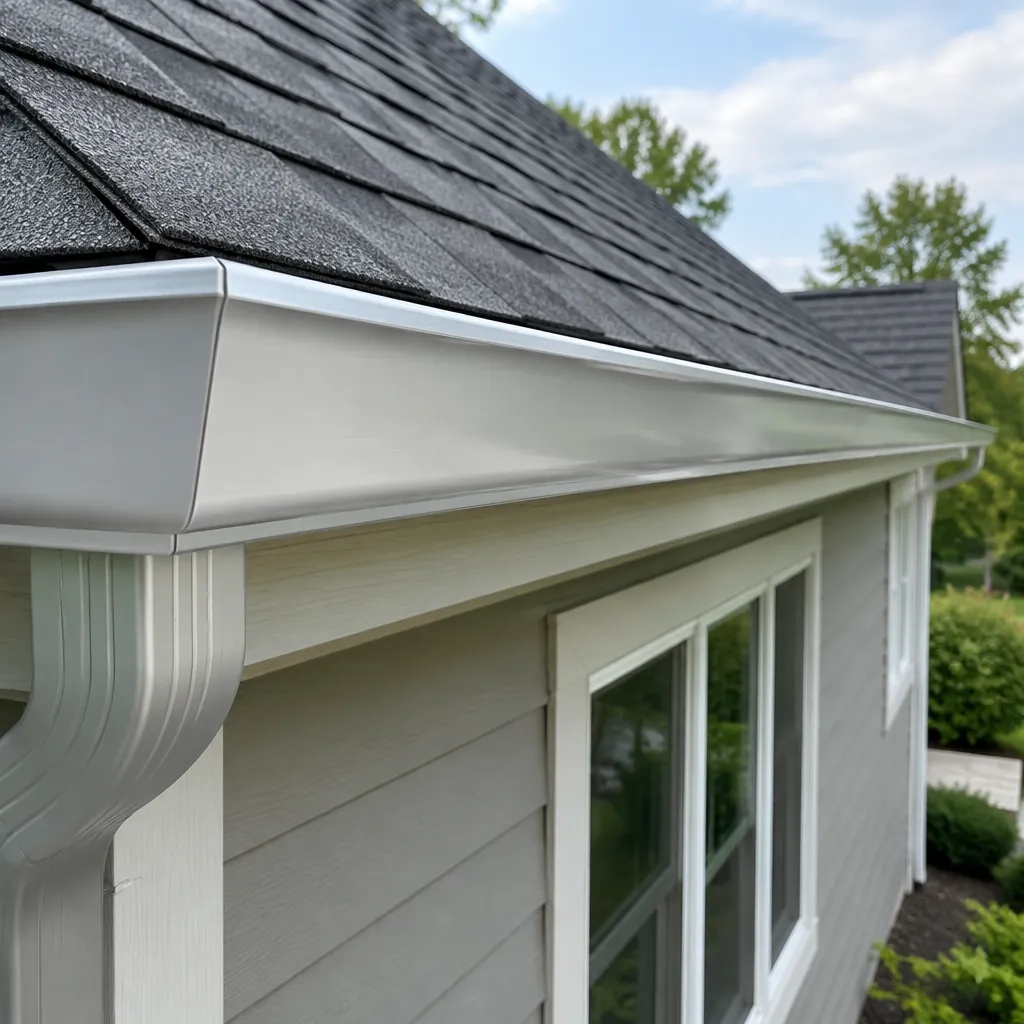
We install seamless gutters, and on most homes here they're the better choice. A seamless gutter is formed from a coil of aluminum and cut to the exact length of each run. There's no joint every ten feet, so there's far less to leak.
Sectional gutters come in shorter pieces that snap or screw together. Every one of those joints is held by sealant. After enough North Texas summers in the sun, that sealant dries out and cracks. Then the drips start, usually one joint at a time.
A seamless run only has joints where it has to: at the corners and the downspout outlets. That's a handful of seams around the whole house instead of dozens.
Size matters as much as the seams. Most homes use a 5-inch gutter. Larger roofs, steep roofs, and long valleys often need 6-inch gutters or bigger downspouts to keep up with a storm. We measure before we pick, because a gutter that's too small overflows no matter how well it's hung.
A few things to know about seamless gutters:
- They're usually aluminum. It won't rust, it's light on the fascia, and it comes in colors to match your trim.
- Hail can still dent them. Small dents are usually cosmetic. A crushed section on a seamless run is harder to swap out than one sectional piece.
- Color fades a little over time. A new run next to an old one can look different, which matters more on the side facing the street.
If you're putting on a new roof or new siding soon, it's worth timing the gutters with it. The gutters come off for that work anyway, and new ones can go up once the edge is finished.
Have questions? We're happy to help.
(214) 649-5984What Happens on Installation Day
Once you've decided the old system has to go, the install is less of a production than people expect. It's mostly ladder work. On many one-story ranch homes around Farmers Branch, nobody has to walk the roof at all.
It starts with measuring every run. That means the length of each roof edge, where the valleys dump in, and where downspouts can go without landing on a walkway. Those numbers set the gutter size and the number of downspouts. They have to be right before any metal gets cut.
Next, the old gutters come down. The fascia gets its look, and any soft wood gets fixed first. The drip edge gets checked too. That's the metal strip at the bottom of the roof that steers water into the gutter instead of down behind it.
Then the new gutter goes up, and two things decide whether it lasts:
- Slope. The gutter needs a slight pitch toward each downspout, often around a quarter inch for every ten feet. Too flat and water sits. Too steep and it looks crooked from the street.
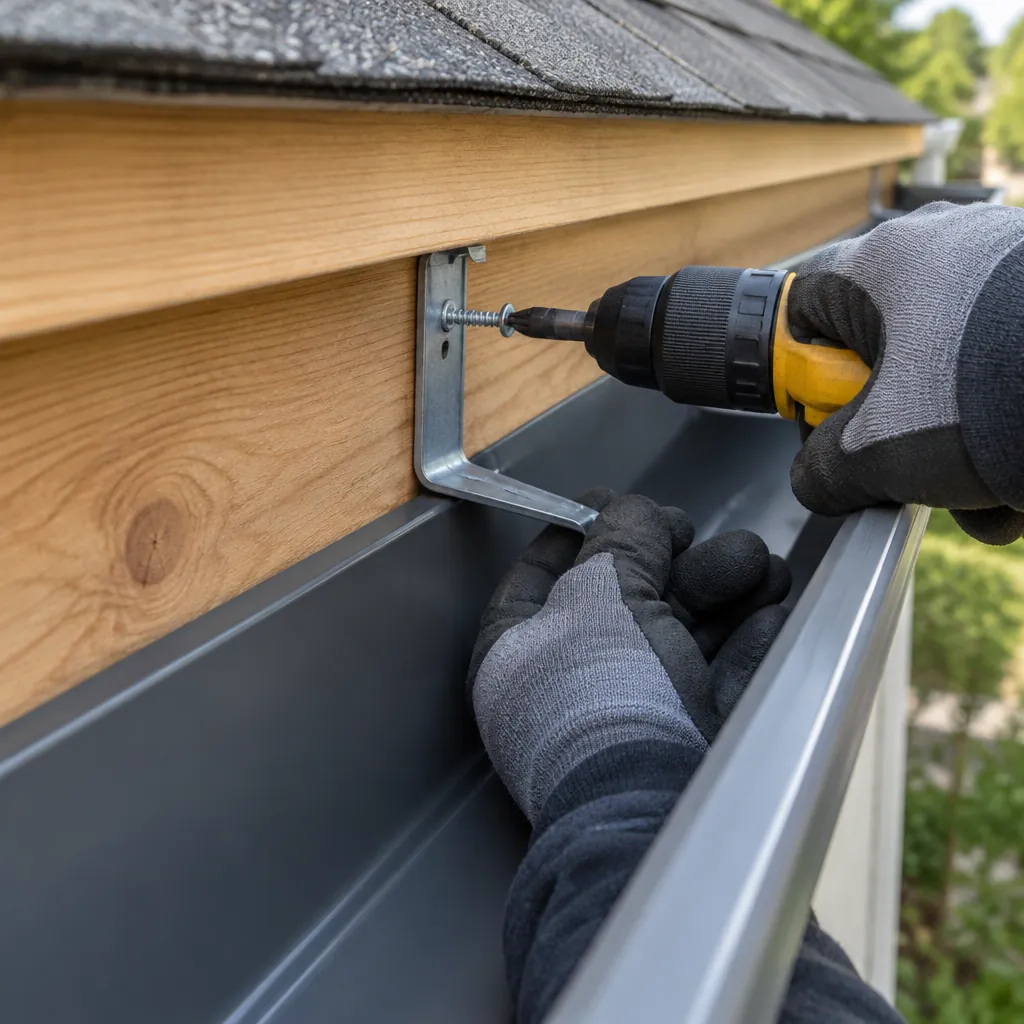
- Hangers. Hidden hangers screw into the fascia. They hold far better than old spikes, so the gutter stays put when it's full of water and leaves.
After that come the downspouts, outlets, and end caps, and the corners get sealed. The downspouts get routed so water lands out past the slab, not against it.
The last step is the one to watch for. We run a hose at the high end of each run. Water should reach the downspout and come out the bottom without dripping at a corner or pooling in the middle. If it doesn't, the slope gets fixed right then.
On your end, there isn't much to do:
- Move cars away from the sides of the house
- Let us know about gate codes or a dog in the backyard
- Pull anything fragile out of the flower beds right under the roofline
How long the day runs depends on the size of the house, the number of corners, and whether the fascia needed work.
Gutter Guards Mean Less Cleaning, Not No Cleaning
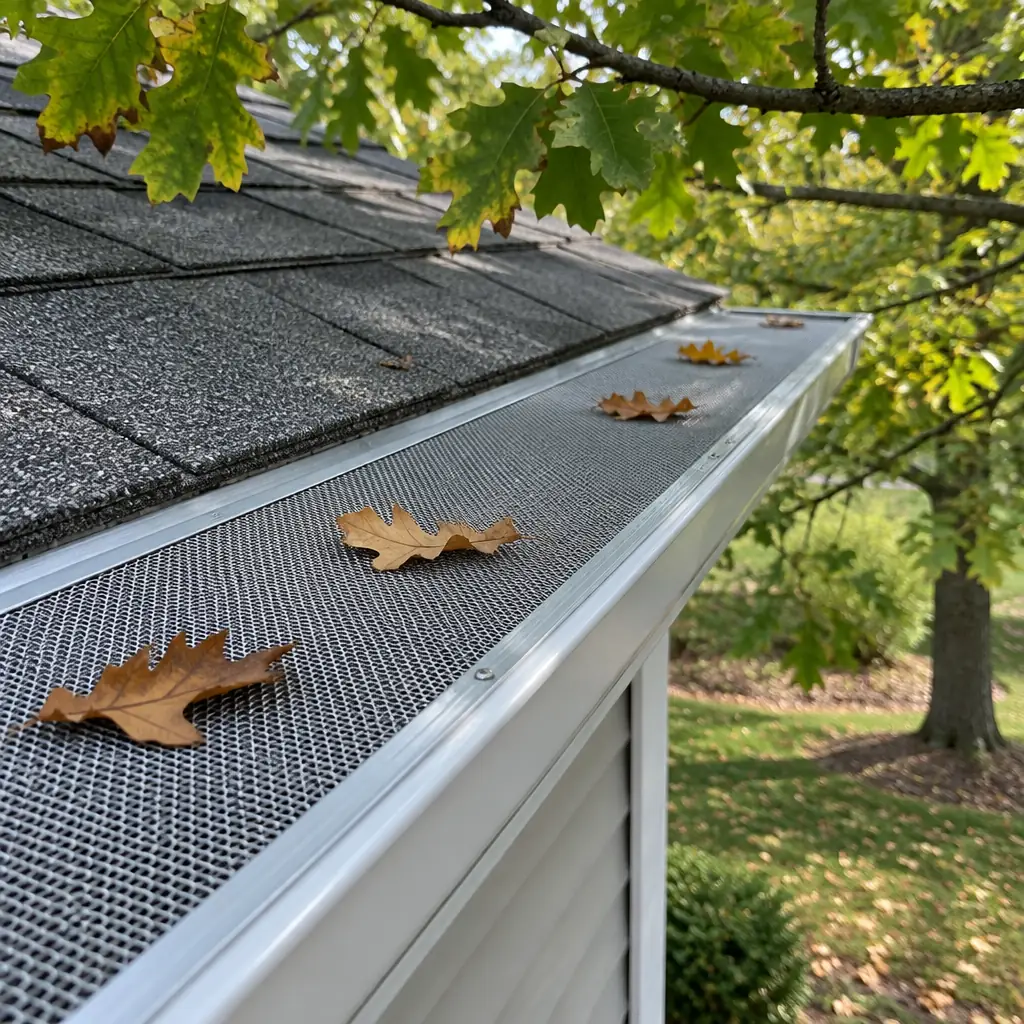
We install gutter guards. Under the big trees around Farmers Branch, they can cut down a lot of the mess. They don't end cleaning, though. A guard nobody checks can hide problems an open gutter would show you right away.
Most guards fall into a few basic types:
- Screens and perforated covers that sit on top and block leaves
- Fine micro-mesh that stops smaller debris
- Solid covers with a curved front edge that lets water roll into the gutter
- Foam or brush inserts that sit down inside the trough
Each one stops big leaves pretty well. Where they differ is in what gets past them and what builds up on top.
Our trees don't make it easy. Live oaks drop a lot of leaves in late winter and early spring. Around the same time, oaks and pecans shed thin, stringy tassels that mat down on top of a mesh. Small seeds and twigs work into screens and brush inserts. On an older roof, shingle granules settle in the gutter, guard or no guard.
Rain can get past a guard the wrong way, too. A hard spring storm can sheet water right over a mesh that's half covered in debris. Solid covers can overshoot on a steep pitch. Valleys usually show it first.
A few habits keep a guarded system draining:
- Brush off the tops after the spring tassel drop and again after the fall leaves
- Pull a section near each downspout about once a year and check for grit inside
- Flush the downspouts, since a clogged elbow backs water up either way
- Walk the house after a hard rain and look for fresh splash marks under the valleys
- Check for bent screens after a hailstorm
One more thing to ask about before guards go on. Some styles tuck under the first row of shingles, and that can lift the shingle edge. Because roofing is our main trade, we pick a guard and an install that won't fight the roof.
Guards can stretch the time between cleanings, sometimes by a lot. They still need someone to look at them. Our gutter cleaning visits handle guarded systems the same way: tops cleared, inside checked, downspouts flushed.
Frequently Asked Questions
Do you install seamless gutters?
Yes, we install seamless aluminum gutters cut to the length of each run. They only have joints at the corners and downspout outlets. That leaves far fewer places to leak than sectional gutters.
Do you install gutter guards?
Yes, we install gutter guards with new gutters or on gutters that are still in good shape. Guards cut down on cleaning under heavy trees. They still need a check after the spring and fall leaf drops.
How do I know if I need new gutters or just a repair?
If the problem is one leaky corner or one loose section, a repair usually does it. New gutters make sense when several seams leak, the slope is off across whole runs, or the hangers won't hold. Clean the gutters first, then watch how they drain.
What size gutters does my house need?
Most homes use 5-inch gutters, but larger or steeper roofs often need 6-inch gutters. Long valleys may also need bigger downspouts. We measure each roof section before picking a size.
Should I replace my gutters before or after a new roof?
After, or at the same time, is usually best. The gutters often come off during roof work, and the drip edge and gutters meet at the same roof edge. Planning them together saves doing that edge twice.
How far should downspouts carry water from my house?
The Department of Energy's building science guidance calls for more than 5 feet from the foundation. That matters on our clay soil, which swells when wet. Extensions or buried drain lines can carry water past that point.
Ready for Your
Gutter Installation?
Get a free, no-obligation evaluation from our family-owned team in Farmers Branch. We'll look at your gutters, give you a written estimate, and walk you through every option.
Want to pay over time? Check your financing options.


Need Gutter Service? Request An Estimate!
Fill out the form and we'll get back to you promptly.