
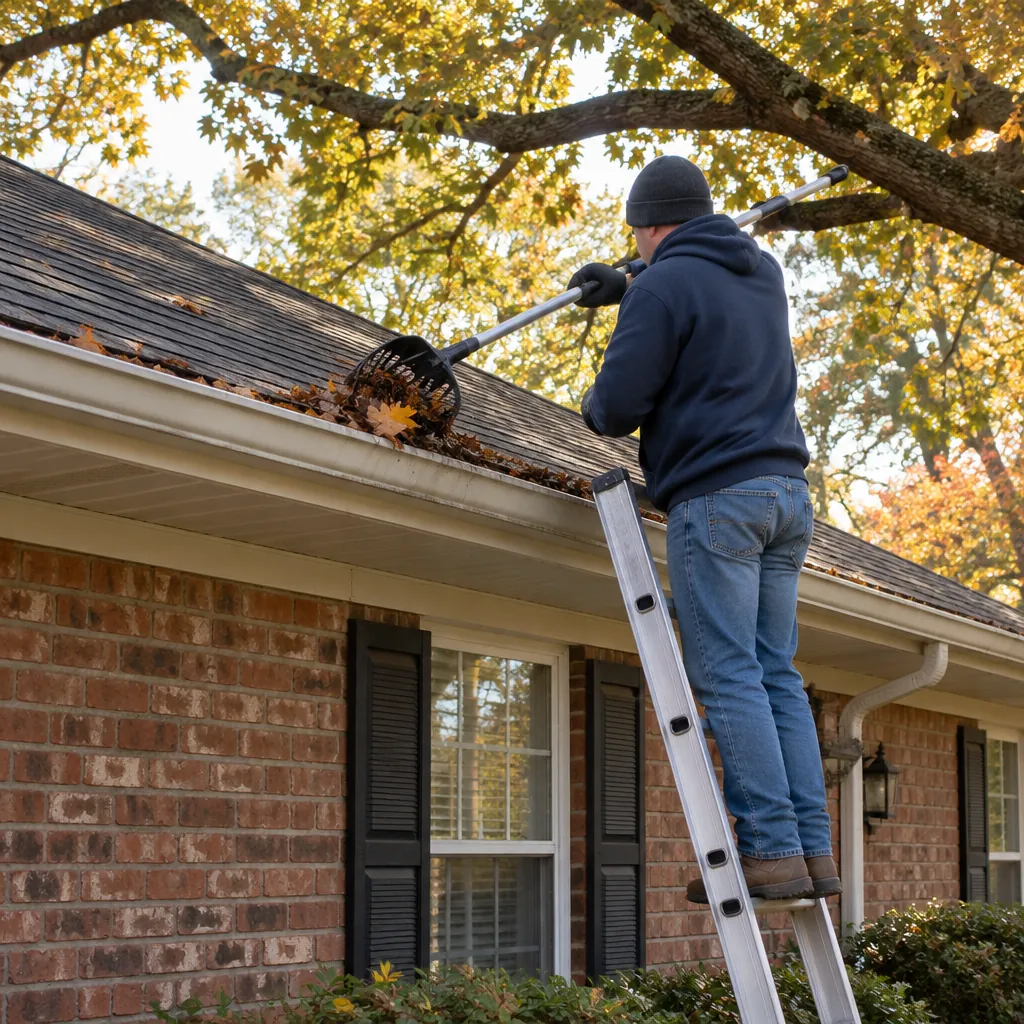
Gutter Cleaning in Farmers Branch
Gutters cleared and downspouts flushed before the next storm, in Farmers Branch and across Dallas.
Call for a Free Estimate- GAF Certified Contractor
- BBB Accredited A+ Rating
- Family Owned and Local
Signs Your Gutters Need Cleaning Now
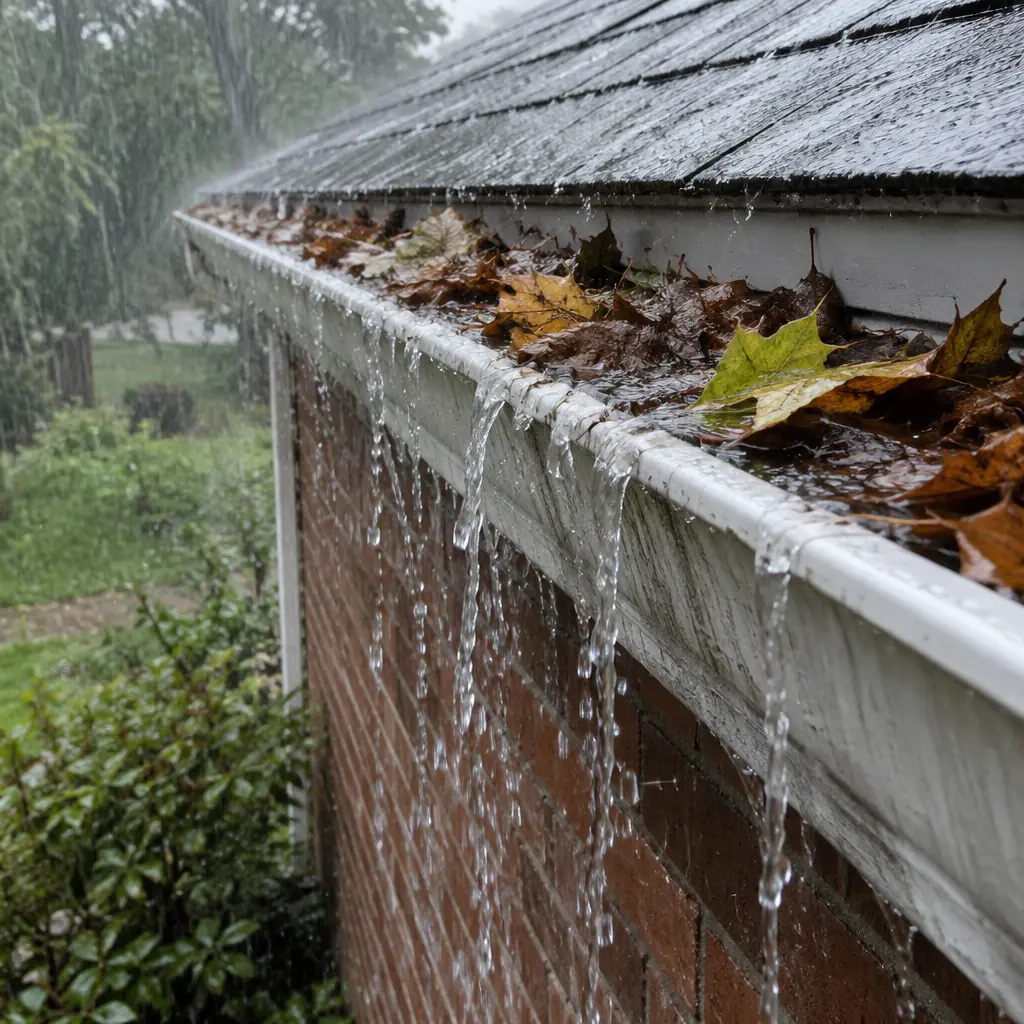
Most gutter clogs show from the ground. Water sheets over the edge in a rain, a downspout barely trickles, or little plants sprout up top. We clean gutters in Farmers Branch and across Dallas and the surrounding area. We serve everywhere from Preston Hollow to Carrollton and the Dallas-Fort Worth area. It's one part of our gutter services.
The easiest time to check your gutters is during a good rain. Grab an umbrella, walk the house, and watch where the water goes. It should run along the gutter and come out the downspout in a steady stream. If it doesn't, something up there is holding it back.
Look for these:
- Water spilling over the front edge, especially in the middle of a run
- A downspout that only dribbles, or stays dry, while the roof is clearly shedding water
- Grass, weeds, or seedlings growing out of the gutter
- Dark streaks running down the outside of the gutter or the siding below it
- Puddles, washed-out mulch, or bare trenches along the drip line of the house
- Peeling paint or soft spots on the fascia right behind the gutter
Overflow is the one people ask about most, and it can fool you. It can be a clog, with leaves packed at the downspout opening. Or the gutter's slope has settled wrong, and water sits in a low spot. From the driveway, those look the same.
A little overflow matters more here than in a lot of places. Our North Texas clay swells when it's wet and shrinks when it dries. When a gutter dumps a roof's worth of water in one spot, that soil soaks and then bakes. The Department of Energy's building science guidance warns that roof runoff can saturate the soil around a foundation.[1] That kind of damage starts slow. You usually don't notice until a door starts sticking.
One more thing to look for. If the gutters hold a lot of dark, sandy grit, that's usually granules washing off the shingles. It can be normal aging or hail wear. That's a question for a roof inspection, not a gutter cleaning.
When You Can Skip a Cleaning This Season
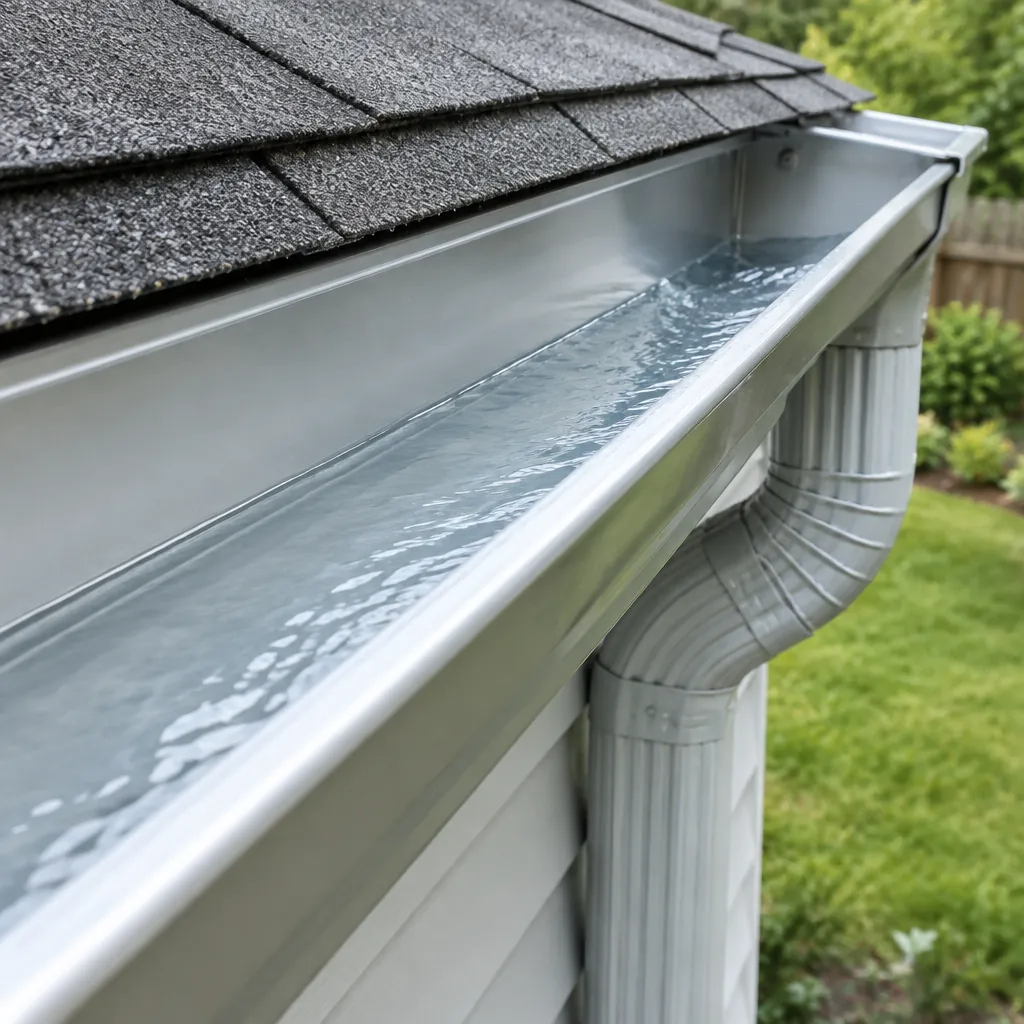
Not every house needs its gutters cleaned every season, and nobody should talk you into one you don't need. If water ran out the downspout in a steady stream on your rain walk, your gutters are working. You can leave them alone.
A few other cases where waiting makes sense:
- No trees over or near the roof. A house on an open lot collects a little grit and windblown debris, and that takes a long time to matter.
- They were cleaned after the last big leaf drop. If it's been a dry winter since, there's usually not much new up there.
- Your gutter guards are working. If water goes in and comes out the downspout fine, there's no reason to pull them this season.
- It's one story with light debris, and you're comfortable on a ladder. A few handfuls of leaves and a quick hose flush is a fine Saturday morning job.
Timing is the other reason to hold off. Plenty of people clean in late summer because it's dry, then the fall leaves fill everything right back up. Wait until the trees are mostly bare and clean once. In spring, let the live oaks finish dropping first.
If a new roof is on the calendar, hold off on cleaning too. Roof work tends to put shingle grit, old nails, and debris into the gutters. They'll need clearing once that's done.
Sometimes a cleaning just won't help. If the gutter sags, pulls off the fascia, or holds water in a low spot when it's empty, that's a slope or fastener problem. Same if the seams leak or the metal is rusted through. That's gutter repair, or new gutter installation on an older system that's failing in many places. I'd rather you hear that up front than pay to clean a gutter that'll overflow anyway.
And if you only see some splashing at one corner during a hard downpour, that can be normal. Some storms drop more water than a standard gutter can carry at once. If it stops when the storm lets up, you can usually let it be.
Clean Gutters Protect the Roof Edge
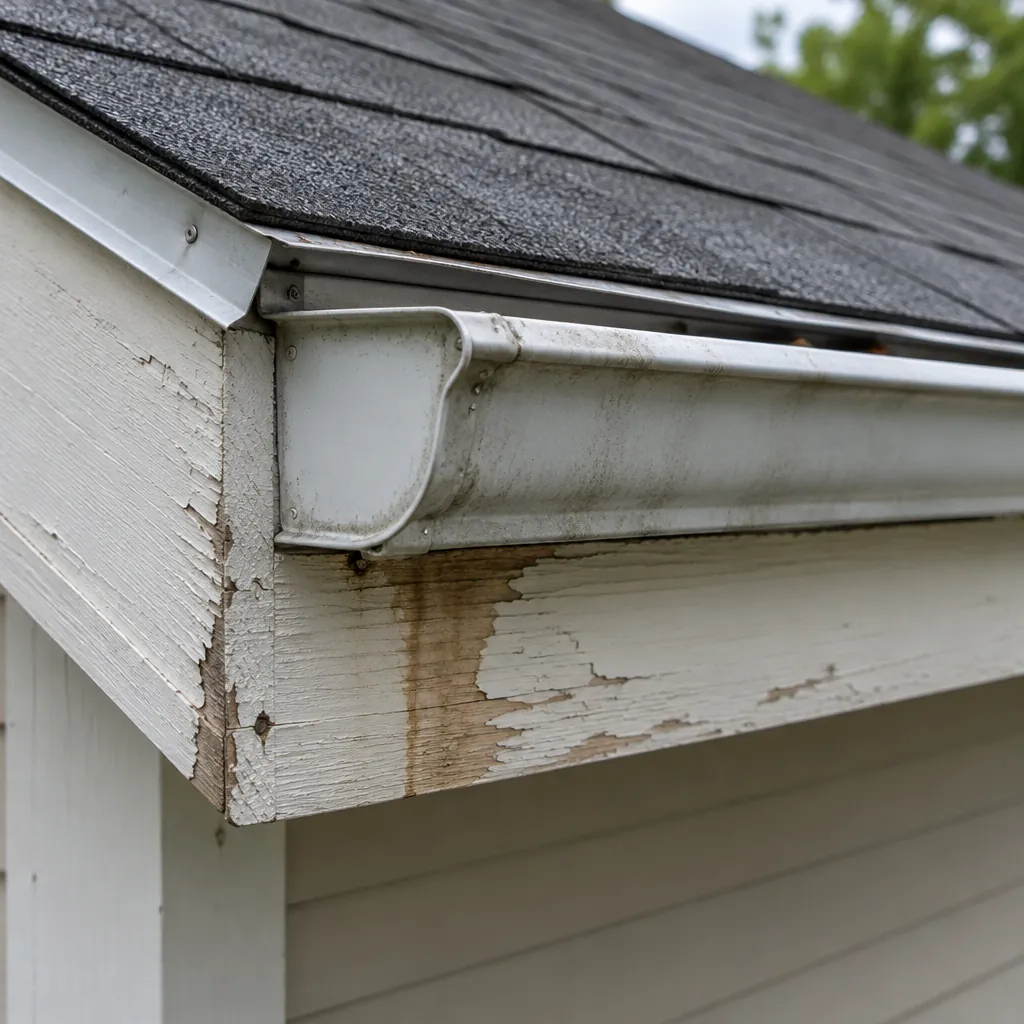
A gutter doesn't hang out there by itself. It's fastened to the fascia board, which is nailed to the ends of the rafters. Right above that is the edge of your roof decking, with the first row of shingles on it. When a gutter fills up and stays full, all that wood sits inches from standing water.
On a roof built right, a strip of bent metal called drip edge runs along the bottom. It kicks water off the shingles and into the gutter. That works fine as long as the gutter has room. When it's packed with leaves, the water level rises to the lip. In a hard rain, water can back up behind the drip edge and soak the wood from behind.
That's slow damage. You won't see it from the yard for a long while. When a gutter has been full for a few seasons, we tend to find:
- Fascia that's soft when you press on it, or paint bubbling along the board
- The first row of shingles staying damp at the bottom edge
- Decking along the eave starting to go soft
- Soffit panels under the eave that are stained, sagging, or pulling loose
- Water streaks down the siding under the gutter line
Soft fascia is one you can't guess on. It can be a gutter that's backed up for years. It can also be a missing or badly tucked drip edge sending water down the board every rain. From the ground those look the same.
The soffit matters for another reason. On a lot of our North Texas homes, the attic pulls in fresh air through vents in the soffit. If overflow keeps soaking those panels, they can warp or clog. Then the attic runs hotter in August, and that heat sits right under your shingles.
Then there's weight. A gutter full of wet, packed debris after a spring storm is heavy. Over time it can pull the hangers loose, and a leaning gutter pulls the fascia with it.
That's why we look at the roof edge any time we're up there cleaning. The leaves are the easy part. The useful part is catching a soft board while it's still a small fix.
Have questions? We're happy to help.
(214) 649-5984Timing Gutter Cleaning Around Spring Storm Season
Spring timing is a little awkward here. The live oaks drop at the same time the storms show up. The National Weather Service's Dallas/Fort Worth climate narrative notes that thunderstorms and severe weather peak in spring.[2] So the goal is open gutters before the rain gets serious, without paying for a cleaning that fills back up.
Live oaks don't only drop leaves. They also let go of long, stringy tassels that coat the driveway yellow-green for a while. Those tassels are often a bigger gutter problem than the leaves. They mat together when wet and pack into the downspout opening like a sponge. A gutter can look clear from the ground and still have its outlet plugged.
The usual approach is one spring cleaning on whatever weekend is handy. Splitting it into steps tends to work better on lots with big oaks:
- Late winter, before the storms: if the gutters still hold fall leaves, get them cleared so the first real rain has somewhere to go.
- After the oaks finish dropping: do a full cleaning and flush the downspouts. This one carries you through the rest of storm season.
- After a real storm: watch the downspouts in the next rain. If one dribbles, a branch or clump probably came down with the wind.
If your gutters were cleaned late last fall and the winter was dry, you can usually skip that first step. The same goes for a house without many trees nearby.
A lot of folks wait until after the first bad storm to call. That's usually the busiest time to get on a roofer's schedule. When hail and wind blow through Dallas County, the phones fill up with roof damage calls. Routine gutter work tends to wait behind those.
After a storm, don't rush anyone up on wet shingles to clean. Give it a dry day. A cleaning right after a storm has a second use, too. Whoever's up there can check the roof edge and what washed into the gutter while it's fresh.
Once the oaks are bare, usually by May, you're generally set until fall. Keep an eye on the downspouts when it rains, and that's about it.
What Happens During a Gutter Cleaning Visit
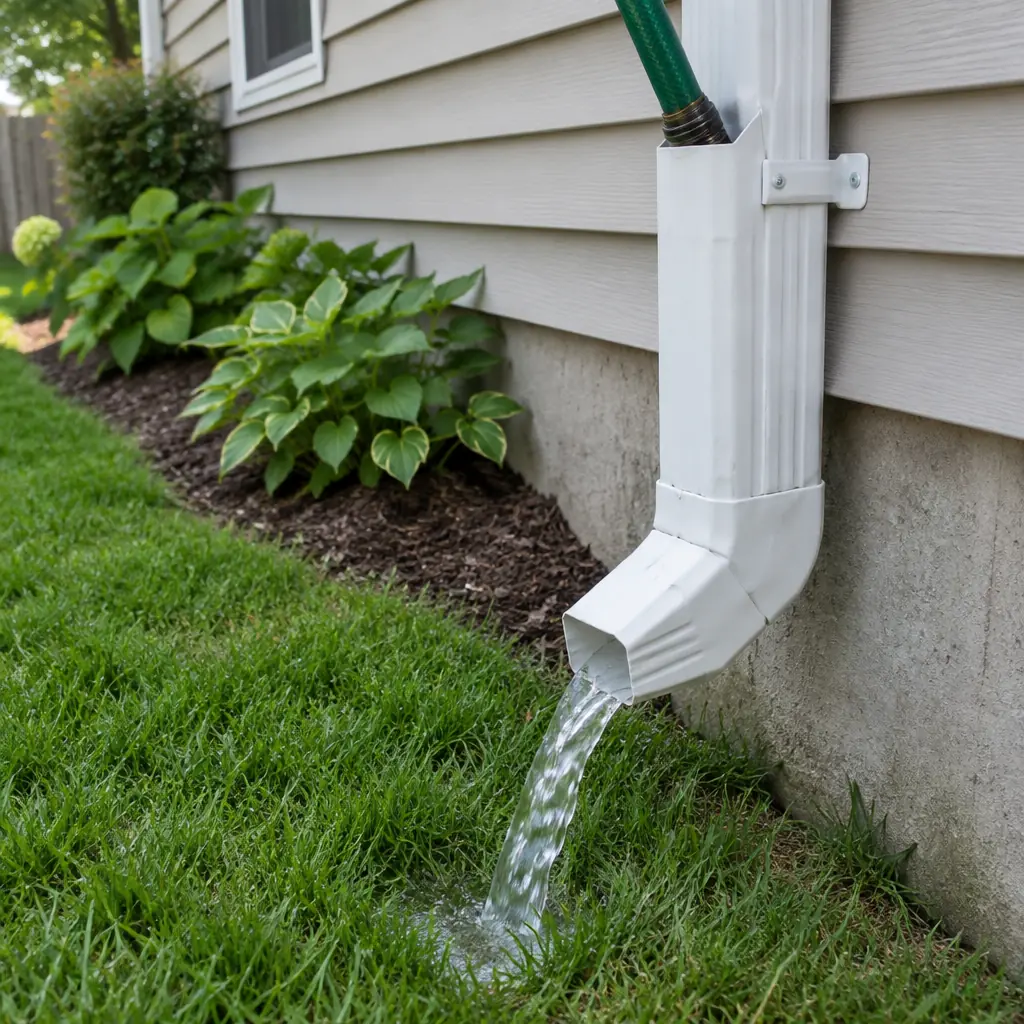
You can do a lot of this from a ladder yourself, so it's fair to ask what you're paying for. Clearing the leaves is only the start. The job is getting water from the roof to the ground and away from the house, then telling you what we found.
How a gutter gets cleaned depends on the scope and the issue. We look at what's in the gutter, how it's attached, and how the roof edge is holding up. Then we pick the method that fits the job.
Many times, that's hand cleaning. Scooping the gutters out, bagging the debris, and carrying it off is slower. It also gets the packed layer at the bottom, which is what holds water. Other jobs call for a different method. Whatever we use, the goal is the same: bare gutters and downspouts that run strong.
Where the crew stands matters too. A ladder with a standoff rests against the roof edge instead of the gutter. That keeps it from crushing the gutter or bending the hangers. On a hot July afternoon, the less foot traffic on soft shingles, the better.
A thorough visit covers:
- Clearing every run, corners included, down to bare gutter
- Pulling the plug of tassels and seed pods out of each downspout opening
- Running water through each gutter to catch low spots where water sits
- Flushing each downspout and checking that it runs strong at the bottom
- Checking hangers and seams for anything loose, leaking, or pulling away
- Cleaning up anything that fell, so the yard looks like it did before
Downspouts deserve a closer look on our North Texas homes. Many don't just empty onto a splash block. They tie into a buried drain pipe that runs to a pop-up emitter in the yard. If water backs up during the flush, the clog can be in the elbow or in that buried line. A clogged buried line can quietly send water back toward the slab.
Before we leave, you get a quick rundown. We'll tell you which downspout was plugged and whether a run holds water. We'll also flag a loose hanger or anything off at the roof edge. A cleaning you can't verify is hard to count on come the next storm.
Frequently Asked Questions
Is it worth paying for gutter cleaning?
Yes, because a clogged gutter can quietly damage your fascia, roof edge, and the soil around your foundation. Our clay soil swells and shrinks with moisture, so repeated overflow in one spot adds up. A cleaning usually costs far less than fixing rotted fascia or soft decking.
What is the best time to clean gutters in Farmers Branch?
There isn't one best month, because there are two heavy leaf drops here. Live oaks drop leaves and tassels in spring, and other trees drop in fall. A late-winter check, a cleaning after the spring drop, and another after the fall leaves works well.
How often should gutters be cleaned?
Most homes with trees nearby need cleaning about twice a year. Houses under big oaks may need a quick extra check in spring. A house on an open lot can often go longer.
Do gutter guards mean I never have to clean my gutters?
No, gutter guards cut down on cleaning but don't end it. Tassels and leaves can mat on top, and fine grit still gets inside. Guarded gutters need the tops cleared and the downspouts flushed.
Do you flush the downspouts?
Yes, we flush every downspout and check that water runs strong at the bottom. If water backs up, we'll tell you whether the clog looks like the elbow or a buried drain line.
Can I clean my own gutters?
Yes, many people clean their own gutters on a one-story house with light debris. A two-story house, a steep roof, or gutters you can't reach without leaning off the ladder is a different story. That's when it makes sense to call us.
Ready for Your
Gutter Cleaning?
Get a free, no-obligation evaluation from our family-owned team in Farmers Branch. We'll look at your gutters, give you a written estimate, and walk you through every option.
Want to pay over time? Check your financing options.


Need Gutter Service? Request An Estimate!
Fill out the form and we'll get back to you promptly.